Creationist Lobbyist Deceives Louisiana Senate Committee, Claims Creationism Law Is Actually Anti-Bullying, Pro-Evolution Legislation 4

Last month, while testifying against the repeal of the Louisiana Science Education Act, Joshua Youngkin, the program officer on law and policy at the creationist con-profit The Discovery Institute, told the Louisiana Senate Education Committee, somewhat stunningly, that the LSEA was actually about teaching “more evolution.” Since its founding in 1990, the Discovery Institute has spent tens of millions in tax-deductible donations paying people to promote and lobby for science denial legislation, and when it was enacted in 2008 by Governor Bobby Jindal, the Louisiana Science Education Act became the organization’s signature legislative accomplishment.

Quoting (bold mine):

Way before anti-bullying law and policy emerged on the national scene, five years ago, this state passed an anti-bullying law for its schools. The LSEA is that law. 

This forward-thinking law says to academic bullies that teachers and students have nothing to fear from more evolution in science class. And that’s what this is about: More evolution in science class, not less.

Youngkin’s claim that the LSEA is a pro-evolution law isn’t just Orwellian hyperbole; it’s a willfully dishonest and deceptive distortion of the well-established legislative and executive intent of the law, and it belies the true mission and purpose of the Discovery Institute.

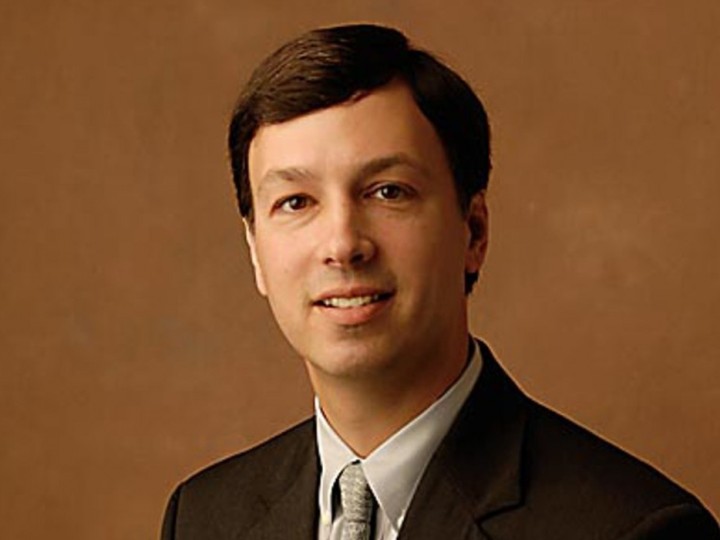
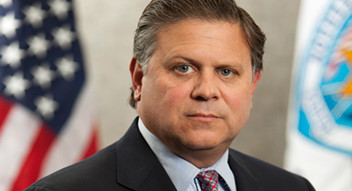
Zack Kopplin and Joshua Youngkin (Source: The Advocate)

Zack Kopplin and Joshua Youngkin (Source: The Advocate)

For many in Louisiana, however, Youngkin’s suggestion that the LSEA is actually a model “anti-bullying” law, adopted well before anti-bullying laws and policies “emerged on the national scene,” may seem even more insensitive and offensive. If you’re from Louisiana, then you likely know that, for years, Governor Bobby Jindal and his fellow Republicans in the legislature have repeatedly rejected actual anti-bullying legislation.

Year after year, proposals that would protect children from being bullied have been opposed and defeated by those on the religious right. Why? Because people like Gene Mills and organizations like the Louisiana Family Forum believe that children should have the right to bully other children for being gay. Apparently, it’s about “religious expression.” Quoting from the Times-Picayune:

Louisiana Family Forum President Gene Mills, who said he’s an ordained minister, told lawmakers, that the bill “introduces sexual politics” into the classroom and would discriminate against religious expression. “You could make a criminal bully out of a child who holds an orthodox view of Christianity.”

It’s worth noting that Gene Mills and the Louisiana Family Forum were instrumental in the passage of the Louisiana Science Education Act and have coordinated closely with the Discovery Institute.

Taken together, one can only assume the Discovery Institute and the Louisiana Family Forum believe that so-called “orthodox Christian” students should be allowed to bully children they perceive as being gay (because that’s just “religious expression”), but when science teachers and science advocates rightfully point out that there is absolutely no scientific basis supporting new earth creationism or intelligent design, they should be called out as “academic bullies.” And while gay and lesbian children continue to be driven to suicide as a result of unrelenting school bullying, at least proponents of creationism and intelligent design no longer have to feel bullied by science.

Before anyone accuses me of being hyperbolic, I think it’s important to point out: Throughout the last several years, the Discovery Institute has continually attempted to “have their cake and eat it too,” arguing alternately if creationism and intelligent design are, in fact, religious beliefs, then any criticism against those beliefs in a public school classroom would violate the Establishment Clause’s prohibition against “inhibiting religion.” In a 2009 article titled “Zeal for Darwin’s House Consumes Them: How Supporters of Evolution Encourage Violations of the Establishment Clause,” Casey Luskin of the Discovery Institute argues:

Assuming ad arguendo that ID’s critics are correct in holding that ID is a religious viewpoint, then it should not only be unconstitutional for the government to “advance” ID, but also to “inhibit” ID. If ID is a religious viewpoint, the government may not violate the “absolute” prohibition against opposing it or showing hostility or disapproval towards it.

In other words, although the Discovery Institute and proponents of intelligent design trot around the country and promote intelligent design as legitimate science, if the courts hold that intelligent design is “religious” (which it did in Kitzmiller v. Dover Area School District), then any science teacher who employs the scientific method to discredit intelligent design is violating the US Constitution. When you cut to the chase, that is what Luskin is arguing, and perhaps more than anything else, it may explain why the Discovery Institute, at least as an official policy, refuses to explicitly support intelligent design in public schools. Make no mistake: It is their end goal, but considering that the court in Dover issued a comprehensive ruling that held ID was just another term for creationism, they’ve been forced to adjust their legal strategy.

Which brings me back to Joshua Youngkin’s testimony to the Louisiana Senate Education Committee.

In response to the accusation that the Discovery Institute does not conduct “any science,” Youngkin claimed that “there are over fifty peer-reviewed articles in a journal called ‘Biologic,’ and there is an experimental outfit in Seattle that produces research original research, that is peer-reviewed, on the power of natural selection to generate biological novelty.”

First, the “journal” is not called “Biologic;” that’s the name of the “experimental outfit.” The journal is actually called “Bio-Complexity,” and it’s completely underwritten by the Discovery Institute. According to RationalWiki:

Despite the intention to have one article per month, it took from May 2010 until December 2010 for another article to be published (by William Dembski, a member of the editorial team). Only one article was published in 2011, and three total are by Douglas Axe.

It is worth noting: Douglas Axe is a paid employee of the Discovery Institute (via Biologic) and earns a salary of over $95,000 a year. Recently, Jeffrey Shalit of The Panda’s Thumb pointed out:

Bio-Complexity (is the) the flagship journal of the intelligent design movement. As 2012 draws to a close, the 2012 volume contains exactly two research articles, one “critical review” and one “critical focus”, for a grand total of four items. The editorial board has 30 members; they must be kept very busy handling all those papers.

(Another intelligent design journal, Progress in Complexity, Information, and Design, hasn’t had a new issue since 2005.)

By contrast, the journal Evolution has ten times more research articles in a single issue (one of 12 so far in 2012). And this is just a single journal where evolutionary biology research is published; there are many others.

But that’s not the most hopeless part. Of the four contributions to Bio-Complexity in 2012, three have authors that are either the Editor in Chief (sic), the Managing Editor, or members of the editorial board of the journal. Only one article, the one by Fernando Castro-Chavez, has no author in the subset of people running the journal. And that one is utter bilge, written by someone who believes that “the 64 codons [of DNA are] represented since at least 4,000 years ago and preserved by China in the I Ching or Book of Changes or Mutations.”

Notwithstanding the fact that Youngkin didn’t even know the name of the “academic journal” to which he was referring, his suggestion to the Louisiana Senate Education Committee that this was “peer-reviewed research” failed to mention that, by “peer-reviewed,” he meant “read by people at the Discovery Institute.”

Youngkin also claimed that “there are over 800 ph.D scientists who have signed a statement called ‘The Scientific Dissent from Darwinism.’” And that may have sounded compelling to some of the members of the committee. The problem is: It’s utterly ridiculous. The vast majority of the signatories (over 75%) have no background in biology; the statement itself has been roundly criticized for being misleading and deceptive; the signatories represent less than 0.03% of the world’s research scientists; and as the National Center for Science Education’s “Project Steve” proved, there are more scientists with the name “Steve” who believe in evolution than scientists who support the Discovery Institute. There are 1,187 eminent scientists named “Steve” who have signed onto the NSCE’s statement, more than the entire number of so-called “scientists” who signed the Discovery Institute’s statement.

Govenor Bobby Jindal being blessed by Religious Radical Preacher, Dr. Gene Mills of the Louisiana Family Forum

Govenor Bobby Jindal being blessed by Dr. Gene Mills of the Louisiana Family Forum

Next year, when the Louisiana Senate Education Committee once again considers the repeal of the LSEA, one can only hope that legislators will be more prepared for this type of deception and better informed about the tactics used by the law’s proponents. Next year, hopefully, the Louisiana legislature will finally realize that the Discovery Institute and the Louisiana Family Forum have been mocking their intelligence, and maybe, just maybe, Louisiana’s elected officials will stand up to the real bullies.

Recently, Lawrence Krauss, a theoretical physicist at Arizona State University, sparked controversy after suggesting that teaching creationism as science was a mild form of child abuse. And while his provocative comments may seem, to some, as completely over-the-top, the truth is that creationist laws like the LSEA– laws intended to confuse children about science, laws written and promoted by right-wing religious fundamentalists– diminish the quality and caliber of American education. In so doing, these laws and policies directly harm children.

Let’s get real: This has nothing to do with academic freedom or teaching “more evolution.” The Discovery Institute was created after the Supreme Court struck down Louisiana’s anti-evolution law in Edwards v. Aguillard, and for the last twenty five years, they’ve been attempting to figure out a clever way to legally impose their own religious beliefs in the public school science classroom. They’ve tried out new terms; instead of “creation science,” they now call it “intelligent design.” The courts have seen right through this, ruling that intelligent design is just code language. They’ve attempted to force schools to read “disclaimers” to students, and again, the courts have seen right through this, holding that these disclaimers were a form of religious coercion. Now, they’re acting as if these laws are actually about bullying and critical thinking, as if they’ve ever understood either. If the scientific method fails them, then they suggest that they’re being victimized by anti-religious bigots. And for good measure and as an insurance policy, they’re funding the salaries of a small group of essayists, attorneys, and rhetoricians they purport to be “scientists,” despite the fact that they haven’t spent a single penny on legitimate scientific research.

Over the last few years, they’ve successfully convinced a small handful of Louisiana legislators to buy into this charade, but in so doing, they’ve also exposed these legislators as comically ignorant and uninformed.

Three years ago, one of them, State Senator Julie Quinn, lambasted Nobel laureate scientists as nothing more than people with “little letters” behind their names: What do they know about science? Two years ago, another legislator, State Senator Mike Walsworth, asked a science teacher, in all seriousness, how E.Coli could “evolve” into a human being; earlier in the meeting, he also proved that he had no idea how to pronounce the word “molecular.“ And this year, State Senator Elbert Guillory described his experience with a witch doctor in order to justify the teaching of pseudoscience, because apparently after a half-naked man danced around in the dust and threw bones on the ground, he was able to convince Guillory to visit a real doctor. Shortly after making these remarks, Guillory had another “conversion experience,” re-enlisting as a member of the Louisiana Republican Party, which some in the media spun as “historic,” despite the fact that Guillory was a Republican only five years ago and became a Democrat because he thought he’d have a better chance winning election.

We have a long and proud history of religious freedom in this country, and the willful distortion of science– the desire to legislatively impose religious mythology as science– is nothing more than pernicious totalitarianism. It is completely antithetical to the values and principles we all cherish as Americans, and it’s time for these folks to be called out.

Plain and simple.

The Discovery Institute Is A Con-Profit Scam 22

Yesterday, David Klinghoffer, a fellow at the creationist “think tank” the Discovery Institute and the author of the absurdly titled book How Would God Vote?: Why the Bible Commands You to Be a Conservative, forcefully demonstrated the ways in which he and the Discovery Institute engage in blatant intellectual dishonesty. Shortly after Zack Kopplin routed Klinghoffer’s colleague Casey Luskin on a national radio show, Klinghoffer took to the Discovery Institute’s website and published an article titled “Zack Kopplin Thinks Louisianans Are Stupid,” an argument he based, entirely, by lifting and grossly mischaracterizing a single sentence from a story Zack told about his experience as a thirteen-year-old kid at summer camp in Connecticut.

For those familiar with the tactics of the Discovery Institute, it’s probably unsurprising that Klinghoffer “quote-mined” from Zack’s speech in order to advance a lie. After all, manipulating other people’s words is one of the Discovery Institute’s hallmarks. Still, this seemed different: Klinghoffer wasn’t simply cherry-picking a couple of sentences from an academic journal to criticize evolution; he was distorting a personal story about being a thirteen-year-old at summer camp to level a spurious and, in my opinion, defamatory personal attack, all in attempt to discredit Zack’s character, not his arguments. And of course, it is laughable and pathetic and obviously mean-spirited. The real issue, however, is not David Klinghoffer’s dishonesty; it’s that David Klinghoffer published his attack under the masthead of a tax-exempt, tax-deductible organization.

And it got me thinking: What, exactly, is the Discovery Institute? Why are they tax-exempt? Why does the United States allow them to operate as a charitable organization? And when people donate to the Discovery Institute, what, exactly, are they getting in return, aside from a tax deduction?

tmp

After pouring over and analyzing the Discovery Institute’s most recent 990 returns and exhaustively researching their programmatic work, I think it’s abundantly obvious: The Discovery Institute is a con-profit scam.

*****

Over the last several years, the Discovery Institute has raised well over $20 million, donations that are almost entirely eaten up in salaries and administrative costs. On average, since 2008, the Discovery Institute has spent less than 13% of its annual revenue on program activity and phony “grants.” Put another way, the Discovery Institute spends nearly 90% of the tax-deductible donations it receives every year on salaried employees, consultants, lawyers, lobbyists, accountants, and administrative and overhead expenses, and that’s being generous. To put this in context, these are the generally accepted spending guidelines for non-profits:

Organization

Recommended/required minimum spending on program activity as a percent of total budget

 BBB Wise Giving Alliance

65%

 American Institute of Philanthropy

60%

 The United Way of the National Capital Area

80%


Indeed, there’s actually ample reason to believe that the Discovery Institute’s programmatic money is dramatically inflated, because during the last several years, nearly half of the expenditures they’ve itemized as “grants” has been given to the Biologic Institute, which is, essentially, a subsidiary organization.

Screen Shot 2013-06-07 at 12.10.51 AM

And if you delve into the 990 returns of Biologic, you’ll find that, like the Discovery Institute, it spends all of its money on salaries and overhead costs.

It’s a not-so-subtle sleight of hand: The Discovery Institute entirely funds Biologic, down to the very last penny. In so doing, the Discovery Institute gets to list their expense as a “grant,” helping it to fulfill its mission as a non-profit and allowing it the ability to claim that it funds “scientific research,” and hoping that no one is the wiser, Biologic then spends the money (between $300,000 – $400,000 a year) to pay three other employees.

In addition to the money the Discovery Institute provides to Biologic, it lists the salaries it pays to its fellows as programmatic grants, which, to be fair, is common practice but, nonetheless, deserves mention. No doubt, many may be surprised that people like David Klinghoffer, who write for the Discovery Institute’s website, aren’t actually considered employees or consultants; they’re grouped together as grant recipients:

Screen Shot 2013-06-06 at 11.58.48 PM

If you combine the money the Discovery Institute provides to Biologic and the money it gives to so-called “fellows,” you’ll quickly realize: This is all an elaborate shell game; it’s a coy way of preventing the Discovery Institute from fully disclosing its activities.

And perhaps more importantly, it provides the Discovery Institute with the ability to claim to the public and to its donors that it is funding “scientific research” on intelligent design. If you scratch beneath the surface, however, you find that the Discovery Institute isn’t really funding scientific research (which requires real money); they’re funding salaries.

For what it’s worth, I anticipate the folks at the Discovery Institute would vehemently dispute my math and my characterization of their activities. First, I imagine they’d assert that they’re a “think tank,” and that, by the very definition of the term, they pay people to think. While I acknowledge they may self-identify as a “think tank,” it’s pretty hard to avoid the fact that they’re not spending any money on conducting scientific research, which is, ostensibly, what they claim to be thinking about. Scientific research requires real, substantial money for equipment and technology; it’s abundantly obvious that the Discovery Institute isn’t investing in research.

Second, they may suggest that I’m overlooking a crucial portion of their 990 returns, the part where they itemize their programmatic activities. So, here is their most recent report:

Screen Shot 2013-06-07 at 12.53.49 AM

Aside from the $831,554 in expenses they report for “developing” a transportation system between Washington, Oregon, and Canada (which seems ridiculous and well outside of their scope), they list nearly $3.5M for the “production of public service reports, legislative testimony, articles, public conferences and debates.” It’s, essentially, a job description, a way of summing up how they spent all of that money on salaries; it’s not programming, and it definitely has nothing to do with scientific research. But, for the sake of argument, let’s say that this is programming, because, if it is, then it sounds like much of their programming is on lobbying state legislatures. That’s probably not surprising to anyone who has followed the Discovery Institute. After all, just last month, Joshua Youngkin of the Discovery Institute flew all the way down to Baton Rouge to lobby against the repeal of the Louisiana Science Education Act.

Here’s the problem, though: By listing its activities as the production of “public service reports” and the presentation of “legislative testimony,” the Discovery Institute is effectively disclosing that it is primarily a lobbying organization, not a think tank. To be sure, the Discovery Institute, as a tax-exempt 501c(3), isn’t prohibited from lobbying, but, as a general rule, a 501c(3) can’t spend more than 10% of its annual revenue on lobbying. In a separate portion of its most recent 990 report, the Discovery Institute disclosed some of its lobbying expenses:

Screen Shot 2013-06-07 at 1.44.15 AM

And while these numbers conform to guidelines on 501c(3) lobbying activities, they seem particularly suspicious, considering that earlier in the report, the Discovery Institute listed more than $3.5M in activities that appear to be awfully close to the definition of lobbying.

What, exactly, is the Discovery Institute lobbying for? Well, as it should be clear, they’re lobbying to keep the gravy train on track. As long as they have politicians willing to pander to creationists, they can maintain the charade, pretending as if they’re conducting “scientific research” while raking in millions in tax-deductible donations to pay for their salaries (including at least five employees who make six figures a year). And if they’re successful in convincing legislatures, like Louisiana’s, in passing laws that allow for the teaching of intelligent design, they stand to gain even more, because, not coincidentally, the very people who are paid by the Discovery Institute are also the authors of the textbooks and supplementary materials that would be purchased, in bulk. They’re not selling an idea; they’re selling a product.

See for yourself. Here are the most recent 990 disclosures from the Discovery Institute:

2011 990

2010 990

2009 990

The Discovery Institute Thinks Americans Are Stupid 10

Earlier today, on the nationally syndicated Michael Medved radio show, Casey Luskin of the Discovery Institute, a Seattle-based “think tank” that lobbies for intelligent design creationism in the classroom, debated Louisiana’s own Zack Kopplin about the merits and the intent of the Louisiana Science Education Act (the LSEA). For those unaware, despite its banal title, the LSEA was sponsored by a creationist lawmaker, State Senator Ben Nevers (who, when the bill was in its initial draft, told the media that it was intended to promote creationism); it was written by a group of creationist lobbyists, modeled after a statute crafted by a creationist think tank, and signed into law by a Governor who admitted it was primarily intended to allow creationism in the public school science classroom.

In late 2010, Zack, then a senior in high school, spearheaded a campaign to repeal the LSEA, and during the last three years, he has asserted himself as one of the nation’s leading advocates for science education. (For the purposes of full disclosure, I am currently working with Zack to launch Second Giant Leap, a non-profit organization focused on promoting science education).

Casey Luskin may not be a familiar name, even to those in Louisiana who have followed the ongoing repeal efforts, but as an attorney and paid employee of the Discovery Institute, Luskin has worked to shape the discussion on the LSEA more than almost anyone else. Considering that the Louisiana Science Education Act was based, almost entirely, on the Discovery Institute’s “model statute” on “academic freedom,” the chances are that Casey Luskin actually wrote the LSEA.

Casey Luskin

Casey Luskin

I’ve written extensively and exhaustively about the Louisiana Science Education Act, and to the best of my knowledge, today was the first time anyone at the Discovery Institute has ever engaged in a substantive debate about the law, a law they consider to be their signature legislative accomplishment.

To be sure, both Luskin and Medved were cordial and respectful to Zack. Despite the fact that the deck seemed to be stacked against him, Zack walked out of the debate as the clear winner, and all things being equal, it was a savvy and wise decision for him to engage in the discussion.

Initially, when I sat down to write this piece, I intended on highlighting the fatal flaws in Casey Luskin’s arguments. They are still worth mentioning, though I now think there is a larger and more important point to be made. But first:

Among other things, Luskin suggested that Governor Bobby Jindal was “confused” about the purpose of a bill that he personally signed into law. Recently, in an interview with NBC News, Governor Jindal claimed that the LSEA provides local school districts with the ability to teach creationism and intelligent design, which is, in fact, exactly what it does. However, Luskin, an attorney who has spent the last few years of his career navigating around the rhetorical contours of well-established law on creationism, likely realized that Jindal’s comments exposed the charade. If the Governor admits the law is about providing for the teaching of creationism as science, then the Governor is also admitting that the law is unconstitutional. Notably, after first suggesting that Governor Jindal was “confused,” Luskin then mistakenly claimed that Jindal had never actually mentioned the LSEA in the context of creationism and that this was all a fabricated talking point. In fact, as the video and the transcript of the interview prove, Governor Jindal specifically referenced the LSEA, by name. As hard as the Discovery Institute may try, they simply cannot rewrite history or alter the evidence.

Bobby Jindal is the Governor of Louisiana. Bobby Jindal signed the LSEA into law. Bobby Jindal is responsible for enacting and enforcing the law. Bobby Jindal says the law is about providing local school districts with the ability to teach creationism and intelligent design as science. And as Casey Luskin knows, teaching creationism and intelligent design as legitimate science in the public school classroom is unconstitutional and violative of the Establishment Clause. End of story.

Luskin also focused on a provision of the LSEA that states the law shall not be “construed to promote any religious belief.” I know it may sound compelling, but the provision is meaningless; it could just as easily read, “This illegal law shall not be construed to be illegal.” As Zack repeatedly pointed out, the Balanced Treatment for Creation-Science and Evolution-Science Act, which was held unconstitutional by the Supreme Court in Edwards v. Aguillard, contained an almost identical provision. Luskin and others can reference the provision until they turn blue in the face; the fact is: The law is intended to allow public schools the ability to introduce very specific religious mythologies (namely, New Earth Creationism) as science.

********

Again, I had initially intended for this post to focus entirely on the debate between Zack and Luskin, but before I’d even written a dozen words, I received a notification from Google Alerts about an article published by David Klinghoffer of the Discovery Institute titled “Zack Kopplin Thinks Louisianans Are Stupid.” Klinghoffer writes:

Education activist Zack Kopplin thinks his fellow Louisianans are a bunch of rubes. And I don’t just mean the Darwin skeptics in Zack’s home state — I mean people in the state generally. He said as much in a TED Talk, where the 20-year-old Rice University student speaks about having introduced himself to new friends from out of state with the disclaimer, “I’m from the Louisiana, but I’m not stupid.” (See above at 2:06.) Isn’t that charming? But you can really tell how dumb he thinks people from his state are — and, in fact, people in general — by the way he frames his argument against academic-freedom legislation.

I don’t know who David Klinghoffer is (or thinks he is), but I know this: I have had the great fortune to work alongside some of the most exceptionally talented, loyal, and fiercely determined people in the state of Louisiana, and in my opinion, Zack is one of Louisiana’s truest champions and best ambassadors.

In his TED talk, Zack referred to the way in which kids from the Northeast perceived kids from Louisiana: “I’m from Louisiana, but I’m not stupid” was something he said as an icebreaker, when he was thirteen years old at summer camp in Connecticut. It’s despicable and completely dishonest to “quotemine” or cherry-pick a single line of a story Zack was sharing about how he felt as a child at camp, far away from home, in order to publicly suggest that he thinks Louisianans are all stupid. As anyone who was born and raised in Louisiana or the Deep South can attest, Zack’s experience is something we all understand and, likely, have all shared.

Zack grew up in a family of public servants, and during the last three years, although his advocacy has allowed him to reach an international audience, it has also made him a magnet for attacks by right-wing religious lunatics, some of whom have been downright creepy. Trust me: You don’t enter into this line of work and put yourself out there as a target for anonymous criticism unless you really love Louisiana and the people of Louisiana.

That said, I’m not suggesting that Klinghoffer is a creep (though he weirdly suggested that Zack’s use of the word “y’all” was an affectation).

But, without question, it is unethical and improper for him to willfully distort Zack’s comments under the imprimatur of a tax-exempt, tax-deductible organization. Klinghoffer’s either being ignorantly negligent or purposefully defamatory; either way, when a 501c3 officially engages in this type of overtly political activity against a single individual, we should all question the organization’s legitimacy.

Which got me thinking: What, exactly, is the Discovery Institute? And why are they a tax-exempt, tax-deductible 501c3?

After pouring over the last four years of their 990 reports, it became very clear: The Discovery Institute thinks Americans are stupid.

(Tomorrow: Part Two)

UNCONSTITUTIONAL: Bobby Jindal’s “Moon Shot” Implodes 2

Houston, we have a problem.

Yesterday, the Louisiana Supreme Court struck down the single-largest and highest-profile policy initiative ever undertaken by Governor Bobby Jindal. In a resounding 6-1 opinion, the court held that Jindal’s plan unconstitutionally violated the State Constitution by diverting funds clearly labeled and dedicated toward public schools in the Minimum Foundation Program.

Source: The Advocate

Source: The Advocate

To think, only a year and a half ago, The Wall Street Journal, titling the story “Jindal’s Education Moon Shot,” praised Jindal effusively for his bold and decisive actions.

From the very beginning, I recognized the fundamental flaws in Jindal’s plans, including, most notably, the ways in which he had planned to fund this initiative, almost entirely through revenue sources that were constitutionally required for public schools. Jindal’s plan, in simple terms, sought to fund his voucher program with public school money. And if you’re a cynic like me, you can’t help but recognize the political calculus at play: Removing substantial revenues from already-struggling public schools is a clear declaration of purpose. Jindal had no desire to truly help existing and struggling public schools improve. In guaranteeing their ultimate failures, Jindal hoped to better justify the marginal improvements that could be gained whenever the State began fully subsidizing voucher schools. It’s the “rob Peter to pay Paul” conundrum, and Jindal had been hoping it would work.

No question, many of Louisiana’s public schools are in bad shape, but here’s the problem: The voucher schools are even worse. A substantial portion of these voucher schools are newly-created church schools with very few credentialed teachers. Thanks to the work of Zack Kopplin and (not to brag) some of the stories I’ve reported on this site, we know that many of these voucher schools teach pseudoscience and revisionist history. Furthermore, during the last year and a half, Zack and I, along with the folks at the News Star and blogger Tom Aswell at the Louisiana Voice, have revealed the ways in which Bobby Jindal and Superintendent John White attempted to qualify anyone and everyone who sought voucher funding– a school owned and operated by a man who believed himself to be a divine Prophet of God, schools that didn’t have classrooms, schools that relied entirely on DVD instruction, schools that used textbooks suggesting the Lochness Monster is real and disproves evolution. These schools are not anomalies.

Jindal so desperately wanted to prove himself as a leader in school voucher reform, he forgot to do his homework: Like it or not, a sizable portion of Louisiana voucher schools are significantly worse than the public schools they seek to replace.

Of the top 500 public high schools in the country, five are from Louisiana: Baton Rouge Magnet in Baton Rouge, Haynes Academy in Metairie, Ben Franklin in New Orleans, Thomas Jefferson High in Jefferson, and LSMSA in Natchitoches. It may mot seem like much, but a State our size, it’s exceptional: There are twice as many public school students in Texas than residents of Louisiana.

Our public schools can and will excel, but we need a Governor who believes in them as much as they believe in themselves.

Old White Men at the Louisiana Family Forum Continue to Obsess Over Screwing Gays 6

Last week, a House committee effectively killed Austin Badon’s HB 85, which would have prevented State public employers from firing employees only on the basis of sexual orientation. Currently, Louisiana has some of the worst, most bigoted, and most discriminatory laws against gays, lesbians, and transgendered Americans in the entire country. From The Times-Picayune:

 The bill, which would have applied to only employment with the state government, would have provided means for employees who believe they had been discriminated against to appeal to the state Civil Service Commission or file suit.

Those complaints would have been handled in the same way the state currently handles discrimination based on political beliefs, sex or race. That type of discrimination is banned under the state Constitution.

Immediately after he was elected as Governor, Bobby Jindal rescinded an executive order that prohibited discrimination against gay and lesbian state employees. And a few weeks ago, Representative Alan Seabaugh introduced legislation that would effectively prevent wrongfully terminated gay and lesbian employees from accessing the courts. Quoting:

The Shreveport Republican is sponsoring House Bill 402, which a prominent Louisiana LGBT advocacy group characterizes as “a stealth attempt” to ensure that employment protections for LGBT workers in Louisiana do not become the law of this land. The bill even goes so far as to supersede local non-discrimination laws.

Presented as an attempt to unclog the state court system of all those pesky frivolous lawsuits brought by gay people who are fired due to their unimpeachable flair for interior design, Seabaugh’s bill plays from the GOP “voter fraud” playbook: that is, it addresses a “problem” that doesn’t exist because the rep’s real aim is to suppress something he doesn’t like. Black people voting for Democrats, gays and lesbians having employment protections … whatever. As Matthew Patterson, legislative co-coordinator of Equality Louisiana, points out, “State courts do not face an excessive number of frivolous employment discrimination suits, and they are capable of determining which suits have merit.”

“I can’t get a damn thing done because of all these frivolous gay lawsuits!” said no judge ever.

Where Seabaugh’s bill goes from nakedly discriminatory against our gay neighbors and family members and trips headlong into jackbooted bull crappery is its override of local anti-discrimination laws. Several municipalities in the state have such laws on their books, but if Seabaugh’s “I’m secretly gay therefore I’m publicly anti-gay” bill becomes law it would prevent citizens in those jurisdictions from seeking the employment protections afforded them by their own communities.

In simple terms, Bobby Jindal wants to reserve his right to fire anyone and everyone- including career, classified  civil servants- merely for being gay, and Seabaugh wants to ensure these decisions are kept out of the court, preventing people from accessing their duly-earned benefits and rights.

Jindal, as some may recall, recently railed against the national Republican Party as “the stupid party”  and called for more inclusion and diversity.  But, you see, Governor Jindal and his allies in the Louisiana Family Forum desperately want to retain the ability to fire good and decent Americans and Louisiana public servants because of their sexual orientation. It may sound flippant or snarky, but the truth is: The old white men who run the Louisiana Family Forum are obsessed with screwing over gays. Maybe there are some latent, repressed issues at play, but regardless, it is definitively bigoted and increasingly bizarre.

Take, for example, the testimony of LFF employee Dale Hoffpauir (hat tip to Bob Mann):

First, Dale Hoffpauir is an idiot. Let’s make that clear. He claims that he had a gay black friend who is now married to a woman, and the punchline to this sad and doomed story is, “And yet, he is still an African-American.”

You get it? His gay friend got cured by marrying a lady, obviously proving that it was all just a choice for him, whereas being African-American is, obviously, not a choice. Lord knows, once a gay man or a lesbian woman decides to marry someone of the opposite sex, their sexuality is immediately reprogrammed.

photo

But secondly and perhaps more importantly, Dale Hoffpauir is in absolutely no position to lecture anyone else about ethics or morality. His employer, the Louisiana Family Forum, has engaged in a series of ethically questionable activities and appears to have illegally and improperly funded its advocacy arm- the Louisiana Family Forum Action- through tax-deductible donations.

Also, there’s this:  

I understand that many sincere people of faith believe that homosexuality is an abomination and a sin, and as stupid and myopic and cognitively dissonant I may find these beliefs, I respect their right to practice their own religion. But for the last few years, Bobby Jindal and the old white guys at the Louisiana Family Forum have attempted to actively and pro-actively discriminate against gay and lesbian Americans, through official state action.

It’s become an obsession. If the Louisiana Family Forum weren’t also advocating against science, it’d be easy to assume that the organization’s entire raison d’etre is the promotion of homophobic policies.

In America, it’s perfectly fine for your religion to be discriminatory. Really. It’s OK. Whatever. Folks don’t have to join your club. But it’s not OK and it never has been OK for the government to actively or even passively discriminate against people simply because of who they are. If your faith tells you that God will punish homosexuals by sending them all to burn in eternal hell, don’t worry: No one is going to force you to relinquish that belief. I know several devout Christians who spend an inordinate amount of their time attempting to argue and justify their beliefs about how and why homosexuality is sinful; they sometimes seem more consumed by fighting this “culture war” than in actually practicing their religion.

Here’s what I know and believe: Fifty or sixty years from now, when I’m dead and gone, I sure hope that people don’t remember me as someone who stood against equality and fairness; I hope that I can spend my remaining time here on earth promoting shared human dignity, the unbelievable potential of knowledge, and the importance of real and substantive empathy. I’ll try my best, but even if I don’t succeed totally, I’m absolutely certain that history will not be kind to those currently standing in the way.

Louisiana State Senator Supports Creationism Law Because Of His Experience With Witch Doctor 8

Update: The videos are online. Part OnePart Two.

For the third year in a row, the Louisiana Senate Education Committee deferred a bill to repeal the Louisiana Science Education Act, which allows for the teaching of New Earth Creationism in public school science classrooms. And for the third year in a row, at least one member of the Louisiana Senate managed to steal the show.

Last year, State Senator Mike Walsworth made himself the star of a viral video when he asked a high school science teacher if e.Coli could evolve into human beings. The year before, Senator Julie Quinn dismissed the credibility of more than 70 Nobel laureate scientists as people who just had “little letters behind their names.

The videos from this year’s committee hearing are not yet available online, but something tells me that State Senator Elbert Guillory is about to become an Internet star.

Screen Shot 2013-05-02 at 12.33.35 AM

From The Times-Picayune (bold mine):

Sen. Elbert Guillory, D-Opelousas, said he had reservations with repealing the act after a spiritual healer correctly diagnosed a specific medical ailment he had. He said he thought repealing the act could “lock the door on being able to view ideas from many places, concepts from many cultures.”

“Yet if I closed my mind when I saw this man – in the dust, throwing some bones on the ground, semi-clothed — if I had closed him off and just said, ‘That’s not science. I’m not going to see this doctor,’ I would have shut off a very good experience for myself,” Guillory said.

I hate to break it to Senator Guillory, but the half-naked guy who danced in the dust and threw bones on the ground was lying to you: He was not a doctor. That thing he did: It wasn’t science.

There are three likely explanations: First, the man was a witch doctor. This is Louisiana, after all, and people still make money pretending to believe in voodoo, mainly to please the tourists.

Or this man was under the influence of hallucinogenic drugs.

Or both: This man was a witch doctor tripping out of his mind, running around, half-naked, in a cloud of dust, throwing bones (presumably not human) around for special effect, and then diagnosing Senator Guillory with some sort of vague condition: “The gods tell me there’s a problem with your heart or bones or lungs.”

It’s the same formula used by people who pretend to speak to the dead. “I’m getting a message from someone you know whose name begins with the letter M.” “That must be my mom.”

But I digress.

The important thing is: This man is responsible for decisions about public school science education, and as awesome and as revelatory as the mystical experience he shared with a half-naked “doctor” may have been, it has absolutely nothing to do with science.

For what it’s worth, this isn’t Guillory’s first brush with fame. Two years ago, he worked with the Louisiana Family Forum to advance a redistricting plan that aimed to decrease minority representation and, not surprisingly, enhance Guillory’s own power. “If you check my [voting] record I’ve not been a 100 percenter with the Family Forum,” Guillory said, “but this is not a Republican-Democrat thing.”

Incidentally, I did check his voting record. Quoting from the Louisiana Family Forum (bold mine):

In the Senate, Democratic Sens. Elbert Guillory of Opelousas, David Heitmeier of New Orleans and Rick Ward III of Port Allen and among the 12 senators who scored 100 percent.

This also should be no surprise. Guillory may be a Democrat, but until he decided to run for State Senate, he was a Republican.

And to some, it’s probably not surprising that Guillory wasn’t telling the truth about his voting record.

A few years ago, The Independent Weekly published a cover story on Guillory, revealing, among other things:

The other recent allegations against Guillory that the Cravins camp helped disseminate involve Guillory’s brief tenure as director of the Human Rights Department for the city of Seattle in the early 1980s. The Seattle Post Intelligencer reported that a little more than a year into the job, Guillory was suspended without pay and then resigned after he was charged with five counts of violating the city’s ethics code. An ethics probe found that Guillory had awarded a $9,999 contract (just below the $10,000 threshold requiring a contract be publicly bid) to his soon-to-be wife, signed off on payment for work on the contract that was never done, billed the city for two weeks of work while he was honeymooning in Tahiti (although he had no vacation time), and allowed an employee to bill the city for time spent driving Guillory’s car cross-country from his former residence in Baltimore, Md. The complaints were all filed with the ethics board, but a settlement was reached before an official hearing was held.

Guillory blamed all of this on the Seattle Mayor, suggesting that he was actually the victim of his boss’s disloyalty.

And then there’s this:

In 2002, he was reprimanded by the Louisiana Attorney Disciplinary Board for notarizing a succession document for his client, former Opelousas Police Chief Larry Caillier, in which some of the signatures had apparently been forged and not witnessed by Guillory. Guillory then admitted to mistakenly relying on the word of his client that the signatures were valid.

And this:

Don Cravins Jr. is the first to admit Guillory’s tactics have proven politically effective. “The guy’s unlike anybody else we’ve ever had to deal with,” he says. “It’s one thing to have political disagreements. It’s just that he’s so sly and disingenuous. It’s so hard to deal with that guy.

Indeed, it’s hard to deal with that guy.

An Open Letter to Conrad Appel, Chairman of the Louisiana Senate Education Committee 2

appel2008

Dear Chairman Appel,

I am writing to respectfully ask you to support the passage of Senate Bill 26, which would repeal the controversial and unconstitutional Louisiana Science Education Act. I am a proud, lifelong citizen of Louisiana and a graduate of the Louisiana public education system. Like you, I believe in the promise and the potential of our Great State.

During the last eight years, Louisiana has defined the word “resiliency,” both to our country and to the rest of the world. However, if Louisiana is to truly emerge as an enduring example of innovation and ingenuity, we must ensure the strength and durability of not only our physical infrastructure– our levees, roads, bridges, sewage systems, and electrical grids– but of our human infrastructure as well.

As you know, objective, non-partisan studies continually reveal that investments in education and science yield significantly higher rates of return than anything else. Last year, you fought to ensure Louisiana develops strategies to attract students in the fields of science, technology, engineering, and mathematics (STEM), an effort for which I earnestly commend you. You said then, “If we’re going to fit into the 21st century, we need more people graduating in these fields.”

I wholeheartedly agree.

As you rightfully pointed out, if we are to be successful in fostering and cultivating a 21st century workforce, then we must adequately provide our students, early on, with the resources they require to pursue careers in the sciences. “Kids are formulating their own ideas early on,” you said. “We have to focus on high schools too.”

Without question, the Louisiana Science Education Act severely undermines your noble efforts to increase the competitiveness and the viability of Louisiana’s 21st century workforce. I understand that you have already voted twice to oppose the law’s repeal, and with all due respect, Mr. Chairman, I firmly believe that you and many of your colleagues have been purposely deceived about the nature and intention of the Louisiana Science Education Act.

Last year, during the Senate Education Committee hearing on the repeal bill, you questioned whether anyone had actually formally complained about the law. It was a fair and legitimate question, but unfortunately, I don’t think it was properly answered.

Next week, when your committee considers SB 26, I sincerely hope you will also consider the following:

  1. The Louisiana Science Education Act is publicly opposed by more Nobel Prize laureates than any other single law in the entire country and more than any single law in Louisiana history. These 78 laureates are not motivated by any political considerations. Unlike those who have testified in support of the LSEA, none of these laureates are registered lobbyists; none of them have ever been compensated, in any way, for their endorsements. They are among the world’s most accomplished and most preeminent scientists, scholars, and innovators, and suffice it to say, their opposition to the LSEA is not capricious; it’s principled.
  2. The repeal efforts have been led by Louisiana public school students, Louisiana public school graduates, and Louisiana parents, teachers, and professors. With all due respect, your question, last year, regarding “complaints” against the LSEA was somewhat confounding, considering that you were speaking in front of dozens of students, parents, and teachers all there to complain, formally, to the Louisiana Senate Education Committee. Indeed, all told, more than 100,000 people, including thousands of Louisiana citizens, have signed petitions urging for the repeal of the law.
  3. Therefore, I can only assume your question about “complaints” against the LSEA referred, instead, to whether or not any litigation had been filed. I hope you will appreciate that those of us advocating for the law’s repeal earnestly seek to avoid litigation. That said, I am supremely confident that the law would be immediately struck down as facially unconstitutional and in direct violation of the Establishment Clause, and my opinion is shared by an overwhelming consensus of legal experts and nationally-renowned Constitutional law professors. A legal challenge, however, should be the last resort. Again, the repeal effort is being spearheaded by Louisiana citizens, and the law we seek to repeal was crafted, in large part, by the Discovery Institute, a Seattle-based creationist “think tank.” The Discovery Institute may be interested in yet another losing “show trial,” but we believe that leaders like you– elected officials who understand the value of science education and the imminent challenges facing Louisiana– are cognizant of the damage the LSEA has already inflicted on the reputation and credibility of our public education system.

Mr. Chairman, considering your strong, unequivocal support for STEM, I believe that you have the unique opportunity and ability to repeal a law that has made Louisiana the subject of national and international ridicule. To be sure, I understand that, to some, the LSEA may seem like “much ado about nothing,” an inconsequential law that merely reinforces “critical thinking” in the classroom. I’d submit to you this: The sustained national and international criticism that Louisiana has received, particularly among the scientific community, will not subside until the law is repealed. Unless and until the LSEA is repealed, Louisiana will continue to be considered a toxic environment for scientists and academics; we will continue to bleed away jobs in the knowledge-based economy. The longer the LSEA remains on the books, even if the law is never fully utilized, the more difficult it becomes for Louisiana to cultivate and retain a dynamic, 21st century workforce.

As you know, Mr. Chairman, laws are often intended to merely serve symbolic functions. Occasionally, legislatures pass laws that may never be fully enforced but that, nonetheless, still effectively deter or encourage certain behavior or policy aspirations. During your upcoming committee hearing, I imagine you will hear from defenders of the LSEA that it has not “harmed” anyone, that those who oppose it are somehow imagining things, that it’s really about providing students with the most robust education possible, that it encourages “critical thinking.” Mr. Chairman, I understand it’s not polite to use this word in politics, but these are all demonstrable lies. If you need any evidence of the harm the LSEA has already caused Louisiana (and I’m not trying to sound flippant), all you need to do is conduct a Google search.

The LSEA purposely relies on semantic subterfuge and deception. Its proponents disingenuously argue that it’s about ensuring “critical thinking.” Mr. Chairman, respectfully, it is manifestly clear that the purpose and intent of the LSEA is to allow evangelical New Earth Creationists the opportunity to promote their own religious beliefs as legitimate science in public school classrooms. It’s not exactly a secret, either. During the last two Senate Education Committee meetings concerning previous repeal bills, those who supported the LSEA attempted to turn the hearings into an embarrassing kangaroo court. As the record reflects, their testimony had nothing to do with “critical thinking.” Instead, the proponents of the LSEA made it abundantly obvious they were more concerned with teaching their religious beliefs as science than in teaching the scientific method. Video clips from those meetings have garnered hundreds of thousands of views online– not because the LSEA’s defenders offered insightful, cogent analysis, but because people were stunned and exasperated by the breathtaking ignorance on full display. It may seem funny or amusing to a national audience, but to those of us who believe in Louisiana, the kabuki theater is embarrassing. The LSEA’s defenders suggest the law has nothing to do with putting science or evolution “on trial,” but during the last two years, that’s exactly what they have attempted to do in your committee. This year, for the sake of our state’s reputation and all of us who have earned a degree in Louisiana public schools, I hope that you and the members of your committee will end this charade, once and for all, and stand up for science.

I sincerely appreciate your leadership on STEM, and I thank you for your service to the people of Louisiana.

Please forgive my long-windedness. I am, obviously, very passionate about this issue. Once again, I urge you to support SB 26.

Respectfully,

Lamar White, Jr.

Louisiana College President Joe Aguillard Accused of Fraud, Misappropriation, Criminal Misrepresentation 3

According to an independent investigation conducted by Kinney, Ellinghausen, Richard & DeShazo, a New Orleans-based law firm, Louisiana College President Joe Aguillard “engaged in numerous improprieties and falsities in his representations not only to school donors, but to the (LC) Board of Trustees.” The report, which was published by The Town Talk, reveals that Aguillard has repeatedly and consistently misled the LC Board of Trustees on the purpose of donations pledged by Edgar Cason and the Cason Foundation and that Aguillard misappropriated at least $60,000, including $2,000 for a pair of suits. Quoting from The Town Talk (bold mine):

The firm was hired by Gene Lee, chairman of the LC Board of Trustees, in the wake of whistleblower complaints filed against Aguillard by LC Vice Presidents Charles L. “Chuck” Quarles and Timothy “Tim” Johnson. Copies of the law firm’s report to the trustees, dated March 17, were obtained by The Town Talk.

….

“I am no attorney and I do not claim to have any expertise in federal or state law,” Quarles wrote in his complaint. “However, I fear the actions of the President are not only unethical, but also illegal. In my opinion, they constitute criminal misrepresentation, misappropriation and fraud.”

Earlier today, former LC Professor Rondall Reynoso reported that Louisiana College lost “the largest donor in college history due to the unethical behavior of Joe Aguillard.” Reynoso published a letter from the donor to the Board of Trustees, much of which mirrors the allegations leveled in the independent investigation report. Quoting (bold mine):

We deeply regret that we must now discontinue that support due to actions of President Aguillard which we believe to be unethical and potentially illegal. We disapprove of his use of Caskey funds for LC Tanzania without our permission and consider this to be misappropriation. We have suspected for several months that Dr. Aguillard has been misleading others about our statements and commitments. We believe that Dr. Aguillard has told others about our statements and commitments. We believe that Dr. Aguillard has told others about pledges to the school which we never made. We thought that we could stop the deception by choosing to communicate with Dr. Aguillard in writing but we have reason to believe that Dr. Aguillard has distorted even our written statements.

Although Reynoso redacted the name of the donor, both The Town Talk and the independent investigation report reveal the donor to be Edgar Cason of Coushatta, Louisiana. Cason is the owner of Fairview Trucking and at least 68 acres in the heart of the Haynesville Shale, land that, according to experts, yields more than $1 million a month for Chesapeake Energy. See 92 So.3d 436 (La. App. 2 Cir. 4/11/12).

During the last two and a half years, Cason donated approximately $5 million to Louisiana College with specific instructions for the funds to be used exclusively for the development of the Caskey School of Divinity. According to Reynoso and others, Cason had contemplated eventually donating as much as $60 million to Louisiana College. The independent investigation report reveals that Joe Aguillard repeatedly deceived the Board of Trustees about the purpose and intent of Cason’s donations and pledges, essentially validating everything alleged in Cason’s letter.

Against Cason’s repeated and specific instructions, Aguillard spent approximately $60,000 on expenses related to a trip to Tanzania, where he hoped to build a high school, a project he titled “LC Tanzania.” During a trip to Tanzania in October of 2011, Aguillard spent at least $2,000 of Cason’s donations on two suits, apparently for himself.

The report also reveals that Aguillard repeatedly claimed that a donor, presumably the Casons, had pledged $10 million to pay for the construction of a dual-purpose law school and divinity school building. From the report (bold mine):

Furthermore, there is no evidence to support Dr. Aguillard’s claim that the Casons had donated a $10 million gift in the form of the building to concurrently house the Divinity and Law School on the main campus. Dr. Aguillard’s statement to this fact is in actuality conclusively false. In fact, Edgar Cason made it abundantly clear on several occasions that he had no interest in investing in “brick and mortar.” These statements should have put him on notice that the Cason Foundation was not and would not be contributing for the construction of a new campus building. However, Dr. Aguillard made several statements to the Board of Trustees that this money had been offered to the College for the purpose of a new campus building. During the December 4, 2012 meeting of the Board, Dr. Aguillard made no attempt to correct Mr. Gilbert Little’s presentation concerning the supposed existence of these funds. He later claimed that he simply forgot to tell Mr. Little that these funds were actually not available. It was only through the intervention of Dr. Quarles that the Board was prevented from making a decision.

Dr. Aguillard not only made material representations to the Board of Trustees, but he also misappropriated almost $60,000 from the Cason Foundation to fund LC Tanzania. This was done in spite of specific instructions from Mr. Cason that he had no desire to fund this project. After being confronted about this misappropriation, Dr. Aguillard attempted to mislead his previous action by seeking the Cason’s approval of an undated statement to approve the use of funds for LC Tanzania. Understandably, Mr. Cason refused to sign this statement as he was not willing, and had never been willing to fund this project.

Aguillard, it’s worth noting, refused to be interviewed by the independent investigators, even though they were hired by Gene Lee, the Chairman of the Board of Trustees and the Compliance Officer for LC’s Whistleblower Policy. For his part, Aguillard claims that he has already been exonerated by a “special committee” of allegedly hand-selected trustees, including, among others, Tony Perkins of the Family Research Council.

(As a side note: If Tony Perkins was aware of these detailed accusations concerning criminal misrepresentation, misappropriation, and fraud and decided to dismiss them, then this story is going national, and Perkins has some explaining to do).

As regular readers of this blog know, I’ve been an outspoken critic of Joe Aguillard for years. I’ve documented, on numerous occasions, the ways in which he has systematically eviscerated the reputation and credibility of Louisiana College. Last year, in late March, I called on him to resign or be fired. I renew that call, though, now, to be honest, it would seem more appropriate for him to be fired, to not even give him the “dignity” of resigning on his own terms, to treat him the same way that he has treated anyone and everyone who has dared to disagree with him. That’d restore at least some balance back to the universe.

The Discovery Institute: Bobby Jindal Doesn’t Understand “Creationism” or the Law Reply

Ten days ago, Louisiana Governor Bobby Jindal, in responding to a question about teaching creationism in public school classrooms, publicly confirmed what many of us have been saying for years (skip to 9:45): The true purpose of the controversial Louisiana Science Education Act is to provide a mechanism by which public schools may teach creationism and “intelligent design” as valid science. As I mentioned at the time, by explicitly linking the teaching of creationism and intelligent design with the Louisiana Science Education Act, Bobby Jindal unwittingly exposed the law as facially unconstitutional and violative of the Establishment Clause.

Jindal’s remarks, not surprisingly, sent off alarms at the Discovery Institute, a creationist lobbying organization that touts the Louisiana Science Education Act as one of its signature legislative accomplishments. Indeed, the LSEA was based, in large part, off of the Discovery Institute’s “model statute.” The blog Sensuous Curmudgeon has been tracking this from the very beginning, and they cut right to the chase. Quoting (bold mine):

The LSEA is the Discovery Institute’s crown jewel, so this admission by Jindal is one of the biggest public relations crises they’ve ever faced. Everyone has always known the real purpose of the LSEA (that’s why it was supported by all those Louisiana legislators who don’t know the difference between science and Voodoo), but the Discoveroids and their useful idiots have always claimed that the law is all about teaching science and it has nothing to do with creationism. Now, to the horror of the Discoveroids, Jindal has flat-out admitted that the law permits teaching creationism.

In response to Jindal’s comments connecting the teaching of creationism to the LSEA, the Discovery Institute published a baffling and hastily concocted blog post titled “Gotcha! Governor Jindal Avoids Lawyering on TV.” According to the Discovery Institute, when Bobby Jindal was speaking about the intent and purpose of a law that he personally signed, a law that his administration has defended in two separate Senate Education Committee meetings, he wasn’t speaking as the Governor, the man responsible for signing, enacting, and enforcing this law; according to the Discovery Institute, Bobby Jindal was speaking personally, as a politician.

Jindal may be an Ivy League educated Rhodes Scholar who turned down the opportunity to attend Yale Law School and who has spent the last fifteen years of his life at the highest levels of state and federal government, and yes, Jindal may have served two terms as a United States Congressman in the House of Representatives, which automatically qualifies him as one of the most powerful lawmakers in the country. But according to the Discovery Institute, Bobby Jindal’s comments about the intent of the law he signed shouldn’t be taken seriously, because, well, Bobby Jindal isn’t a lawyer. Quoting from the Discovery Institute (bold mine):

Like the critics of the LSEA, Governor Jindal is not a lawyer. He delivers no legal memo. However, unlike the critics of the LSEA, Governor Jindal is a Rhodes Scholar with a degree in biology, an experienced politician who knows what his role is and when to stick to it.

….

Teaching actual creationism in public schools is not constitutionally acceptable, if that’s even what he meant. It seems more likely that Jindal, like a lot of other people, used the term “creationism” imprecisely.

….

In brief, Jindal was speaking as a politician with an agenda, not as an interpreter of presently existing law.

I imagine the Discovery Institute thought they were doing Jindal a favor– covering for him– by suggesting that he had no idea what he was talking about, but instead, they managed to publish one of the most brutal (and patronizing) critiques ever written about Bobby Jindal, a direct refutation of the image that Jindal has spent nearly two decades attempting to cultivate– Jindal as the brilliant policy wonk, the wunderkind who is fluent and exhaustively informed on every single issue, encyclopedic and authoritative.

According to the Discovery Institute, Bobby Jindal doesn’t know what “creationism” means, and he doesn’t know the law. As vehemently as I disagree with Bobby Jindal on this and many other issues, I’m quite certain: He fully understands what creationism and intelligent design are, and he knows exactly what his law does. The only reason the Discovery Institute is in damage control mode is because they are aware Jindal admitted, openly and perhaps unintentionally, that the Louisiana Science Education Act is unconstitutional. Quoting again:

The TV interview (with Jindal) is not legislative history. It can’t be used by courts to construct the legislative intent behind the statute, for good or bad. Nor does it reveal how the law is actually being implemented.

Without question, the remarks of the Governor who signed the law and is responsible for implementing the law can be used by the courts. Sure, Jindal’s remarks may not speak to legislative history or legislative intent; they’re actually far more important: They indicate how he seeks to use the law. (I don’t know who the Discovery Institute thinks they’re fooling).

The Discovery Institute’s effectiveness relies entirely on its capacity for plausible deniability: They can’t explicitly promote a creationism law, because that’s unconstitutional. As they learned in 2005 in the Kitzmiller v. Dover Area School District decision, they also can’t explicitly promote “intelligent design,” because that’s also unconstitutional. So, the Discovery Institute adapted, pardon the pun. Their model statute doesn’t explicitly promote creationism or intelligent design; it even contains a provision about how the law should not be construed to “promote any religious doctrine” or “discriminate” against religious beliefs, a provision that has been grossly misread by Jindal apologists like LSUS Professor Jeff Sadow, who, in a recent comment on NOLA.com, accused critics of never reading the LSEA and then incorrectly claimed that the LSEA actually prohibits the teaching of religion as science. To be clear, the LSEA was designed to facilitate the teaching of religion as science.

Just ask the guy who enacted it.

Louisiana Lawmaker Completely Guts “Lord’s Prayer” Bill 1

A couple of weeks ago, I broke a story about State Representative Katrina Jackson’s attempt to pass legislation that would have ensured the daily recitation of the Lord’s Prayer in public schools. The story was picked up nationally. The day after I published the story, it was mentioned on “Overtime” with Bill Maher. Yesterday, it was referenced in a story on Salon.com. Jonathan Turley, the nationally-renowned constitutional law professor (and former Tulane law professor), wrote about it on his blog, arguing that it definitively violated the Establishment Clause.  It was also picked up by the Friendly Atheist blog on Patheos, and the David Pakman Show.

b519c00d3415d4ccea0e9e680465e7f9

Well, I am happy to report that Representative Jackson has completely gutted the bill, removing practically all of its most controversial provisions and amending it, instead, to focus on the rights of public school teachers to participate in student-led prayer groups, as long as these events are held before or after school and the teachers are “off the clock.” The amended bill also includes a provision that would allow for student prayer groups to use public school facilities during “noninstructional” (sic) time during the school day, a proposal that I think is riddled with logistical, constitutional, and legal problems (and one I hope she will scrap). Quoting:

Section 1. R.S. 17:2118 is hereby enacted to read as follows: §2118. Prayer; student-initiated; conditions

A. Upon the request of any public school student or students, the proper school authorities may permit students to gather in a classroom, auditorium, or other space that is not in use for prayer at any time before the school day begins when the school is open and students are allowed on campus, at any time after the school day ends provided that at least one student club or organization is meeting at that time, or at any noninstructional time during the school day. A school employee may be assigned to supervise the gathering if such supervision is also requested by the student or students and the school employee volunteers to supervise the gathering.

B. Any school employee may attend and participate in the gathering if it occurs before the employee’s work day begins or after the employee’s work day ends.

C. Any parent may attend the gathering if the parent adheres to school procedures for approval of visitors on the school campus.

D. The students may invite persons from the community to attend and participate in the gathering if other school organizations and clubs are allowed to make similar invitations. Such persons shall adhere to school procedures for approval of visitors on the school campus.

While there may be some debate over whether her new legislation’s provisions about teacher participation violates the Equal Access Act, at the very least, this is a legitimate debate: Currently, the law prohibits teachers from actively participating in student-led prayer groups; teachers may only “monitor” these events and activities as custodians.

Although it is important for student religious groups to actually be led by students and not by public school employees, Representative Jackson’s retooled legislation, if challenged, would likely provoke a real, substantive discussion on the rights of teachers who are not “on the clock” to pray aloud with students in student-led events before school. The law is a little vague on this, but it would be absurdly naive to think that this isn’t already being done, nearly 100% of the time. The question hinges on the distinctions between “monitoring” and “participating” and the ways in which it applies to prayer and other religious rituals.

That said, much of Representative Jackson’s amended bill is actually just a recapitulation of existing law. The Equal Access Act already provides students with the right to form religious groups and meet on school property before and after school, so long as the school also provides the same rights and privileges to other groups.

Ms. Jackson’s proposed legislation now also contains language about allowing students the ability to use school facilities during non-instructional hours. As I mentioned earlier, I think this particular proposal is somewhat troubling, because I’m unclear how it could effectively and logistically conform with the Equal Access Act. Moreover, school employees are “on the clock,” even during non-instructional periods, so it appears, at least superficially, to be troubling. The problem is this, as held by the 9th JDC:

Student/staff time at high school constituted “actual classroom instruction” under Equal Access Act, and thus school district would not be required to allow high school religious student group to meet during student/staff time, since such time did not qualify as noninstructional under statute; student/staff time was scheduled period where attendance was taken and students could not leave campus, but were allowed to participate in certain student club meetings with prior arrangement. Education for Economic Security Act, § 802 et seq., 20 U.S.C.A. § 4071 et seq.

Prince v. Jacoby, 303 F.3d 1074 (9th Cir. 2002)

The Supreme Court case Lee v. Weisman makes it clear:

A reasonable dissenter of high school age could believe that standing or remaining silent signified her own participation in, or approval of, the group exercise, rather than her respect for it. And the State may not place the student dissenter in the dilemma of participating or protesting. Since adolescents are often susceptible to peer pressure, especially in matters of social convention, the State may no more use social pressure to enforce orthodoxy than it may use direct means. The embarrassment and intrusion of the religious exercise cannot be refuted by arguing that the prayers are of a de minimis character, since that is an affront to the rabbi and those for whom the prayers have meaning, and since any intrusion was both real and a violation of the objectors’ rights. Pp. 2657–2659.

Lee v. Weisman, 505 U.S. 577, 578, 112 S. Ct. 2649, 2651, 120 L. Ed. 2d 467 (1992)

On a final note, though, I want to express my gratitude to Representative Jackson. She and I may not see eye-to-eye on these issues, but almost immediately after I published my first story, Representative Jackson began engaging me (and others) on Twitter and social media. She listened to our concerns, and she responded. Most politicians, when challenged, tend to double-down; Ms. Jackson, however, was receptive, collaborative, and respectful to her critics. I may not like this new legislation, but I like it a lot more than the previous bill. And I sincerely thank her for hearing us out.

Bobby Jindal: Let’s Teach Them Creationism. 3

Today, Louisiana Governor Bobby Jindal finally admitted, for the very first time, that the controversial Louisiana Science Education Act, which he signed into law during his first year in office, was designed and intended to allow public schools the ability to teach creationism as legitimate scientific theory.

Jindal made his comments to NBC News correspondent Hoda Kotb, during tail end of an interview at the Education Nation conference in New Orleans. Kotb asked Jindal, “Should creationism be taught in school?”

Screen Shot 2013-04-13 at 4.15.53 AM

Jindal attempted to dodge the question, pivoting to the importance of science education and ensuring Louisiana students were nationally and internationally competitive. “If you’re asking about what should be taught in private schools, in Catholic schools, in independent schools,” Jindal said, “I think parents can make the decisions about where they send their kids to school, about what kinds of values their kids are taught.” Of course, that wasn’t what Kotb was asking.

“So you don’t think that.. so, not in public schools? You don’t think creationism should be taught in public schools?”

Since NBC News hasn’t yet provided an official transcript of Jindal’s remarks, I’ve taken the liberty of transcribing them (bold mine):

Jindal: “We have what’s called the Science Education Act, that says if a teacher wants to supplement those materials, if the school board’s OK with that, if the State school board’s OK with that, they can supplement those materials.

“Bottom line, at the end of the day, we want our kids to be exposed to the best facts. Let’s teach them about the Big Bang theory. Let’s teach them about evolution. Let’s teach them….

I’ve got no problem if a school board, a local school board, says we want to teach our kids about creationism, that some people have these beliefs as well.

Let’s teach them about intelligent design.

I think teach them the best science.

“Let them, give them the tools where they can make up their own mind, not only in science but as they learn and teach about other controversial issues, whether it’s global warming or whether it’s…”

Kotb: “Climate change…”

Jindal: “Climate change or these other issues. What are we scared of?

“Let’s teach our kids the best facts and information that’s out there. Let’s teach them what people believe and let them debate and learn that.

“We shouldn’t be afraid of exposing our kids to more information, more knowledge. Give them critical thinking skills, and as adults they’ll be able to make their own and best decisions.”

The problem with politicians like Bobby Jindal: Too often, their mouths work faster than their brains. In the span of only thirty seconds of frenetic blathering, Bobby Jindal unwittingly exposed the LSEA as an unconstitutional law respecting the establishment of religion. He took the bait- hook, line, and sinker.

You see, the Louisiana Science Education Act relies on an elaborate legal trick. In its first incarnation as the Louisiana Education Freedom Act, the language was explicitly pro-creationist. In fact, its sponsor, State Senator Ben Nevers, said that the bill was about ensuring that “scientific data related to creationism be taught;” Senator Nevers even admitted that he filed the bill at timageshe request of the right-wing religious organization, the Louisiana Family Forum. But there was one major problem: The courts, including the United State Supreme Court, have repeatedly and consistently declared unconstitutional laws that mandate or encourage the teaching of creationism in public school science classrooms.

State Senator Nevers and the Louisiana Family Forum, likely at the urging of the Discovery Institute, a Seattle-based creationist organization, had to drop any and all references to creationism if they wanted to stand any chance against a constitutional challenge. So, Senator Nevers refiled and renumbered the bill, and borrowing from the Discovery Institute’s model statute, he even included a cute provision about how the law could not establish religion, something, of course, that is already illegal.

The truth is, of course, that the Louisiana Science Education Act is nothing more than a charade; its purpose and intentions are self-evident: The law has nothing to do with “critical thinking;” it’s about ensuring New Earth Creationists have the authority and the ability to indoctrinate public school children; it’s about equivocating a narrowly-held religious belief with empirically-based scientific theory.

That’s why Jindal screwed up: He admitted it. Sure, it was an open secret, but there is a damn good reason that the law was rewritten and scrubbed of any mention of “creationism.” The Discovery Institute, as sneaky and pernicious as I may find them to be, is at least savvy enough to realize that creationism in the classroom is unconstitutional.

In fact, one of their lawyers, Casey Luskin, wrote a lengthy article for the Liberty University Law Review titled “Zeal for Darwin’s House Consumes Them: How Supporters of Evolution Encourage Violations of the Establishment Clause.” Luskin argues, bafflingly, that even if creation “science” and “intelligent design” aren’t actually grounded in empirical, evidenced-based scientific theory, those who critique the scientific validity of creationism and intelligent design in public schools are in violation of the Establishment Clause’s prohibition against “inhibiting religion.”

0

Quoting:

Courts have consistently held that advocating creationism in public schools is unconstitutional. In this regard, this present author agrees with courts that there are certain core tenets of creationism—namely its adherence to supernatural or divine forces—which make it an unscientific and untestable religious viewpoint that cannot be constitutionally advocated in public schools. That having been said, there is a glaring asymmetry in the law when courts hold on the one hand that creationism cannot be advocated in public schools because it is not science, but on the other hand that it can be disparaged as “scientifically . . . nonsense,” also because it is not science.

Luskin, like most of those employed by the Discovery Institute, claims that he is not a New Earth Creationist, but he argues that creationists should be allowed to have their cake and eat it too. Science teachers should present nessieChristian creation mythology as “alternative” scientific theory, but if they dare to use the scientific method to “critique” creationism, they’re “inhibiting religion” and violating the First Amendment.

Again, the Louisiana Science Education Act has nothing to do with “critical thinking;” it’s actually about protecting the sanctity of a fundamentally unscientific and definitively religious belief.

With all due respect to those who believe in New Earth Creationism as an article of faith, if creationism is introduced in the science classroom and legitimately and thoroughly “critiqued,” it’s immediately invalidated and discarded. Obviously, that’s not what supporters of the LSEA intend. They’d rather their religion be introduced, uncritically, in order to poke holes in science, to reinforce, validate, and reassure the fundamentalist religious beliefs instilled in young, impressionable children by their fundamentalist religious parents, to stifle a meaningful discussion on things that challenge the validity of evangelical Protestantism.

Bobby Jindal wasn’t supposed to say “creationism.” He was only supposed to say “intelligent design.” The constitutionality of the LSEA is constructed, after all, on semantic dishonesty– neologisms and code language. By even casually suggesting that the State of Louisiana should be teaching “creationism,” as provided under the LSEA, Jindal tears down his own rhetorical house of cards.

In a way, I get it. Jindal’s terrified of these white evangelical Protestants, a group blamed for his loss in the 2003 gubernatorial election. He’s spent much of his five years as Governor kowtowing to them, choppering in every other Sunday to one of their church services in the middle of Nowhere, Louisiana. It may be hard to believe, but Bobby Jindal is still only 41 years old. He’s a young Governor whose political career has been determined by old, white, predominantly rural, evangelical Protestant men. After losing the election in 2003, The American Spectator reported:

“If there was a racist backlash against Jindal anywhere, it would be in north Louisiana, in Duke country,” Louisiana political analyst John Maginnis told Rod Dreher of National Review Online after the race.

To some extent, Blanco laid the groundwork for a such a backlash herself. She dusted off her maiden name and campaigned as Kathleen Babineaux Blanco. Voters encountered the full name on the ballot, where her opponent was listed as “Bobby” Jindal, complete with quotation marks (Jindal’s given name is Piyush). Appealing to tribal instincts in the only state where Frenchness is still considered a virtue, Blanco’s packaging of herself was designed to make it clear who had the deeper roots in Cajun country.

Such tapping of identity politics for ethnic whites is nothing particularly unusual or scandalous. The shamrock incorporated into Irish-American candidates’ names is a staple of local politics across much of the Midwest and Northeast. It would be unfair to suggest that Blanco ran a racist campaign. At the same time, isn’t it worth noting that the usual suspects, to whom unfairness rarely gives pause, haven’t so much as raised an eyebrow?

But it’s time for him to become an adult in this conversation. He’s an Ivy League educated Rhodes Scholar with a degree in Biology. His pandering on creationism is cowardly and intellectually, morally, and ethically dishonest. And I get the impression that he knows it: In his interview with NBC, it was revealing that he attempted to turn the question about creationism in the classroom to the rights of private schools. The LSEA embarrasses Bobby Jindal; it tarnishes his image; it forces him completely off-message. He’s the guy who dared to tell his fellow Republicans to stop being the stupid party, and his own party in Louisiana, the one he, ostensibly, leads, keeps sticking him with stupid. For some reason, perhaps it’s because he’s still young and ambitious and intimidated, Bobby Jindal feels more at ease with lecturing the national Republican Party about their stupidity than confronting people like Gene Mills of the Louisiana Family Forum, who have held hostage the State of Louisiana with their conspiratorial, hateful, and religiously intolerant social agenda.

pangu

One final note: In ancient China, during the Zhou Dynasty, the writer Xu Zheng essentially “invented” the creation myth of Pangu. Quoting from Wikipedia:

In the beginning there was nothing in the universe except a formless chaos. However this chaos coalesced into a cosmic egg for about 18,000 years. Within it, the perfectly opposed principles of Yin and Yang became balanced and Pangu emerged (or woke up) from the egg. Pangu is usually depicted as a primitive, hairy giant with horns on his head and clad in furs. Pangu set about the task of creating the world: he separated Yin from Yang with a swing of his giant axe, creating the Earth (murky Yin) and the Sky (clear Yang). To keep them separated, Pangu stood between them and pushed up the Sky. This task took 18,000 years; with each day the sky grew ten feet (3 meters) higher, the Earth ten feet wider, and Pangu ten feet taller. In some versions of the story, Pangu is aided in this task by the four most prominent beasts, namely the Turtle, the Qilin, the Phoenix, and the Dragon.

After the 18,000 years had elapsed, Pangu was laid to rest. His breath became the wind, mist and clouds; his voice the thunder; left eye the sun and right eye the moon; his head became the mountains and extremes of the world; his blood formed rivers; his muscles the fertile lands; his facial hair, the stars and milky way; his fur the bushes and forests; his bones the valuable minerals; his bone marrows sacred diamonds; his sweat fell as rain; and the fleas on his fur carried by the wind became the fish and animals throughout the land. Nüwa the Goddess then used the mud of the water bed to form the shape of humans. These humans were very smart since they were individually crafted. Nüwa then became bored of individually making every human so she started putting a rope in the water bed and letting the drops of mud that fell from it become new humans. These small drops became new humans, not as smart as the first.

Of course, this is all absurd and silly, and even at the time, the Chinese knew it was just a myth: A cosmic egg that gestated for 18,000 years and then became the entire universe?

Guess what?

It’s just as scientifically valid as New Earth Creationism and Intelligent Design.

Panic Attack: The Discovery Institute, Creationist “Think Tank,” Scared Senseless By Teenage College Student 1

If the constitutionality of the Louisiana Science Education Act is ever challenged in court, one thing is for certain: It will involve a ton of “discovery” about the Discovery Institute, a Seattle-based “think tank” that has, for more than twenty years, promoted creationism in the classroom. To be sure, the Discovery Institute prefers the terms “creation science” or, more popularly, “intelligent design,” which sounds palatable enough until you realize that it’s actually the same exact thing as New Earth Creationism, a belief in the literal interpretation of the creation myth in the book of Genesis. And indeed, if you probe a little further into the history, purpose, and intent of the Discovery Institute, you will discover something they’d prefer you didn’t know about: A confidential internal memorandum called “the Wedge” and also known as “the Wedge Strategy,” which was leaked onto the Internet in 1999.

The “Wedge” makes it abundantly clear: The Discovery Institute’s core purpose is advancing Protestant evangelical Christianity by undermining evolution and science. There’s really no way around this. The Discovery Institute doesn’t care about science; it’s concerned with undermining science in order to legislate and conscript religion.

The Discovery Institute, like them or loathe them, has been savvy in the past: They’re careful to not overtly mention religion; in the case of the Louisiana Science Education Act, they were apparently able to convince legislators to include a provision about the law not endorsing religion. But that’s merely a rhetorical and political ploy, and frankly, it’s not particularly clever. After all, “teach the controversy” legislation like the LSEA presupposes two fundamentally incorrect things: First, that there is a real scientific controversy (which there’s not), and second, that the “alternative theories” are grounded in the scientific method (which they’re not). “Teach the controversy,” much like “intelligent design,” is nothing more than rhetorical gamesmanship; it means, simply, “teach religion as science,” specifically New Earth Creationism.

Unfortunately, legislators and our Governor, Bobby Jindal, gave all of this a nod and a wink and made it a law, hoping that they could sufficiently mask their intentions behind facially neutral, meaningless neologisms. In so doing, Jindal and the Louisiana legislature provided the Discovery Institute with its greatest legislative victory, and they’ve been defending it tooth and nail ever since.

As if we’re all stupid in Louisiana.

As if we can’t see exactly what this is all about, who these people are, and what they’re actually promoting and encouraging.

When Zack Kopplin launched a campaign to repeal the Louisiana Science Education Act three years ago, as a high school student, the Discovery Institute didn’t pay him any attention. Likely, they realized that it wouldn’t be good for them to go out on the attack against a kid in high school, and even if they did, it could only hurt their cause: In that first year, there was no real way the LSEA could muster the votes needed for a repeal.

Perhaps they thought that if they ignored him, he’d go away; the repeal effort would be stopped in its tracks, and they’d never have to say anything.

Unfortunately, for them, however, the effort to repeal the Louisiana Science Education Act has only gained momentum. They likely never anticipated that Zack would be able to pick up the endorsements of 78 Nobel laureates, or that he would attract national and international media attention to the cause. Still, the Discoveroids, as they’re sometimes called, remained silent. It was still politically risky for them to engage a teenager, I suppose.

Well, I’m pleased to report: Not anymore. Yesterday, the Discovery Institute’s Joshua Youngkin wrote a screed about Zack’s recent appearance on “Real Time with Bill Maher” that is almost as obnoxious and self-righteous as Youngkin’s biography (My favorite line: “He is a Supreme Court watcher who has interacted personally with Justices Thomas and Scalia”).

As Youngkin’s post reveals, the Discovery Institute isn’t just taking Zack’s advocacy seriously; they’re in full-scale panic mode. Youngkin, a lawyer (not a scientist), titles the post, “Non-Scientist Says, ‘You’re Not a Scientist.’” If it wasn’t too meta, I would have titled this post, “Non-Scientist Attacks Non-Scientist for Saying, ‘You’re Not a Scientist’ to Non-Scientist.”

So, just to clarify for those people who, like Youngkin, apparently only operate in soundbites: In probably the best single moment of the show, Zack told Stephen Moore, the Wall Street Journal columnist and founder of the Club for Growth, “We’ve been over this: Stephen, you’re not a scientist,” in response to Moore’s suggestion that the government was wasting money by funding research on snail mating (more on that in a moment).

It was a clever line, a zinger, and everyone on the set, including Moore himself, thought it was hilarious. But Youngkin obviously didn’t understand why it was so funny; he’d have readers believe that Zack, the history major, was asserting himself as a scientist, as if he was just being some smug kid. The truth is: Only minutes before, in a completely different conversation and before Zack had joined the panel, Stephen Moore said, in response to remarks by Senator Bernie Sanders, “I’m not a scientist.” Seriously, Stephen Moore said that exact line only minutes before; Zack merely reminded him of what he had just said, hence the “We’ve been over this, Stephen.”

Joshua Youngkin, a Discovery Institute lawyer, wasn’t just comfortable with this leading headline; he desperately wanted to demonstrate that those poor snails and their research was an extravagant waste of money, not because he knew anything about the science but, like Stephen Moore, it sounded terrible to someone like him.

Let me assuage both Joshua Youngkin and Stephen Moore: We’re studying snail mating habits because snails are carrying deadly infectious diseases that are sickening and killing people. We’re funding this research because snails carry diseases that kill children. Sorry, Joshua and Stephen, but your argument is ruined and exposed as nothing more than a political trick, a cheap and ignorant potshot.

One more thing: We could have focused on a court challenge, but we’ll continue to put forth repeal bills and spare children and parents from prolonged litigation about their own religious discrimination; it’d be better for everyone if the bill was simply repealed legislatively.

We’re optimistic. And apparently, we have good reason to be: The Discovery Institute is freaking out.

Zack Kopplin on “Real Time With Bill Maher”: A Live-Blogging Extravaganza 3

Upperestdate: As a result of his appearance, Kopplin has been featured by Huffington PostUpworthyTruthDigthe Moderate Voice, and Media Matters, among others. 

Upperdate: Once the video is online, I’ll post it. But this is my favorite tweet of the night:

Screen Shot 2013-04-05 at 11.58.56 PM

Update: So, I’ll live-tweet this and then update the blog afterward. If you don’t have HBO, you can still watch the Overtime segment online.

zack-kopplin-current-2013Tonight, Zack Kopplin, the Louisiana native and Rice University sophomore who, at the age of 17, launched an international campaign against Louisiana’s unconstitutional creationism in the classroom law, will appear as the special guest on the HBO show “Real Time with Bill Maher.”

As a high school student, his hometown newspaper, The Baton Rouge Advocate, called Zack a “giant killer.” He is also the recipient of the Hugh Hefner First Amendment Award (not to be confused with other prizes Hefner doles out at the Playboy Mansion), and the National Center for Science Education’s Friend of Darwin Award (not to be confused with the Darwin Award). Last year, Zack again generated national and international attention on the exhaustive research he conducted on creationist voucher schools (Full Disclosure: I collaborated on some of this research with Zack and am a registered agent on his new non-profit organization). Late last year, Zack was selected as the first-ever “TroubleMaker of the Year.”

Zack will become the youngest-ever special guest on Bill Maher’s show.

The show airs at 9PM Central Time, and we’ll be liveblogging here on CenLamar. Contributions are welcome.

Stay tuned.

Louisiana Legislator Wants Lord’s Prayer in Public Schools 39

I’m sorry, Ms. Jackson, but are you for real?

Screen Shot 2013-04-04 at 12.19.06 AM

Not content to let House Republicans monopolize unconstitutional legislation, Louisiana State Representative Katrina Jackson (D-Monroe) recently filed HB 660, which she’d like to be known as “The Parental Choice Historical Prayer and Pledge Act.”

If passed, Jackson’s bill would allow and encourage public schools to begin each school day with the recitation of the Lord’s Prayer. In fact, it’d mandate BESE to establish a Lord’s Prayer policy. Quoting:

A. The State Board of Elementary and Secondary Education, or “state board”, shall establish a policy and develop procedures to allow public school students to participate in the recitation of the Lord’s Prayer and the “Pledge of Allegiance to the Flag” at the commencement of each school day. Such policy and procedures shall include but not be limited to provisions for the following:

(1) Student participation in the recitation of the prayer and pledge shall be voluntary.

(2) Students shall be reminded that the Lord’s Prayer is the prayer that the pilgrim fathers recited when they came to America in search for freedom.

(3) Students shall be informed that these exercises are not meant to influence an individual’s personal religious beliefs in any manner.

(4) The recitations shall be conducted so that students learn of America’s great freedoms, including the freedom of religion symbolized by the recitation of the Lord’s Prayer.

B. The state board shall develop a program of instruction for public schools with regard to the pilgrim fathers.

Let’s get a few things out of the way. As beautiful and meaningful as the Lord’s Prayer may be to millions of Christians all over the world, the suggestion that its recitation symbolizes “freedom of religion” is a gross distortion and manipulation of American history; it’s shameless. The recitation of Lord’s Prayer is definitively, self-evidently a religious ritual, and while the pilgrims from the Mayflower may be an important part of early colonial American history, the United States of America wasn’t founded by “pilgrim fathers.” Apparently, Representative Jackson not only doesn’t understand the Constitution, she also never properly learned American history. But, to her, I suppose, that’s no problem; she can just ensure the state rewrites history: “The state board shall develop a program of instruction for public schools with regard to the pilgrim fathers.”

Fundamentally, the bill is defiantly unconstitutional. If passed, it’d violate more than 50 years of established United States Supreme Court precedent. That’s worth emphasizing: Fifty years. Usually, when a lawmaker is forced to defend of explain this type of blatantly unconstitutional legislation, they wax philosophical about the destructive forces of secularization in America. “School prayer is under attack,” they say. And so, they introduce legislation like this, because, they say, they’re compelled to act with fierce urgency. At least that’s the typical excuse, but I wouldn’t presume to understand what, if anything, Representative Jackson is thinking.

But I do know this. She didn’t write this bill. This is not her original work, not even her original idea. She filed it on someone else’s behalf, and more than likely, there’s campaign money involved here. Indeed, there’s an almost identically-worded bill being considered right now in Indiana, which was itself modeled after a bill from Kentucky. She’s clearly doing someone else’s bidding, though I doubt she’d see it that way. Quoting from her campaign biography:

Ms. Jackson attributes her accomplishments to not just having a dream, but having a dream that lines up with God’s plan for her life.  She believes her footsteps are ordered by God and everyday Ms. Jackson works to allow God to guide her in the process of realizing her dream. Her family worships at Riverside Missionary Baptist Church in Monroe, LA.

There’s really nothing quite like a politician who claims their “footsteps are ordered by God.” It’s the ultimate defense against bad government and stupid policies. Incidentally, it’s the same logic the pilgrims used when they landed on Plymouth Rock. Quoting from the U.S. Department of Defense (bold mine):

In December, a scouting party went ashore, and tradition says they first set foot upon the stone known today as “Plymouth Rock.” This may or may not be true, but the rock is so large that they probably at least used it as a landmark when rowing ashore.

The men in this first group ashore feared a possible confrontation with unfriendly Indians, but soon they discovered the local Indians were all dead of smallpox. They took this as divine providence and assumed God had cleared their way by killing off the natives.

Jindal’s Unconstitutional “Tim Tebow” Law Proves Louisiana Legislature Cares More About Football Than Education 5

In many parts of Texas, high school football isn’t simply a tradition; it’s a religion, a way of life, and a mega-million dollar industry.  It’s been the subject of bestselling novels, movies, and at least one hit network television show, Friday Night Lights, based on the novel of the same name. Last year, a high school in Allen, Texas made international headlines after opening a $60 football stadium, a decision that perfectly epitomizes the enormous imbalances in public education funding and financing. When the stadium in Allen was under construction, Texas Governor Rick Perry, along with the state legislature, cut more than $5 billion from public education.

Although Louisiana may not be known for high school football extravagance, football is still a religion for many of us; our NFL team, after all, is the Saints. In fact, for the fourth year in a row, more professional football players (per capita) hail from Louisiana than from any other state. Louisiana high school football may not be as glamorous or as well-funded as our Texan neighbors, but we know how to cultivate talent. And although Louisiana high school football games aren’t played in mega-million dollar stadiums, they still generate significant revenue.

Last year, when Governor Bobby Jindal swept through his education “reform” initiative, which included the most expansive school voucher program in the country, I imagined, perhaps cynically, that financially struggling private schools would be likely to exploit the program and offer a disproportionate number of vouchers to star athletes attending academically struggling public schools.

Take, for example, Evangel Christian Academy in Shreveport, a football powerhouse. During the last twenty years, Evangel has won a dozen high school football championships, a fact made even more impressive when you consider its high school opened in 1990. But in those twenty-three years, Evangel, despite its prowess on the football field, has only graduated two National Merit Scholars. (There were two in my graduating class at a public high school in Alexandria, at least four the year before. In fact, my Louisiana public high school even had a National Merit Scholar in its very first year).

Now, to be fair, I have no way of knowing whether or not Evangel Christian Academy is using the voucher program as a way of recruiting athletes to play for its football team. And unfortunately, neither does Superintendent John White or anyone else in charge, because the State of Louisiana doesn’t actually oversee which students are approved or denied for vouchers; the school does. Currently, there is no way to demonstrate that a private school is exploiting the voucher program to disproportionately recruit star athletes (even when they claim a “lottery” selection process; a lottery, after all, can always be rigged). But we do know this (bold mine):

A mother named Trailais Tillman signed up her son, Aidan, to receive a voucher. Aiden was zoned to go to a public school that is failing. She was thrilled when the lottery resulted in her son receiving a school voucher for a private school called Evangel Christian Academy.

There was a big problem, though. Aiden has autism. Evangel Christian Academy told Trailais Tillman that the school does not have the services that he needs. This means that even through Aiden was selected to receive a school voucher he cannot accept it.

Again, I hate to sound cynical, but Aiden is better off at a public school that is legally obligated to provide him with individualized special education. Either way, his story perfectly demonstrates the problem with Jindal’s voucher program– trapping the most vulnerable students into struggling schools and then reallocating already-scant resources to unaccountable private schools.

Bobby Jindal’s program uses taxpayer dollars to actively discriminate against mentally and physically disabled children. Period.

And guess what? Bobby Jindal doesn’t deny it. The Louisiana Department of Education actually issued a response to the story about Aiden. They claimed their hands were tied because non-public schools weren’t required to adhere to federal laws that protect disabled students. If Governor Jindal wants to provide tens of millions of dollars every year to private schools, then he should be championing an analog of the IDEA Act for Louisiana, instead of cowardly ducking behind it.

His voucher program has very little to do about “saving education.” So-called “school choice” provides conservatives with the ability to do two things they’ve always wanted to do: Monetize public education and eliminate all of the annoying attendant liabilities and obligations– like adequately providing for the disabled or not discriminating against students on the basis of their religion.

This has nothing to do with helping those who are most affected by failing public schools. If the goal is to decimate and further marginalize a struggling inner-city neighborhood or rural community, then one of the best ways is to strip away the funding it needs to maintain and operate its most important civic institutions– its public neighborhood schools, to gut those institutions of all but the most vulnerable, effectively transforming our public schools into federally-mandated special education centers for the mentally and physically disabled and for children who struggle academically.

So, back to football, because, apparently, that is what our legislature really cares about:

During the next month, the legislature will consider three different bills that aim to force the Louisiana High School Athletic Association to reconsider its decision to create two different high school football championships, one for public schools and one that, essentially, is for private schools. Additionally, the State Senate will consider a bill that repeals a series of laws about the LHSAA that the Louisiana State Supreme Court recently declared unconstitutional.

The irony is: Unlike Governor Bobby Jindal or the majority of the Louisiana legislature, the Louisiana High School Athletic Association actually has standards. The LHSAA doesn’t like it when member schools attempt to cheat the system by stealing athletes from other schools. They understand that high school athletics, particularly high school football, can be a cash cow, and as a result, there may be an incentive for some schools to “game” the system.

A couple of months ago, the Jindal Administration’s and the Louisiana legislature’s attempts at coercing the LHSAA were dealt a death blow at the Louisiana State Supreme Court. You can read the case here. It’s a doozy.

But the facts are pretty simple: the Louisiana legislature, at Jindal’s behest, passed a bill that required the LHSAA to allow home school students the ability to participate in their sanctioned events. Basically, home school students would become “free agents” in the lucrative world of high school football. The law violated the LSHAA’s own bylaws, which provide a framework for qualifying schools and students.

Jindal, under the banner of “school choice,” attempted to force the LHSAA, by law, to change its practices, even though neither he nor the legislature attempted to interfere with the bylaws of other, privately-held Christian athletic associations. Moreover, the Jindal administration asked the courts to rule that the LHSAA was a “quasi-public” organization, a distinction that likely made no real difference. The LHSAA was organized as a private non-profit corporation. Labeling it “quasi-public” merely meant the legislative auditor could review its annual financial reports, something already done by the IRS or anyone with a subscription to GuideStar.com.

In their amicus brief to the Louisiana Supreme Court, the Jindal administration spends an inordinate amount of time talking about Tim Tebow. Quoting (bold mine):

Perhaps the most well-known beneficiary of Florida’s Craig Dickinson Act is Tim Tebow. The statute allowed Tebow, who was home-schooled, to play football at Allen D. Nease High School in Ponte Verde, Florida. Tebow’s exploits as a high school football player are the stuff of legend in Florida. It is also common knowledge that Tebow, as the quarterback of the University of Florida football team, won the Heisman Trophy in 2007 — the award given to the most outstanding college football player in the country. Tebow helped lead the University of Florida football team to two college football national championships — one in 2006 and another in 2008. At the end of his college football career, Tebow held the all-time Southeastern Conference records for passing efficiency and rushing touchdowns. As a result of his accomplishments on the football field, Tebow became perhaps the most recognizable ambassador for the University of Florida and currently is a prominent professional quarterback in the National Football League.
It is a bit sobering to realize that if a student athlete like Tebow were residing in Louisiana today, the LHSAA would be opposing legislation that would allow him, as a home-schooled student, to play high school football and perhaps pursue an athletic scholarship to a university like LSU. In other words, if the LHSAA were to prevail here and have Louisiana’s legislation declared unconstitutional, the LHSAA would thwart the development of home-schooled student athletes like Tebow in Louisiana. 
No, this is not a joke, though the majority of the Louisiana State Supreme Court may have a different perspective: They were not impressed or convinced by Jindal’s pathetic “Tim Tebow” argument, and not only did they hold the LHSAA is, in fact, a private non-profit organization that is legally allowed to establish its own bylaws, they also struck down the entirety of Jindal’s “Tim Tebow” laws as unconstitutional.

If you want to understand why, exactly, the Louisiana legislature is considering a series of bills that would effectively ban public high schools from participating in LHSAA-sanctioned events, here’s your answer: The Jindal Administration, in its push for “school choice,” has been attempting to chip away at the authority of the LHSAA, an organization primarily comprised of actual educators, because the LHSAA believes its member schools and its participating students should all have to follow the same rules. (In the LHSAA’s brief, they list a series of legislative actions that were specifically undertaken to benefit individual football players).

And that’s what makes the LHSAA’s decision to create a dual high school football championship so genius and so unnerving to Jindal and his supporters. Many of these voucher schools were hoping to make money by recruiting top-notch public school athletes, but if they can’t compete against the teams with the most talent, their “championship” becomes less meaningful and more difficult to commoditize.

There’s less of an incentive to use public dollars for vouchers to build up an athletic program. And that’s exactly why this pending legislation is so important. At the end of this year’s session, Louisiana citizens will have a much better understanding of who cares more about high school football than ensuring a quality education.

State Senator Mike Walsworth: “I’m Not a Scientist” and I “Don’t Know Anything About Science” 1

In the upcoming weeks, the Louisiana State Senate Education Committee will, once again, consider a bill to repeal the misnamed Louisiana Science Education Act. Last year, during the committee hearing, State Senator Mike Walsworth, a Republican from Ouachita Parish, asked a series of questions that- months later- made him the star of a viral video on YouTube.

And not to brag, but I was actually the first blogger to post this e.coli video, only a few hours after Zack Kopplin had uploaded it onto YouTube. Unfortunately for me, I buried the lede. There were so many absurd things said during last year’s committee meeting, so many different things going on, all at once, I didn’t know where to begin.

So I included the videos in an overwrought personal essay, instead of where they belonged– headlining a post detailing and documenting the willful ignorance of lawmakers who are responsible for making informed decisions on education policy. Thankfully, though, in an interview with Zack on the popular website i09, the Walsworth video clip was given prominent attention and within 24 hours, it and a few others went viral, racking up nearly 700,000 views. Suffice it to say, the video of Walsworth’s questioning a high school biology teacher on the merits of evolution is, perhaps, the most viral video in the history of the legislature.

Shreveport rap star Hurricane Chris will likely be disappointed to learn that his stirring rendition of the song “Halle Barry” isn’t even close. Walsworth’s video has already received twice as many hits as Hurricane Chris’s historic song. For some comic and musical relief:

And as fun and irreverent and (frankly) bizarre as Hurricane Chris’s performance was, I seriously doubt he would have anticipated that his viral video would soon be surpassed by a series of tired questions about science education. Hurricane Chris wasn’t the rock star. State Senator Mike Walsworth was, and by the of end the day, he likely could never appreciate why, months after this testimony had wrapped up, it was suddenly being ridiculed by people all over the world.

But here is the most interesting thing, and it had not been reported in Louisiana. A few months ago, in response to these viral videos and during an interview with Fox News 26 in Houston, Senator Walsworth said, “From the blogs. ‘Hey, you probably don’t know anything about science.’ And they’re probably right.,” he said. “But I was just asking questions. And that’s what debate is supposed to be about. I mean, I’m not a scientist.”

Screen Shot 2013-03-31 at 5.04.02 AM

To recap: Mike Walsworth supports the thinly-disguised religious education bill, the Louisiana Science Education Act and then admits to Fox News Houston that those who oppose him are “probably right” and then, finally, concedes that he is not actually a scientist. He continues:

Do I believe that God created the heavens and the earth? Absolutely, I do,” Walsworth told FOX 26 News.

That is, without question, Walsworth’s personal religious beliefs on the origin and the development of the Universe; it’s not science, and it is not even a substitute for science.

They continue: “But the Louisiana legislator points out a paragraph in the law expressly forbidding the promotion of any religious doctrine or “discrimination for or against religion or non-religion.”Senator Walsworth says the purpose of the law was to give teachers and school administrators more flexibility in how they present concepts like evolution, global warming and human cloning. And the lawmaker says the controversy over the Louisiana Science Education Act is overblown.”

I vehemently disagree. This law was conceived with one central goal in mind: To promote Christian creationism as a competing scientific theory. But it’s not a scientific theory; it’s a religious myth. And eventually, it will be held Unconstitutional, despite its efforts to cleverly, serpentine work around the law.

Regardless of how milquetoast the language may seem, the undeniable truth is that by ensuring “flexibility” for teachers to critique valid science, they can, by definition, teach religion as science.

The Act may sparkle and smell like a new car, but if you ride it around the block a few times, parts will begin to fail and fall out; the headlights will break, and within weeks, you’ll realize you bought a lemon. Great on paper. But on the road, a death trap.

It’s worth noting: I don’t know who Mike Walsworth is. Maybe he is a nice man. I know many politicians who regret a vote or two. But he faces a daunting task this cycle: He admits that the scientists were right and that he knows nothing about science education.

Finally, he writes, “The Department of Education, as of – I just talked to them last week. Not one parental complaint. Not one.”

Screen Shot 2013-03-31 at 5.02.42 AM

We have more than 70,000 signatures officially complaining, including thousands of Louisiana parents. The repeal effort has been endorsed by 78 Nobel Laureate scientists, dozens and dozens of ministers, priests, and clergy, the largest Science Education groups in the world, Hollywood celebrity comedians like Jason Alexander, Patton Oswalt, Bill Maher, and countless others.

When Gene Mills and Mike Walsworth and company attempt to suggest that no one has complained to anyone, I suggest they come prepared with their checkbooks. Coping the thousands of responses and then tens of thousands of pages will be labor intensive.

From the Vault: A Column I Wrote When I Was 17 Reply

As a disclaimer:

First, I didn’t write the headline. Second, I was only seventeen when I wrote this– more than thirteen years ago, and my understanding of these issues has, well, “evolved.” And third, again, I was just seventeen, writing for a conservative audience in a conservative newspaper; I wasn’t trying to be unnecessarily provocative, though I remember thinking I’d pulled off a coup by getting The Town Talk to publish something that referred to God as female.

I’ve referenced this article before in my posts about the Louisiana Science Education Act and my friend Zack Kopplin, who was seventeen when he began his campaign against Louisiana’s creationism law.

It’s stunning that we’re still debating this stuff.

Theory of evolution, God coexist in harmony

Youth Commentary

By Lamar White Town Talk Youth Council

FEBRUARY 4, 2000:

Greek philosopher Heraclitus believed that the only thing constant in our world is change. “You can’t step into a river at the same place twice,” he writes.

Change can heal, hurt, create, and kill.

We live now in a society of unlimited knowledge. Information can be relayed to us in a period of milliseconds via the Internet.

This decade has produced more knowledge than all of human history combined. As a whole, people are more aware, more active and more ambitious than ever before.

Americans are blessed with the privilege of free public education. Thomas Jefferson wrote, “Only the educated are free.” Our freedom, therefore, is directly related to the knowledge we possess.

Not in Kansas

It is surprising to me that anyone in our age of change and intelligence would willfully oppose the teaching of evolution, one of biology’s principal theories. However, in Kansas this year, students will not be taught evolution due to an unprecedented ruling by the state school board.

Their school board will not “require” the education of evolution because it deems the theory to be baseless and inaccurate.

Many people believe that if one accepts the theory of evolution as being correct, then one denies the existence of a soul and God. Their contention is that evolution blasphemously opposes the Biblical translation of creationism, which states that the world was created in six days.

Creationism is a theory that has been debated tremendously throughout our century. When Darwin presented his theory of evolution, humankind felt somewhat less divine.

Creationism, which adheres to the ideas presented by Aristotle and Plato, states every form of life was created separately. It also adopts the idea that life is immutable, which evolution directly opposes.

Essentially, the theory of evolution states that all of the world’s life holds a common ancestor, that all life evolves slowly over time to adapt to changes in its environment, and that life on earth is in the constant process of perfecting itself.

Evolution, unlike most scientific theories, cannot be tested in a laboratory. Life evolves much too slowly for changes to be noted during one generation.

However, many experiments have noted small evolutionary changes in various species of insects in a period of only a few years.

Although the theory of evolution is not infallible, it is fairly well substantiated. The evidence lives all around us.

I believe that evolution is true. I also believe in God. In my opinion, the two things can simultaneously exist with no conflict.

I feel that evolution is a beautiful theory. It presents the idea that God is constantly improving Her or His creation, that life is eternally in the pursuit of perfection.

The Kansas School Board acted out of ignorance. Unfortunately, it did not understand the complexities of evolution and, as a result, denied students the opportunity to learn about it.

After thorough research, it is apparently obvious that the theory of evolution is well substantiated in fossil records and other botanical and zoological findings.

It’s disrespectful

In my opinion, the view that evolution and religion cannot simultaneously exist is disrespectful. There are many religious scholars who vehemently believe in the theory of evolution.

The story of Genesis can also be viewed as a metaphorical tale of creation. Before the world was created, time had no meaning.

After all, the sun was not even created until “day” four. Therefore, a “day,” as referred to in Genesis, might very well be millions of years.

Genesis also clearly states that Adam, the first human being, “was created out of the dirt of the earth.” This is, in a sense, a very evolutionary concept.

Hopefully, the incident in Kansas will prove to be isolated. As our knowledge of our history increases, one can only wish that respect for other beliefs will also increase.

It is important that both sides respect one another.

Harvard professor Steven Jay Gould, one of the country’s leading evolutionary scientists, believes in keeping science and religion in two distinct “magisterium.”

He adopts a theory of non-interference where science only deals with aspects relating to the earth and religion focuses primarily on the heavens.

He is right.

The reason that religion and science have conflicted so much in the past one hundred years is because both sides do not respect one another. Science won’t stop pestering religion about God, and religion won’t stop persisting creationism’s right to be taught in the public classroom.

The argument culminated with the Scopes Trial in 1925. John Scopes, a substitute teacher from Tennessee, was charged and convicted of teaching evolution in the classroom.

His trial, although partially rigged, shed light on evolution and paved the way for future educators to teach the theory.

I respect an individual’s right to believe in whatever he or she chooses.

However, I also feel that the basics of evolution are essential to any person’s knowledge of the past 150 years.

Charles Darwin’s revolutionary idea changed the path of science forever.

In his book On the Origins of Species, Darwin, a believer in God, writes, “There is a grandeur in this view of life (evolution), with its several powers, having been originally breathed by the Creator into a few forms or one; and that, whilst this planet has gone cycling on according to the fixed law of gravity, from so simple a beginning endless forms most beautiful and most wonderful have been and are being evolved.”

Scientific hero

Darwin, once considered the most dangerous man in England, is now heralded as a modern day scientific hero. Things change with knowledge.

In 1996, Pope John Paul II, spiritual leader of Catholicism, adopted evolution. He states, “New knowledge has lead to the recognition of the theory of evolution as more than a hypothesis. The convergence, neither sought nor fabricated, of the results of work that was conducted independently is in itself a significant argument in favor for the theory (of evolution).”

Before stubbornly and ignorantly rejecting an alternate view on life, society must thoroughly understand it.

I believe that if the Kansas School Board truly comprehended the theory of evolution, then the theory would still be taught.

In the end, evolution will always be a theory.

Although there is some proof in fossil remains, notably the australopithecus africanus and the Neanderthal man, scientists and archeologists can’t go back in time and research; they can only speculate using what our past has provided us with.

Lamar White is a student at Alexandria Senior High School.

####

As a postscript: My last two paragraphs were stupidly and dishonestly worded, and I knew it at the time. Evolution is science, and I should have made it clear that there is a fundamental difference between scientific theories and stuff people believe in because they choose to read the book of Genesis literally. But again, I was seventeen.

Creationism is not a “theory;” it’s a willfully and blindly ignorant myth. Sure, science is always, existentially, “speculative,” insofar as no one will ever possess a complete and total understanding of the nature and purpose of life and the universe. But creationism is just absurd, ridiculous bombast.

If you’re a Christian and you believe in creationism, then you believe in a dumb and deceitful God, a God who purposely attempts to fool human beings by planting evidence of a structured but beautifully complicated universe– fossils, stars, quantum mechanics, physics, carbon dating, relativity, dinosaurs.

It’s all just one enormous ruse, a trick that the creationist God has played on all of human existence in order to test their “faith” in the literal interpretation of Genesis. What kind of God is that? A dumb and deceitful God, a God that shuns knowledge, a God that hates humankind, a God that corrupts the physical world to ensure that only the most blindly ignorant are granted eternal salvation.

It’s perfectly cool with me if folks want to believe in this hogwash, but when they start attempting to infect public schools with their poisonously ignorant mythology, I have and have always had a problem.

PS: I had also claimed Charles Darwin believed in God, and for a great part of his life, he did. But by the end of his life, Darwin was an outspoken agnostic.

Courage and Integrity. Thank You, Joshua Breland and Drew Wales. Reply

I want to publicly commend and thank Joshua Breland and Drew Wales, the two Louisiana College divinity school students who dared to speak truth to power and who, in the process, rallied and inspired an entire community.

Today, The Town Talk reported that both men have withdrawn from Louisiana College

I could say a lot more about this travesty and this injustice, but I’ll save that.

I simply want to thank Joshua Breland and Drew Wales for the courage and integrity.

In a couple of months, we should all pitch in to give them a real award. They’re heroes.

Thank you both for exemplifying the Best of Louisiana. Thank you for never relentless.

Kopplin: Activists Re-Launch Campaign to Repeal Nationally Ridiculed Louisiana Creationism Law Reply

Via Zack Kopplin:

Activists Re-Launch Campaign to Repeal Louisiana’s Creationism Law

Since 2008, the Louisiana Science Education Act Has Been the Subject of National and International Criticism and Ridicule

For Immediate Release:

Baton Rouge, LA — (March, 18, 2013) – Senator Karen Carter Peterson (D-New Orleans) recently filed SB 26 to repeal the Louisiana Science Education Act, Louisiana’s misnamed and misguided creationism law.

Since its passage in 2008, the Louisiana Science Education Act (LSEA) has been the subject of national and international criticism and ridicule, and its repeal has been endorsed an overwhelming consensus of scientists and educators and a broad coalition of religious leaders and clergy. This is Senator Peterson’s third attempt at repealing the act.

Previous hearings about the Louisiana Science Education Act were the focus of intense national interest.  Videos of the meetings have collectively received more than 680,000 views on YouTube and were covered by national publications including io9 and Slate

The campaign has been covered both nationally and internationally, including in The GuardianThe Boston GlobeThe Huffington PostThe Washington PostItalian Vogue, MSNBC, and Bill Moyers’s “Moyers and Company.”


Originally conceived as the Louisiana Academic Freedom Act, the LSEA is based on a model statute developed by the Discovery Institute, a Seattle-based think tank that lobbies for legislation promoting creationism in the classroom.

State Senator Ben Nevers, the bill’s original sponsor, explained that he filed the bill at the behest of the Louisiana Family Forum. “They (the Louisiana Family Forum) believe that scientific data related to creationism should be discussed when dealing with Darwin’s theory,” Senator Nevers said.

Nobel laureate chemist Sir Harry Kroto said, “The present situation (the LSEA) should be likened to requiring Louisiana school texts to include the claim that the sun goes round the Earth.”

Three years ago, Sir Harry Kroto was the first Nobel laureate to publicly endorse the act’s repeal. Today, the repeal campaign is endorsed by 78 Nobel laureate scientists, nearly 40% of living Nobel laureate scientists, and numerous other prominent scientists.  It has also been endorsed by the American Association for the Advancement of Science and other major science and educator organizations in Louisiana and the United States.

In addition, thousands of clergy members, who are part of the Clergy Letter Project, have joined the repeal campaign. Reverend Welton Gaddy, President of the Interfaith Alliance, said, “(The repeal effort) represents the best thinking in American science, the best thinking in American religion, and it also reflects the United States Constitution.”

Over 70,000 people from Louisiana and around the country have signed a Change.org petition and other petitions in support of this repeal.

The conservative Thomas Fordham Institute stated the Louisiana Science Education Act creates “anti-evolution pressures (that) continue to threaten state science standards.” In its evaluation of Louisiana’s education system, the Thomas Fordham Institute called the LSEA a “devastating flaw.”

BE8oXaNCMAA-dvS

Zack Kopplin, the student who began the campaign against the law said:

“America needs a scientific revolution; a Second Giant Leap for Humankind.  Fighting for a repeal of Louisiana’s creationism law is ground zero of this revolution.

“We need a grassroots movement of students who stand up and demand their public officials to support evidence-based science.”

Supporters of the repeal believe they will see a breakthrough this year because Louisiana’s public officials are becoming increasingly pro-science.  This spring, the Society for Integrative and Comparative Biology lifted a boycott of New Orleans (a boycott still remains on the rest of Louisiana), which had begun after the passage of the Louisiana Science Education Act.  The boycott was lifted after the New Orleans City Council voted unanimously to support the repeal of Louisiana’s creationism law, and the Orleans Parish School Board banned creationism from their classrooms in reaction to the passage of this law.

The bill to repeal the Louisiana Science Education Act in 2012 was defeated in committee, by a vote of 2-1.

“We believe that this spring we can muster the votes we need to pass,” Kopplin said.

Bobby Jindal Proposes Largest Tax Increase in Louisiana History, Highest Combined Sales Tax Rate in the US 1

Less than a year ago, Governor Bobby Jindal vetoed a bill to permanently extend a existing 4-cent tax on a pack of cigarettes. At the time, Jindal explained (emphasis mine), “I have made a commitment to the taxpayers of Louisiana to oppose all attempts to raise taxes.” It was a blatantly disingenuous argument: The bill wasn’t about “raising” taxes any more than they already were; it was a mere formality: Renewing a tax on cigarettes that had already been on the books, and Jindal’s opposition had nothing to do with the merits of the policy itself and everything to do with ensuring his unblemished resume tax on increases. And the timing couldn’t been worse. Jindal, after all, was still angling for a spot on Romney’s Presidential ticket.

At the time, James Gill of The Times-Picayune noted (bold mine):

But smoking is not the issue here. Jindal must figure that taking a few licks now will be worth it if there is a reward down the road, perhaps when he is running for another office. Indeed, when urging his fellow Republicans to uphold his veto of the cigarette tax, he said the issue is “personal” because he made a promise not to raise taxes.

The idea that it is against Jindal’s principles to break a promise no doubt raised a smile on some of the faces present. But this promise is different, because Jindal is mad about ideological purity.

Jindal was so dead-set on not raising ANY taxes, even a perfunctory renewal tax on cigarettes, that he wouldn’t even consider renewing a paltry 4 cent tax on cigarettes, a tax that had already been on the books. He was, after all, a man of principle.

A year later, Bobby Jindal apparently believes that he had hypnotized the entire State of Louisiana into some type of quasi-amnesiac ignorance (And if his college essay about participating in an unsanctioned demonic exorcism maintained even an ounce of credibility, it may seem at least remotely possible, particularly among his most devout believers).

But if you carried any illusion about Governor Jindal’s consistent ideological position, you’re now having to confront an inconvenient truth:

Two days ago, Jindal announced plans to impose the single-largest combined sales tax rate in the country: Under Jindal’s plan, for every ten dollars you spend in anything and everything, you’ll need to spend an additional dollar with the government, Again, a year go, Jindal even refused to renew a tax on cigarettes; now he wants to collect $1.41 more for every pack sold.

Any why? Because Jindal wants some way– any way– to shuffle in big, out-of-state corporations and pillagers- no state income taxes, no corporation taxes, no taxes on risky speculation. Come first; we’ll sort out the details later. The break almost exclusively benefits the wealthy.

But don’t just take my word. From The New York Times: (I don’t do this often, but read the whole thing:)

These regional disparities go back to Reconstruction, when Southern Republicans increased property taxes on defeated white landowners and former slaveholders to pay for the first public services — education, hospitals, roads — ever provided to black citizens. After Reconstruction ended in 1877, conservative Democrats — popularly labeled “the Redeemers” — rolled taxes back to their prewar levels and inserted supermajority clauses into state constitutions to ensure it could never happen again. Property taxes were frozen; income taxes were held down; corporate taxes were almost nonexistent.

Practically the only tax that could rise was the one that hurt the poor the most: the sales tax. And rise it did, throughout the Deep South in the late 19th century, then spreading into the Carolinas, Georgia, Florida and the rest of the region in the 1960s and 1970s. Even liberal politicians weren’t able to buck the tide — just ask Bill Clinton, who as governor of Arkansas urgently sought new revenue to improve his state’s ailing schools and found the sales tax was the only politically viable option.

If this were just a history lesson, we could set it aside. It isn’t. In the last 30 years, these trends have only gotten worse. Southern states have steadily increased the tax burden on their poorest citizens by shifting the support of the public sector to sales taxes and fees for public services. After California voters passed Proposition 13, which capped property-tax increases, in 1978, Western states began to move in a similar direction. Sales taxes on clothing and school supplies and fees for bus fare and car registration take up, of course, a far bigger slice of a poor household’s budget than they do from the rich.

Over the same 30-year period, some Northeastern and Midwestern states moved in the opposite direction. They mimicked the federal government by passing their own earned-income tax credits (and making them refundable, as the federal government has done, so that very low-income earners get a check after filing their returns), preserved progressive state income-tax rates, and either exempted food and other basics from sales taxes or gave sales-tax rebates to low-income households. No Southern state provides refunds to its poor citizens through the tax code, no matter how little they earn.

There are many reasons to worry about the growing regional divide. But even leaving aside basic fairness — why should a poor child in the Northeast have greater life chances than one in the South? — the divergence exacerbates poverty itself, driving households deeper into distress and lowering social mobility.

For a book published in 2011, my colleague Rourke L. O’Brien and I analyzed the combined burden of sales tax, state and local income taxes on poor households in 49 states, based on consumer expenditures, from 1982 to 2008. (We omitted Alaska because it offers oil-revenue-related rebates to every household). We looked at the relationship between the total tax burden on a poor family of three and state-level figures for mortality, morbidity, teenage childbearing, dropping out of high school, property crime and violent crime.

The fact is, the more the poor are taxed, the worse off they are, whether they are working or not.

And they continue:

It turns out that after factoring out all other explanations — like racial composition, poverty rates, the amount spent on education or health care, the size of the state’s economy, existing inequality levels, and differences in the cost of living — the relationship between taxing the poor and negative outcomes like premature death persisted. For every $100 increase on taxes at the poverty line, we saw an additional 7 deaths and 78 property crimes per 100,000 people, and a quarter of a percentage point decrease in high school completion.

Southern states have far higher rates of strokes, heart disease and infant mortality than the rest of the country. Students drop out of high school in larger numbers. These outcomes are not just a consequence of a love of fried food or higher poverty levels. Holding all those conditions constant, the poor of the South — and increasingly the West — do worse because their states tax them more heavily. They have less money to buy medication, so their health problems get worse. High sales taxes make meals more expensive, so they shift to cheaper, unhealthy food. If people can’t make ends meet, they may turn to the underground economy or to crime.

This self-defeating pattern has plagued the citizens of the “meaner states,” the ones that tax poor people at a higher rate, for a long time. But it is about to get worse. Governors in fiscally strapped states are hoping to roll back state earned-income tax credits. Some — like Bobby Jindal of Louisiana, Dave Heineman of Nebraska and Mary Fallin of Oklahoma — are aiming to cut or even eliminate state income and corporate taxes and raise sales taxes. North Carolina lawmakers are considering the same thing.

Proponents say these moves will make their states more economically competitive, bring back jobs, and attract high-income residents. But economists who have studied the impact of raising taxes on residential choices have found that tax rates don’t make much of a difference. Employers represent a different story: they are attracted to low-tax states, particularly if they don’t need high-skilled labor. Accordingly, low-wage job opportunities have grown in the Cotton Belt and the Sun Belt, and shrunk in the Rust Belt. There is something to be said for this, if the goal is to replace the nonworking poor with the working poor. But this is hardly a strategy for eradicating poverty itself.

The fact is, the more the poor are taxed, the worse off they are, whether they are working or not. We all pay a huge price for this shortsightedness. Medicaid payments, food stamps, disability benefits — all of these federal programs swoop in to try to patch up a frayed safety net. Consequently, the Southern states reap more dollars in federal benefits than they pay in taxes (like Mississippi, which saw a net gain of $240 billion between 1990 and 2009), while the wealthier states — which do more to take care of their own — lose out for every dollar they pay (like New Jersey, which handed over a net of $706 billion over that same period). As noble as the federal effort to rescue the poor in the “mean states” may be, it is not enough to reverse the impact of regressive taxation.

There is a better way: increasing taxes on luxury goods; exempting necessities like food, medicine and children’s clothing from sales taxes; and perhaps most important, issuing tax rebates and preserving refundable earned-income tax credits, which put more money in the hands of low-income households. Since poor families tend to spend all of what they take in, these protections would stimulate the economy and preserve, or even expand, the job base.

The states headed in the opposite direction are not only damaging the most vulnerable of their citizens, but exacting a significant toll on Americans in states with more progressive tax policies. We all pay for the damage done when states try to solve their fiscal problems, or score ideological points, on the backs of the poor.

Sound familiar? It should.

On a final note, I highly recommend Tyler Bridge’s commentary on The Lens. Louisiana is so lucky to have him back. 

Tom Aswell: Superintendent John White’s Top Employees Aren’t Registered To Vote In Louisiana 14

Louisiana Superintendent of Education John White’s Chief of Staff, Deputy Chief of Staff, Deputy Superintendent, and Director of the Office of Portfolio are not Louisiana voters. 

Reposted with permission from LouisianaVoice.com.

Gov. Bobby Jindal was adamant during his campaign for governor about stemming the outflow of Louisiana’s brightest college graduates from the state.

To show his commitment to keeping Louisiana talent at home, he promptly brought in several out-of-staters to fill key roles. Most prominent among those was Paul Vallas of Chicago by way of Philadelphia to head up the Recovery School District (RSD) and then as Vallas’s successor, John White of New York.

Jindal subsequently shoved Superintendent of Education Paul Pastorek aside in order to promote White to head up the Department of Education (DOE).

So much for that rosy bit of political rhetoric from Jindal.

Now White himself has brought in a host of non-residents whose job it is to decide how nearly 700,000 public school students in Louisiana will be taught, what they will be taught, where they will be taught, when they will be taught and even who will teach them.

And LouisianaVoice has learned that five of those, including his Chief of Staff, Deputy Chief of Staff, a Deputy Superintendent, and one who, alternately, has been called “Deputy Superintendent,” “Director,” and “Director of the Office of Portfolio, are not even registered to vote in Louisiana.

A fifth, Hua T. Liang of New Orleans, is an administrator with the Pride College Preparatory Academy in New Orleans, a former charter taken over by RSD. His salary is $110,000 a year.

Chief of Staff Kunjan Narechania, she of the email to White informing him that Charlotte Danielson of the Danielson Group of Princeton, N.J., was “being a pain again” over DOE’s decision to use only five of 22 components of Danielson’s teacher evaluation system, came to DOE from Chicago but has neither registered to vote here nor has she registered her vehicle, which still carries Illinois plates, in Louisiana, thus depriving the state of vehicle registration fees.

Her qualifications for serving as Chief of Staff to the Louisiana Superintendent of Education at a salary of $145,000 include a stint as Vice President of Design, Teacher Support and Development for Teach for America (TFA), the billion-dollar organization bent on taking over public education nationwide and staffing the nation’s schools with teachers with only five weeks’ summer training.

But, hey! That’s a strong recommendation; John White, after all, came from TFA.

Likewise, Deputy Chief of Staff Nicholas Bolt ($104,000), an alumnus of Education Pioneers, came from the New York City Department of Education and resides here now, helping to determine the fate of the state’s education system but, like Narechania, has neither registered to vote nor removed his out-of-state tags in favor of a Louisiana plate.

Then there is Michael Rounds, the Deputy Superintendent who is being paid a cool $170,000 a year. Like his boss, John White, Rounds is a 2010 alumnus of the Eli Broad Superintendents Academy which critics say turns out superintendents who use corporate-management techniques to consolidate power, weaken teachers’ job protections, cut parents out of the decision-making process and introduce unproven reform measures.

The academy, founded by billionaire businessman Eli Broad, offers a six-weekend (not week, weekend) course spread over 10 months. There are no qualifications that students have any experience in education—just that they have a bachelor’s degree.

Rounds resigned his Kansas City position a year ago following an investigation by a local television station into bid irregularities involving a $32 million renovation project for Kansas City schools—only to turn up as one of the top officials charged with day-to-day decisions impacting our school children. And he doesn’t even vote here.

But Rounds’ prior employment record pales in comparison to the career track our old friend David “Lefty” Lefkowith of Los Angeles.

No one knows precisely what Lefkowith’s actual title is, but he is paid well for whatever it is he does. He is listed as a Director, but also has been identified as a self-proclaimed Deputy Superintendent and Director of the Office of Portfolio. One of his primary responsibilities is to push DOE’s Course Choice program but he has cut a wide swath through the upper tier of political power in the state of Florida.

Working with the now defunct Enron Corp. several years ago, he attempted, along with an associate of former Florida Gov. Jeb Bush, to corner the water marketing rights in the state. Following that, he became a motivational speaker through his company, The Canyon Group.

He went straight from a $35,000 contract with DOE to his new status as employee.

But Lefkowith is not only a non-voter in Louisiana; he doesn’t even choose to live here.

Unlike Deirdre Finn, a former deputy chief of staff for Jeb Bush, who works as public relations hack for the department—but from her home in Tallahassee, Florida—at $12,000 per month, Lefkowith does work in Baton Rouge but resides in Los Angeles and commutes back and forth, making some wonder how he affords to do that because, even at his $146,000 salary, commuting each weekend to and from Los Angeles by air is a far cry from the short interstate drive from Gonzales or Denham Springs or U.S. 61 from St. Francisville.

But except for Lefkowith, one still might expect the others to at least register to vote here.

That doesn’t seem to be asking too much.

Louisiana Department of Education, Superintendent John White, and Governor Bobby Jindal Double Down on Creationist Voucher Schools 4

Superintendent John White Qualifies Six More Creationist Voucher Schools for 2012-2013 School Year, Bringing the Total to 26.

On Tuesday, March 19, the Louisiana State Supreme Court will finally consider whether Bobby Jindal’s school vouchers scheme violates the Louisiana State Constitution. Things aren’t shaping up too well for Team Jindal. Surprisingly (at least to me), District Court Judge Tim Kelley ruled that Jindal’s vouchers scheme was unconstitutional, because it relied entirely on funding through the State’s Minimum Foundation Program, which is specifically established to fund public schools in Louisiana.

Despite the fact that Judge Kelly is a well-known conservative who is married to Jindal’s former Commissioner of Administration, Angelle Davis, and who recently received $1,000 in campaign contributions from Jimmy Faircloth, the attorney representing Jindal in the dispute, Kelley issued a remarkably straightforward ruling and thorough analysis of Jindal’s voucher program, carefully assuring some so-called “reformers” that the plan itself may hold up under constitutional scrutiny – at least, abstractly– but that its funding through the MFP was grossly and blatantly illegal and unconstitutional.

Thankfully, for those who care and believe in improving the public system, the facts and the law remain on our side.

Still, regardless, it is impossible to predict how the Court will rule.

But one thing is for sure:

dt.common.streams.StreamServer

John White is closing applications for school vouchers only four days before the Louisiana State Supreme Court determines their legality and constitutionality. Superintendent White, as he had the previous year, could have provided a more expansive deadline and application process. The wholly, entirely political decision to end applications four days prior to a Louisiana State Supreme Court hearing and subsequent ruling– let’s be honest– is nothing more than crass political theater, needlessly and cynically exploiting dozens of parents and children, a bald-faced effort to “pre-victimize” a class of  applicants by hurriedly qualifying and “investing” them to participate in a program that likely violates the Louisiana State Constitution. The Department of Education’s decision, ostensibly acting under the orders of Superintendent John White, isn’t merely gamesmanship; it borders  on negligence and coercion.

“But your honor,” they’re scripting themselves to say, “What can we do about the thousands of students?” The most honest answer, in the event that Supreme Court agrees with Judge Kelley is: Blame yourself, and blame John White and his allies.

*****

But here is the real story, a story that, in many ways, is more important than the Louisiana Supreme Court’s pending decision, considering we’re already hearing rumors about Superintendent White’s “contingency plans,” which would either seek to reformulate the MFP program OR would beg already cash-strapped local districts to pony up money for private school vouchers. Make no mistake: Even if he is defeated, Superintendent John White and Governor Jindal will work harder than they ever have in their entire lives to find money for schools. No, not public schools, of course. They need money to subsidize and float unaccountable, largely unaccredited private schools. Quoting from Judge Kelley’s ruling:

“While the Court does not dispute the serious nature of these proceedings nor the impact and potential effects on Louisiana’s educational systems, vital public dollars raised and allocated for public schools through the MFP cannot be lawfully diverted to nonpublic schools or entities,” Kelley wrote in his ruling.

BE8oXaNCMAA-dvS

Last summer, Zack Kopplin identified twenty voucher schools, some of whom were set to receive hundreds of thousands of taxpayer dollars every year, that advanced and promoted a series of offensive, racist, and, most commonly, anti-scientific propaganda; these schools were slated to receive millions in tax dollars to help them further indoctrinate children, a clear and unequivocal example of using government money for the sole purpose of establishing religion.

Zack had exposed this story nationally, identifying those 20 creationists voucher schools in Louisiana and then hundreds more across the country. In fairness to Superintendent John White and his spokesman Nicholas Bolt, both men promised a thorough investigation into the curriculum standards of voucher schools. 

In December, in response to a question about creationist voucher schools, Bolt told Louisiana Public Broadcasting, “So there’s a couple of different plans of actions around this, this idea. First of all, every school will currently undergo a curriculum review as they do right now to be approved by the State Board. You know, our main concern now is how those students do on the science tests. So, yeah, they will all be tested… and if the curriculum, if the science curriculum is truly bad… then that will be reflected in the science test and in the review of the curriculum as well.”

This may sound all well and good, but it’s complete and total nonsense. Neither Superintendent White nor anyone in his Department actually thoroughly vet the schools they pre-qualify for taxpayer subsidization.By now, that should be abundantly clear: White approved sending hundreds of thousands of dollars a year to a school operated by a man who calls himself a “prophet” of God; he approved even more money to a school in Ruston that doesn’t even have adequate facilities, and millions of taxpayer dollars to teach students that scientists are sinful men, that the Lochness Monster is a living dinosaur that disproves evolution, that the KKK was, at one point, a force for moral good, that hippies were dirty Satanists, and the list goes on.

John White and his team at the Department of Education, in an effort to demonstrate how the public school system is failing Louisiana school children, are diverting millions in funding every year from public schools in order to enrich some of the worst schools in the United States– religious zealots posing as educators, fly-by-night operators who don’t even have the necessary infrastructure, and bigoted and religiously intolerant “church schools” that specialize in utilizing thoroughly debunked textbooks and materials to stifle dissent, schools that seek to enrich themselves with taxpayer dollars while reserving their right to expel any student on the basis of their perceived sexual orientation or religion.

And despite the international criticism Superintendent White and Governor Jindal have received, largely because of Zack’s exhaustive and insightful research about the ways in which the voucher program subsidized the teaching of creationism in science classrooms, and despite the weakly-worded public statements by people like Nicholas Bolt, not a single creationist voucher school has been removed from qualifying.

Screen Shot 2013-03-13 at 3.09.43 AM

In fact, during the last year, Superintendent John White, Governor Bobby Jindal, and their hand-picked team at the Louisiana Department of Education have qualified at least SIX ADDITIONAL creationist voucher schools for the up-coming school year:


21.
Hosanna Christian Academy, which teaches “(t)he soon-coming, personal return of the Lord Jesus Christ. (1 Thes. 4:16-18).”

22. Alfred Booker, Jr. Academy, which teaches math like this: “Creation was completed in six (6) days and commemorated on the seventh. Elisha was able to multiply the widow’s oil and Peter was encouraged to forgive ‘seventy times seven.’” And science like this: “By Design is a creation based curriculum showing the craftsmanship of God in the creation of earth. Created to link Science and Faith, By Design shows students how Science actually backs what the Bible says. When properly taught, Science reflects back to the infinite power of God and allows room for inquisitive minds to grow and develop without sacrificing principle.”

23. Riverdale Christian Academy, which uses the aBeka curriculum.

24. Family Community Church School, which has its own detailed laundry list.

25. Westminster Christian Academy, which believes in New Earth Creationism.

And last but not least:

26. Union Christian Academy, which uses the Bob Jones University curriculum.

The Discovery Institute, the Creationist, Pseudoscience Lobbying Group, Touts Its “Insider” Role in Drafting “Academic Freedom” Legislation Reply

In America, the most controversial laws typically have the least controversial names. It’s one of our grandest and most cynical traditions. How could you possibly vote against the PATRIOT Act? That, by definition, would be unpatriotic, right? Last week, the Arkansas legislature overrode a veto by the Governor and passed the most restrictive anti-abortion law in the country, the “Human Heartbeat Protection Act,” a great name for a blatantly unconstitutional law.

While the practice of naming legislation the same way corporations use focus groups to sell cereal or cars or anti-depression medication may seem cynical and exploitative, it is nonetheless very effective. Even if you don’t know a single thing about policy, you can still make a fortune if you know how to market policy.

There may be no better example of this phenomenon than those behind the promotion of so-called “academic freedom” laws. “Academic freedom” sounds like a feel-good, aspirational ideal; the term may not be in the Constitution, but it sounds like it should be. And if you’re a progressive or an academic or both, the chances are that you consider the broad concept of “academic freedom” to be sacrosanct, something critically important to a functioning democracy, a thriving economy, and a real and robust education system. But “academic freedom” is not really the intention of those who promote, lobby for, and draft “academic freedom” legislation. In fact, it’s quite the opposite.

If your state legislature or your Governor is supporting an “academic freedom” bill, beware: Today, “academic freedom” is code language for “religious indoctrination.” Despite what it sounds like, “academic freedom” legislation is almost entirely concerned with giving public schools “legal” (albeit likely unconstitutional) permission to promote the religious beliefs of evangelical Protestants, particularly New Earth Creationists, in the science classroom. It’s really that simple.

And it’s complete nonsense.

In 2008, Governor Bobby Jindal signed the Louisiana Science Education Act, a law that has absolutely nothing to do with science education and everything to do with making sure that New Earth Creationists would be given a platform in public science classes. It wasn’t the first creationist law in the country; we’ve had others, but all of those had been struck down as unconstitutional.

No doubt whatsoever, the Louisiana Science Education Act is unconstitutional. However cleverly worded and evasive it may be, the LSEA was intended to allow for the state-sponsored endorsement of creationism, and as such, even if it never is actually used as intended, it still violates the Establishment Clause.

The fools behind this legislation aren’t scientists; they’re religious zealots and pandering, comically ignorant politicians. State Senator Ben Nevers, the man who introduced the legislation (but quite obviously didn’t write a single word of it), revealed that he was actually working at the behest of the Louisiana Family Forum. “They (the Louisiana Family Forum) believe that scientific data related to creationism should be discussed when dealing with Darwin’s theory,” he said.  ”This (the LSEA) would allow the discussion of scientific facts.”

I hate to break it to Senator Nevers, but the Louisiana Family Forum was punking him: There are no — count it, zero– “scientific facts” and not even a scintilla of scientific data that support creationism. Creationism is a religious belief. It is not and will never be science.

When Senator Karen Carter Peterson filed a bill to repeal the LSEA, State Senator Julie Quinn ridiculed the 78 Nobel laureates and the thousands of scientists all across the world who had endorsed the repeal effort as nothing more than people “with little letters behind their names.” And a year later, when Senator Peterson filed another repeal bill, during a hearing of the Senate Education Committee, State Senator Mike Walsworth asked one of the dumbest questions in the history of the Louisiana State Senate and, in the process, demonstrated to the entire world that he has absolutely no business on any committee that deals with education policy.

As loyal readers know, I have been covering the story of the Louisiana Science Education Act for more than two years. In February of 2011, I wrote about a kid named Zack Kopplin from Baton Rouge Magnet who had recently been commended by The Huffington Post as a “profile in evolutionary courage.” And I’ll give credit where credit is due: If Zack hadn’t sounded the alarms, if he hadn’t been as earnest and bold and articulate about the real problems with this so-called “academic freedom bill,” it may have been ignored as yet another symbolic victory for the entrenched political elites. I recruited Zack to at least spend a weekend at the New Leaders Council Institute in Baton Rouge.

Fast forward a couple of years: Zack is now nationally famous, and it, at times, is surreal to me, not only because I now consider Zack as one of my best friends and most talented collaborators, but also because his fame has become undeniably relevant. This act in Louisiana, the LSEA, is critically important, but the related research that Zack and others (including myself and bloggers like Jason Berry and journalists in small hometown newspapers like The News Star) on voucher schools in Louisiana and across the country is actually much more important and informative and terrifying.

This is fun “work,” if you can call it that with a straight face. None of us are getting paid to conduct this research. Zack hasn’t earned a dime from an official sponsor or someone who simply wants to advertise. And neither have I.

A couple of weeks ago, Bill Moyers asked Zack who, exactly, was behind the Louisiana Science Education Act. (I know I am STILL burying the lede, but stick with me). And without hesitation, Zack answered:

Nationally, there’s this group called the Discovery Institute. They’re a creationist think tank that’s been pushing these types of laws all around the country for years and years. They even tried to get one nationally included in George Bush’s No Child Left Behind with the Santorum amendment. And so they wrote this law and they passed it on locally to the Louisiana Family Forum, which is our affiliate of Focus on the Family. Senator Ben Nevers, who sponsored it, said the Louisiana Family Forum suggested the law to him because they wanted creationism discussed when talking about Darwin’s theory. So we know from the horse’s mouth exactly what this law is about.

Recently, Louisiana Family Forum President Gene Mills told The Houston Press:

“Zack does very well…The problem is, he’s lost every single time in the court of public opinion…There are only so many times you can tell everybody they’re dumb and still prevail in a popular vote.”

It’s a bafflingly ridiculous claim. The LSEA has never been subjected a public vote. The Great Reverend President Gene Mills, a man who apparently seems to be cheating on his organization’s taxes (by funding his 501c4 organization almost exclusively through 501c3 transfers), probably shouldn’t lecture anyone on calling people “dumb.”

The Discovery Institute’s response was even worse. Not only do they refuse to discount their role in this type of “academic freedom” legislation; they are proud of it.

The Discovery Institute wants “equal time” with Bill Moyers. I have an offer: I’ll give any and every one of you an unedited interview debate about these issues. Name a time and a date, because this is nonsense:

But why not have your producer now give Discovery Institute a call? Zack is a torchbearer for his cause. But he is also an outsider to the academic freedom lawmaking process, and so understandably missed the ball a few times, leaving your viewers in the dark.

Discovery Institute, on the other hand, is on the inside, and ready to shed light from a privileged vantage point. We draft and amend academic freedom language, counsel lawmakers privately,testify publicly, and are otherwise intimately acquainted with the intentions behind and likely effects of academic freedom legislation.

We’re ready, Discovery Institute.

Zack Kopplin’s Full Interview With Bill Moyers Reply

Transcript:

BILL MOYERS: Welcome to this week’s broadcast and the “troublemaker” of the year. That’s right, my guest is the first recipient of a new award that singles out teenagers who are not afraid to speak their minds on major issues, even when everyone else around them disagrees. Not afraid, in other words, to stir up trouble for a good cause. That’s what Zack Kopplin was doing just the other day at a Save Texas Schools rally in Austin, the state capital:

ZACK KOPPLIN: Do we want Texas tax dollars being used to fund private schools teaching creationism? Say no Texas!

ATTENDEES: No!

BILL MOYERS: Zack Kopplin was chosen to receive the first “troublemaker” of the year award because he’s made waves fighting on behalf of science and against laws making it easier to teach creationism in public schools.

Today’s fundamentalists, with political support from the right wing, are more aggressive than ever in crusading to challenge evolution with the dogma of creationism. But they didn’t reckon on Zack Kopplin.

Starting at the grass roots in his home state of Louisiana, he’s become a formidable adversary nationally, speaking, debating, button-holing politicians, and winning the active support of Nobel laureates, the American Association for the Advancement of Science, The New Orleans City Council and tens of thousands of students, teachers and others around the country who have signed on to his campaign. Troublemakers all. Zack is now 19 and a history major at Rice University in Houston. He’s with me now. Welcome to the show.

ZACK KOPPLIN: Thank you so much for having me on.

BILL MOYERS: What was it about the Louisiana Science Education Act that you didn’t like?

ZACK KOPPLIN: Well, this law allows supplemental materials into our public school biology classrooms to quote, “critique controversial theories,” like evolution and climate change. Now, evolution and climate change aren’t scientifically controversial, but they are controversial to Louisiana legislators. And basically, everyone who looked at this law knew it was just a backdoor to sneak creationism into public schoolscience classes.

BILL MOYERS: Who was behind it?

ZACK KOPPLIN: Nationally, there’s this group called the Discovery Institute. They’re a creationist think tank that’s been pushing these types of laws all around the country for years and years. They even tried to get one nationally included in George Bush’s No Child Left Behind with the Santorum amendment. And so they wrote this law and they passed it on locally to the Louisiana Family Forum, which is our affiliate of Focus on the Family. Senator Ben Nevers, who sponsored it, said the Louisiana Family Forum suggested the law to him because they wanted creationism discussed when talking about Darwin’s theory. So we know from the horse’s mouth exactly what this law is about.

BILL MOYERS: What’s your understanding now of creationism? What essentially does it hold?

ZACK KOPPLIN: Essentially it’s a denial of evolution, mainly based off a literal interpretation of Genesis.

BILL MOYERS: That God created the earth, a supernatural power intervened, and that’s where we and the universe came from?

ZACK KOPPLIN: Yes. And so there’re some versions that say the earth is less than 10,000 years old. There’re some where they’ve, creationists have adapted and said, “Well, we got in trouble in the court case when we said that, so we’ll say it’s millions of years old. But evolution still doesn’t happen. We were created in our present form.” And that’s intelligent design creationism. Intelligent design creationism is still creationism dressed up to look like it’s scientific, but it’s really not.

BILL MOYERS: When did you collide with this notion?

ZACK KOPPLIN: So the Louisiana Science Education Act passed back in 2008. It was the summer before my sophomore year in high school. And so I knew about it. My dad’s been involved in Louisiana politics my entire life, so it was a dinner conversation. We’d be, like, “We can’t believe this bad law is just, like, it’s passing. But Governor Jindal will never sign it.” We knew Governor Jindal. He’s a very smart man. He’s a Brown University biology major. And so we decided, “Okay, when it gets to him, he’ll veto it.”

BILL MOYERS: He’s also a Rhodes Scholar.

ZACK KOPPLIN: He’s a Rhodes Scholar, yeah. And so it got to Governor Jindal with overwhelming support. And Governor Jindal started voicing his support for intelligent design creationism, he signed the law and he’s defended it ever since. And we were shocked. So for about two years I sort of stewed over this law. I wanted to fight it. I talked to all my friends. And my friends knew I couldn’t stand this law. But I never really knew how to take it on at that point. I was still too young to really recognize I had a voice.

BILL MOYERS: At what point did you say that to yourself, “This is so important to me for my own reasons of conscience, that I’m going to make it my life as a young man.”

ZACK KOPPLIN: So, my senior year of high school, I had to do a senior project. And I had friends who learned how to cook healthy food, learned a new language. And I was just, like, none of that interests me. But you know what? But what got my attention was this law. And so on a whim, I sent an e-mail to Dr. Barbara Forrest, who’s an expert about, an expert on this issue. She—

BILL MOYERS: Teaches philosophy, doesn’t she?

ZACK KOPPLIN: She teaches philosophy at Southeastern Louisiana. So she was an expert witness at the Kitzmiller versus Dover trial, where—

BILL MOYERS: In Pennsylvania.

ZACK KOPPLIN: In Pennsylvania, where intelligent design creationism was ruled unconstitutional. And while it’s not a Supreme Court case and doesn’t have holding across the entire United States, it essentially has put a stop to intelligent design as a serious method of sneaking creationism into the classroom.

But, so she was an expert witness there and she happens to live 30 minutes away from me in Livingston Parish, a local hotbed of creationism. And so I sent an e-mail to her and said, “I’m a student at Baton Rouge Magnet High and I really want to fight this law.” And so she apparently looked me up to make sure I wasn’t a creationist plant and then set up a meeting with me. And we got going from there—

BILL MOYERS: A mole.

ZACK KOPPLIN: Yep. I didn’t really ever expect it to actually take off the way it did. I sent one e-mail, and suddenly this whole campaign began.

BILL MOYERS: Who else helped you?

ZACK KOPPLIN: I set up a meeting with Barbara and I asked her, “who should I talk to locally?” We worked out Senator Karen Carter Peterson, who represents a district in New Orleans. And she was one of the few votes against the law when it first passed. So I got her to agree to sponsor a repeal bill. And that was a great meeting. She just said, “Okay, like, when do we get started?” And that was just her response to me, “When do we get started.” So, I talked to her and I also talked to Barbara about if we wanted to bring some big names on board, who should I, like, who should I talk to? And one of the people she recommended was Sir Harry Kroto, who is a Nobel Laureate chemist at Florida State. And so I sent him an e-mail. And he immediately called, he sent me an e-mail back and said, “Hey, do you have time to talk on the phone, like, on Friday?” And so we set it up where I had written a letter for Nobel Laureate scientists to our state legislature. I talked to him. And I woke up the next morning with him and about ten other Nobel Laureates having signed the letter. And we just started building from there. And so we have 78 Nobel Laureate scientists onboard.

BILL MOYERS: But you haven’t repealed the law. It’s still in place.

ZACK KOPPLIN: I mean, we would, I would’ve liked the law to be repealed two years ago, or even five years ago now. But it’s going to be a long, tough fight. And I think we know that at this point.

BILL MOYERS: You realize that you’re bucking public opinion. The latest findings from Gallup last June are that 46 percent of Americans believe in creationism. 32 percent believe in evolution guided by God. I guess they would call that a form of intelligent design. And 15 percent believe in evolution without God’s help. You’re definitively in the minority.

ZACK KOPPLIN: I would say we’ve got about 54 percent that are in the majority because there’s a difference between intelligent design and what I think that second option about God guided evolutionists, which be theistic evolution. And there’s a lot of people who say that God has caused evolution to happen. But they don’t, that’s not actually intelligent design. Intelligent design specifically rejects evolution, especially on a large scale. Creationists like to break it up into micro, macro evolution. That’s not a legitimate thing. That’s not what scientists do. But that’s how they say, “We can’t accept change over millions of years.” And—

BILL MOYERS: And the theistic theory?

ZACK KOPPLIN: Theistic evolution is to say what the Catholic Church accepts, where Pope John Paul II said there is no conflict between evolution and the doctrine of faith. And they just say, “We think God started evolution. And it’s run the way scientists say it’s run.”

BILL MOYERS: Do you think the Gallup poll is simplistic?

ZACK KOPPLIN: I think it’s very simplistic.

BILL MOYERS: Doesn’t recognize the varieties of ideas on this subject—

ZACK KOPPLIN: Yes, having said that, the 46 percent who think the earth was formed in the last 10,000 years is a very scary number for me.

BILL MOYERS: Let me play you a clip from Representative Paul Broun of Georgia. He’s a member of Congress. You’ve heard of him, I’m sure. And this was his appearance at an event organized by the Liberty Baptists Church in his own state.

PAUL BROUN: God’s word is true. I’ve come to understand that all that stuff I was taught about evolution, and embryology, and big bang theory, all that is lies straight from the pit of hell. And it’s lies to try to keep me and all the folks who are taught that from understanding that they need a savior. You see there are a lot of scientific data that I found out as a scientist that actually show that this is really a young earth. I don’t believe that the earth’s but about 9,000 years old. I believe it was created in six days as we know them. That’s what the bible says.

BILL MOYERS: Representative Broun is a medical doctor. He is a member of the House Committee on Science, Space and Technology. If he were sitting here instead of me, what would you say to him?

ZACK KOPPLIN: We need to change that attitude. I mean, we need to be teaching evolution and embryology and the big bang theory because, you know, while he may think they’re lies from the pit of hell, they’re not. They’re good, established science. And if our students don’t learn it, they’re going to be at a disadvantage to the rest of the world, to China, to Britain to France. And we’re not going to do what we need to really make the advances to keep our way of life and ensure the survival of the human race, if we don’t teach our students science.

He has the freedom to be educated and educate his children the way he sees it. But, we have to make a specific distinction. Not in the public schools, not in publicly funded private schools, like voucher schools. And definitely not educating other people’s children.

BILL MOYERS: You’ve taken this fight beyond the Louisiana law into the fight against school vouchers. Why?

ZACK KOPPLIN: I didn’t initially really care about school vouchers because I was fundamentally a science advocate. And I was worried about evolution. And then last summer I got, a friend sent me an article by Alternet that had exposed a school in Louisiana in this voucher program that was apparently using curriculum that taught the Loch Ness Monster disproved evolution, and the Loch Ness Monster was real.

And so it caught my attention. And I said, “Well, let me look into this more.” And so I pulled a list of the voucher schools off our department of education’s website and just started going through them. And I’d look up a school and look up its website. And I’d go find a school that said, “Scientists are sinful men.” And we are—

BILL MOYERS: Sinful?

ZACK KOPPLIN: Sinful. And they rejected the things like theories like the age of the earth and anything else they said anything that, like, that that goes against God’s word is an error. And so I found a school like that. I found a school that put in their student handbook that students had to defend creationism against traditional scientific theory. And so these are schools receiving millions in public money.

BILL MOYERS: Through vouchers—

ZACK KOPPLIN: Through vouchers—

BILL MOYERS: –transferring public funds from public schools to private religious schools.

ZACK KOPPLIN: And recently we, I exposed with MSNBC that over 300 schools in voucher programs in nine states and Washington DC are teaching creationism. We have schools that call evolution the way of the heathen. And so it’s become pretty clear if you create a voucher program, you’re just going to be funding creationism through the back door.

BILL MOYERS: Neal McCluskey at the Cato Institute writes, “Were Kopplin’s argument fundamentally that taxpayers should not have their money taken against their will to schools with which they might disagree, it would be one thing: vouchers do transfer taxpayer money, though they provide far more overall freedom than does public schooling. But Kopplin’s argument, like the arguments of so many people on numerous education issues, isn’t ultimately about freedom. It’s about prohibiting others from learning something he doesn’t like.”

ZACK KOPPLIN: I think Neal McCluskey is forgetting about the First Amendment fundamentally. We have a separation of church and state in this country. And creationism is fundamentally religious. And evolution is just science and is not religious.

And I think as you probably have discussed on the show, the free exercise of religion includes religion and non-religion. So this country is fundamentally secular. And there shouldn’t be, you, we shouldn’t bring in one specific, not even just Christianity, but one specific version of Christianity that would not teach what the Catholics, or the Hindus or the Muslims or the atheists believe in the public schools and teach it instead of established science.

BILL MOYERS: Do you ever wake up in the morning and say, “Hey, I’m only 19. I’ve got Rice, tough school to get out of and get started in my life, in my work. Why am I doing this?”

ZACK KOPPLIN: I don’t think it’s a choice. I think it’s something that has to be done. And I’m the one who’s in the right position to do it, so I’m going to do it.

BILL MOYERS: Well, Zack, I’ve enjoyed this conversation and I wish you well. Thank you for coming.

ZACK KOPPLIN: Thank you so much for having me on.

Jindal’s Moon Shot: An Astronomical Disaster 9

A little over a year ago, The Wall Street Journal published a story extolling Louisiana Governor Bobby Jindal’s ambitious plans for education reform, labeling Jindal’s sweeping set of proposals his “moon shot.” The term “moon shot” was intended as a compliment toward Jindal and a slight dig at Newt Gingrich, who was then in the midst of his failed campaign for President and who had just declared his support for a colony on the moon. The Journal was being purposely cheeky. Quoting (bold mine):

Newt Gingrich wants the U.S. to return to the moon, but as challenges go he has nothing on Louisiana Governor Bobby Jindal’s school reform plans.

Mr. Jindal wants to create America’s largest school voucher program, broadest parental choice system, and toughest teacher accountability regime—all in one legislative session. Any one of those would be a big win, but all three could make the state the first to effectively dismantle a public education monopoly.

At the time, I noted on my website, in a post titled “Bobby Jindal Is Mooning Louisiana,” that the comparisons between Gingrich’s moon colony and Jindal’s education reform initiative unwittingly reinforced an essential truth: Both plans were irrational, untested, grandiose, and absurd. The Wall Street Journal didn’t get it: As Governor of Louisiana, Bobby Jindal effectively controls the legislature, the speakership, the president of the Senate, and committee membership. It wouldn’t be a “big win” for him to pass through his education “reform” initiative “all in one legislative session;” its passage was a foregone conclusion, and the hype was nothing more than manufactured publicity. “America’s largest school voucher program, broadest parental choice system, and toughest teacher accountability regime” were Jindal’s own disingenuous talking points shamelessly republished under the masthead and with the imprimatur of a once-respected newspaper now owned and controlled by the same man who owns and controls Fox News.

In only two short years, Bobby Jindal has gone from being one of the most popular governors in the country to one of the least popular. According to the most recent PPP poll, Jindal is approved by only 37% of Louisiana voters, plummeting more than 20 points since 2010. The conventional wisdom is that Jindal has damaged himself by spending so much time away from Louisiana, and this, no doubt, is also the explanation that Jindal and his allies must offer in defense of his record, credibility, and relevance. Louisiana voters, the logic goes, only disapprove of Bobby Jindal because they love him so much and just wish he was around more often.

As much as I hate to disabuse Jindal’s defenders of this, the truth is:  Jindal’s standing has plummeted in Louisiana because he has spent his years as Governor promoting and pushing through a litany of disastrous and hugely unpopular policies, cynically and cavalierly using Louisiana as the testing grounds for controversial far-right legislation, much of which was cooked up behind the closed doors of powerful conservative lobbying organizations and right-wing think tanks: Privatizing prisons and hospitals, attempting to eliminate state income and business taxes with an exorbitantly high and regressive sales tax, refusing billions in federal funding for health care, high-speed rail, unemployment insurance, and a string of much-needed infrastructure projects. Governor Jindal is no longer popular  because Louisiana voters simply want to see him govern more; he’s unpopular because they believe he’s not good at governing. He’s a partisan conservative media personality, more comfortable with being an archetype than in being an effective leader.

Put another way, it’s not that Louisiana voters wish Jindal would be in Baton Rouge more often; it’s that they are finally, collectively realizing a fundamental truth about the Governor they had once deemed their “Boy Wonder”: Bobby Jindal has always cared more about his national political future than his record in Louisiana.

If you require any more proof, then simply review his record on education reform, his “moon shot.”

When running for President, Mitt Romney elevated Jindal as his “point man” on education reform, and recently, Texas State Senator Dan Patrick, in announcing his intention to introduce school voucher legislation, suggested that Texas should be guided by Jindal’s program in Louisiana.

Bobby Jindal’s “bold” and “ambitious” school reform initiatives, to put it kindly, have been a series of embarrassing, unmitigated disasters:

1) UNCONSTITUTIONAL 

Screen Shot 2013-03-05 at 1.00.17 AM

2) UNCONSTITUTIONAL

Screen Shot 2013-03-05 at 1.06.26 AM

3) UNCONSTITUTIONAL 

Screen Shot 2013-03-05 at 1.15.28 AM

Part II will be published on PolicyMic.com. Stay tuned.

Barry Ivey: Pro-Gun > Pro-Family + Pro-Life 1

Later today, the good people of Central, Louisiana (a town in exurban Baton Rouge not to be confused with the real Central Louisiana) will vote on their next State Representative.

And it is very possible that Republican Barry Ivey will be elected.

Meet Barry Ivey:

542841_10102047764440675_1233437271_n

It’s adorable, right? Barry, armed only with his visor, kneeling down with three of his four children and teaching them, as only a father could, how to use a gun as a political prop. (Incidentally, this pro-family, pro-life advertisement very obviously fails to include at least one of Barry’s kids and his wife, who I hope was morally outraged by notion that placing guns into the small hands of her small children in a political ad was just shameless, stupid exploitation, however cute it may seem).

Quoting from CentralSpeaks.com:

 Ivey is President of Pinnacle Precision Services, LLC, which provides piping/mechanical services primarily to the nuclear power industry. Barry and Julie Ivey have been married for 14 years and have four children.

 ”I will work closely with Governor Jindal, Speaker Kleckley, the business community and the conservatives in the Louisiana House of Representatives to bring continued reform to Louisiana and to fight for much needed funding for District 65. I have the temperament and experience to work with other legislators to deliver concrete results for our district. I am strongly pro-business, pro-economic development and pro-reform. I am a conservative and will continue to fight for the right to life and to protect our Second Amendment rights,” Ivey said.
A couple of things: If your business is dependent on the nuclear power industry, then, whether you want to admit it or not, you are earning your livelihood from government contracts. Oh look, as a matter of fact, here’s Barry’s company advertising on GovernmentContractingOnline.com. I hate to sound so cynical, but c’mon, it’s obvious!

Bill Moyers Highlights Louisiana’s Innovative Progressives: Zack Kopplin and the Lafayette Pro-Fiber Movement 1

On Friday, legendary PBS host Bill Moyers will sit down with my friend and a young man who is increasingly becoming one of the leading education and science advocates in the nation, Zack Kopplin. In only two short years, Zack has catapulted his activism into international acclaim. Last week, Zack addressed more than 10,000 people at the Save Texas School rally in Austin:

And again, on Friday, he will be interviewed by the Great Bill Moyers on PBS (so set your TIVOs). Here’s a preview:

A couple of weeks ago, Moyers’s show also focused on the innovative and incredible work being done in Lafayette, Louisiana, featuring another one of my dear friends, Stephen Handwerk. It’s a great story, and you should watch it in its entirety.

Former Louisiana College Professor Dr. Scott Culpepper: Fire Joe Aguillard 1

Dr. Scott Culpepper is currently an Associate Professor of History at Dordt College in Sioux Center, Iowa.

Dr. Culpepper is a graduate of Louisiana College and Baylor University and from 2007 until 2012, he served as an Associate Professor of History at Louisiana College.

Yesterday, he published a stunningly candid open letter to LC’s Board of Trustees.

Republished with permission:

Ladies and Gentlemen of the Louisiana College Board of Trustees,

As an alumnus (1996) and a former faculty member (2007-2012) of Louisiana College, I urge you to take decisive action to restore the academic and spiritual integrity of our college by immediately terminating the employment of Joe Aguillard as president of Louisiana College and dismissing all charges against Joshua Breland and all other students involved in this recent fiasco.  I do not make either of these requests lightly or without good reason.  There are many who would attest to my conservative credentials, but I found that I could no longer serve under Joe Aguillard in good conscience because his leadership contradicts the very core of the scripture he claims to defend.  Public and private dishonesty, spiritual manipulation and intimidation, irresponsible anti-intellectualism, and presumptuous attempts to implement poorly conceived pipe dreams rather than responsible planning has characterized life at Louisiana College during Joe Aguillard’s tenure.  His recent attempt to penalize students for exercising their First Amendment rights is only the latest in a long series of poor decisions that have compromised the academic and spiritual integrity of Louisiana College.

I was initially a supporter of Joe Aguillard and excited about the new direction of Louisiana College.  I had been concerned about issues at Louisiana College as a student and was hopeful that the new direction of the college would provide a fresh start in a positive direction.  Even when I started to hear disturbing stories about how the transition had been engineered, I hoped that reconciliation could be achieved and that the college would move forward.  None of that happened.  As my first year at LC continued, I began to be concerned about the grandiose announcements that were being made regarding the establishment of a law school with no clear plan for funding the venture.  I also became aware that many of my colleagues were struggling financially and yet vast amounts were being funneled for the building of a new football stadium.  Only the first phase of that project is completed nearly four years later.  I told myself that maybe the administration was just operating with the hope that athletics would make money to support academics, but it became increasingly obvious that little fundraising was going on to support the undergraduate program.  In fact, the undergraduate program, the traditional core of Louisiana College’s liberal arts program, seemed to be taking a back seat to the dizzying array of proposed graduate ventures that were being advanced by the administration.

I thought I was alone in my concerns for a while and possibly overreacting.  As evidence began to accumulate that my impressions were accurate, I started to compare notes with colleagues.  I discovered that several of them had similar concerns and also new information to add to what I had observed myself.  It also became obvious that there was no forum for faculty to safely speak to the administration about these issues.  Conversations I had with Dr. Aguillard about them generally degenerated into attempts on his part to find out who I had been talking with and reminders that we need to be careful of idle gossip.  We were told that anyone who went directly to the Board of Trustees without first speaking with Aguillard would be immediately terminated for insubordination.

My first direct encounter with Aguillard’s style of managing subordinates came in the spring of 2009 when I voiced concern, first through a series of e-mail messages and then through a letter sent to leading administrators as well as select faculty members, about comments made by David Barton at the spring commencement.  Mr. Barton made several comments at the ceremony that were erroneous.  Not only students but faculty members seemed to be taking his false assertions as fact.  I had already communicated to the administration before the event Barton’s well known reputation for distorting facts and his nearly universal repudiation by Christian academics.  I requested that Aguillard allow us to present the other side of the argument for students and faculty who might be aware of Barton’s factual distortions.  The response was bizarre.  Dr. Chuck Quarles had also written a letter in which he echoed some of my concerns about Barton’s presentation.  Aguillard requested that his personal assistant, Joseph Cole, vet my letter and Dr. Quarles’ for factual accuracy because we probably “misunderstood Bro. Barton.”  Cole was a music major with no background in history who had not even completed his undergraduate degree.  Aguillard finally called me in for a rather strange conversation in which I tried to convince him with historical evidence that Barton was incorrect, and he responded by continually asserting that I would believe otherwise if I felt the spiritual vibe at Barton’s headquarters in Aledo, TX.  The meeting ended with Aguillard saying that he forgave me for my letter.  When I tried to diplomatically say that I stood by the letter and was not apologizing for its content, Aguillard said it would be best for my long term future at Louisiana College to forget about Barton.  I am still convinced that if Dr. Quarles had not been involved as well and I had not just been selected as Professor of the Year by the student body that spring that my treatment at  this time might have mirrored the ordeal that Rondall Reynoso endured two years later.

My second direct encounter occurred in the early summer of 2010.  I had become increasingly aware of the deteriorating infrastructure on campus.  The information technology services were and continue to be an embarrassment.  The dorms and library were rotting even then.  I had just returned to my office after teaching a May term class.  My students in the class were upset because they had not been able to access e-mail for days; they were unable to read primary sources for the class that day because the blackboard server was down; several of them had major registration issues, and the classroom computers did not function that day.  As I sat contemplating all these frustrations, the melodic strains of “Home on the Range” wafted over Alexandria Hall from the sparkling new chimes that had been installed in our dilapidated headquarters through the generosity of an anonymous donor.  Sick and tired of the complete cloak of silence imposed by the administration on any hint of a statement that sounded like a critique or criticism, I placed a statement on my Facebook page expressing my frustration that we had money to install bells to play American folk anthems on the hour, but none to provide an adequate infrastructure for our students.  Several students and faculty members responded with their own frustrations.  Joe’s response was immediate.  He called me and two other faculty members to his office with no warning.

In my meeting with him, he claimed that the donor was very upset and that the donor had specified which songs he wanted played.  “Home on the Range” was supposedly one of them.  I am guessing he liked “The Wizard of Oz” as well because we often heard other triumphant songs to advance the Kingdom of God such as “Somewhere Over the Rainbow.”  I was very open and honest with Aguillard at this meeting.  I told him that I wanted to trust him but that I had serious questions about the direction of the college and his leadership.  He responded by giving me a trite illustrative story on gossip printed from one of those web sites that provides cribbed illustrations for sermons.  When I said that there were others who shared my concerns, Aguillard responded, “Who?  I want to know all their names!”  When I refused to provide him with names, he accused me of lying about there being other concerned parties.  When he asked why I did not think that the administration was working to raise money to care for the campus, I indicated that the library roof was in disrepair, the dorms were falling apart, and the information technology infrastructure was shot.  When I mentioned the library roof, Aguillard shouted, “That is a lie!  You have been a pastor and you are lying about the state of our campus!” I later learned that a crew was brought in just a few weeks later to examine the roof.  Two years later, I learned from a student that both a donor and the Board of Trustees were going around campus asking questions but not about the condition of the campus.  They were asking questions about me.  To this day none of them, including the donor, has ever approached me or asked me anything about my reasons for expressing those concerns.  I am convinced again that it was only my good record and the verbal support of many students that protected me.  I am also convinced that this was the moment that the administration decided to make Rondall Reynoso the scapegoat for faculty dissent.  Rondall was only one individual involved in the Facebook posts, but as an Art professor with a small cohort who was unknown to many students on campus, he was easier to slander than the rest of us.  He also was known to challenge the administration on ethical issues when they were in the wrong.  Aguillard directly called Rondall poison in our meeting that day and said I needed to “pray about the influences on my life.”

While these two encounters represent occasions when I attempted to express concerns directly to Dr. Aguillard, we daily lived in an atmosphere of tension and paranoia.  Aguillard and many of his associates routinely acted in ways that were spiritually immature.  They made a regular practice of shunning people who displeased them by refusing to acknowledge their presence when they passed them in the hallway.  There was an expectation that, in the words of an administrator, “You must love everyone Joe loves and hate everyone Joe hates.”  My department chair increasingly put pressure on me to stop allowing people to come to my office who were considered critical of the administration.  Information technology personnel who could not keep the campus network operating in the best of circumstances spent an inordinate amount of time monitoring faculty e-mail and Facebook to look for “subversive” activities.  A spirit of fear and paranoia pervaded the campus.

We hung our heads in embarrassment as Joe launched a crusade against the “Satanic” Town Talk which dared to print the truth about his administration.  I listened to hateful diatribes in chapel and faculty meetings that contradicted everything we were trying to teach our students about developing the mind for God’s glory.  We watched as Joe ate worms twice, hired an actor to play a mentally retarded person to make a point about how we needed to be open to admitting people with mental handicaps, listened as he slandered Baylor University as a godless and secular school, and chuckled at the great bat infestation which the administration would never admit happened.  I listened to Joe lie repeatedly about the extent of our problems with SACS when I knew the truth and was threatened for sharing it.  The entire time my heart broke for my students, some of whom had no idea what they were not getting at Louisiana College and others who endured threats and intimidation because they knew exactly what was happening and would not stand for it.  In fact, those who are rightly expressing concern for the students now being repressed should know that there were many before them who were quietly dealt with by the administration and whose cause was not taken up simply because they were not ministerial students.  In fact, the Christian Studies department often warned their students to stay away from these students because they were “troublemakers.”

The tactics of the administration reached a new low with the Rondall Reynoso prosecution.  I will not retell the entire story because Rondall has told it well himself on several forums.  For my part, I was walking a very thin line because of my friendship with Rondall and my obvious agreement with his critique.  I was “asked” to recuse myself from his case, the only faculty case ever to reach the Faculty Advisory Committee during my tenure of service, because evidence would be presented about situations in which I had been involved.  This directive was sent down despite the fact that Carolyn Spears, a fervent supporter of Aguillard, was allowed to serve on the committee even though she was implicated in evidence that Rondall was presenting in his defense.  Aguillard’s “request” was delivered to me by Joseph Cole.  Cole walked into an upper-level class and interrupted me mid-lecture to hand-deliver me the document in front of a room full of startled students.  In addition to Rondall’s dismissal, another of my colleagues, Beth Overhauser was released from her contract despite the fact that she had been given a promissory notice that her contract would be renewed a month earlier.  Beth had testified on Rondall’s behalf, a practice that was permitted by the faculty handbook, and she also dared to suggest to Aguillard that she was concerned that his rhetoric in chapel regarding homosexuality might be tempered with more references to God’s willingness to forgive anyone who would repent.  Several faculty members assisted the administration in branding Beth a radical because we had read George Orwell’s 1984in a faculty reading group.  They also said she was disparaging Louisiana because we read John Kennedy Toole’s Confederacy of Dunces. This book had been chosen by another member of the group.  All other books we read were chosen from a list of acknowledged classics by group consensus.  It did not matter.  She was given no contract while other faculty members received ours in our boxes during commencement exercises.  She had to request a meeting to get face-to-face confirmation from acting president Tim Johnson and Vice President of Academic Affairs Tim Searcy that she was not being renewed..

I could write an entire book chronicling the issues at Louisiana College.  Since this document is already longer than I planned, I will close by saying that the examples here could be supported by a ream of other incidents.  By God’s grace, He delivered my family from these circumstances last year when we received a call to teach at another private Christian college.  While I will not chronicle all of our personal issues due to our LC experience, suffice it to say that it was unbelievably stressful for our entire family.  Louisiana College administrators often brought up our families when reminding us that we needed to toe the party line, regardless of the truth.  They constantly displayed callousness towards concerns about the welfare of families and other innocents that stood in direct contrast to the compassion Jesus commands us to have for even our enemies.

For these reasons and many others that I have not had time to record, I state once again my impassioned request that you begin the rebuilding of Louisiana College by removing Joe Aguillard from power, rescuing the Christian Studies students he is persecuting currently, and dismantling the network of supports who have enabled his ruthless leadership.  This task will not be easy.  There are many who would still be at Louisiana College who have been willing instruments in implementing Aguillard’s reign of terror.  Others have enabled him through their silence or by reporting on other faculty and students who sought to bring change.  Anyone who takes the helm will have to deal with these remaining corrupt elements as well as with a Louisiana Baptist constituency that has no understanding of how to foster a quality conservative Christian education.  In other words, you and the future president of Louisiana College have your work cut out for you.  But I am praying that you have been sent for this time, to this place, in this role, for such a time as this.  May God bless you and Louisiana College!

Sincerely,

Dr. Scott Culpepper

LC Class of 1996

Louisiana College Announces Emergency Board Meeting on February 25th; Here’s the LC Board 6

According the website Blow the Whistle, L.C., Louisiana College just announced an unprecedented emergency board meeting, ostensibly to discuss the recent controversies related to President Joe Aguillard’s decision to refuse to extend the contracts of three divinity school professors who allegedly have advanced and espoused a type of Calvinism in their scholarship and his administration’s decision to actively investigate graduate divinity school students for criticizing Aguillard’s decisions, apparently alleging that these students may have violated the Student Handbook, which prohibits students from saying anything and everything that may be perceived to be “disparaging” against the school, an Orwellian and dictatorially broad statement that effectively penalizes and punishes students who dare to speak out.

Commenters on the Save Our LC online forum have reason to be optimistic (quoting):

According to the Whistleblower site, an emergency board meeting will commence next Monday, the 25th.  One has to wonder whether this is the end for this administration.  What are the chances the board will pay off the prez and send him packing?  Might he announce his retirement, effective graduation day?  Or, will he somehow politically survive the latest round of accusations of mistreatment of employees and students?

This board must feel “up against it.”  Decries from preachers about the Calvinism, from students that their beloved professors have been mistreated.  Oh, what a difficult time to be a trustee.  These are the yields of less than courageous leadership.  This is what unprincipled, political hacketry gets you.  Do the right thing, guys/gals.  Let him exit with grace, even though he didn’t grant that to others.  Renew the contracts.  Express support for the students.  Find a president from far away who knows a little something about higher ed.

The speculation is, of course, the Louisiana College Board members will finally see the writing that’s been indelibly written on the wall, and remove Joe Aguillard from his Presidency. It remains to be seen whether the Board will muster enough bravery and loyalty needed to oust Joe Aguillard’s fractious and divisive leadership so soon, but it is a good sign.

The Whistle Blower website encouraged students and concerned citizens to contact three specific board members.

I’ll take it a step further: Contact all of them!

Without further delay, here they are, the Trustees of Louisiana College:

1. Roy Davis- North Shreve, Shreveport

2. James Foster- Utility, Jonesville

3. Jim Garlington- Oak Grove, Bentley

4. Michael Moore (no, not that Michael Moore)- Mooringsport, Mooringsport

5. Tommy French- Jefferson, Baton Rouge

6. David Willoughby- Calvary, Monroe

7. Mark Taylor- Cook, Ruston

8. Tony Perkins- Greenwell Springs, Baton Rouge

9. Steve Folma- First, Houma

10. Lonnie Scarborough- Fair Park, West Monroe

11. Jerry Chaddick- Open Door, Moss Bluff

12. Jill Kidder- Istrouma, Baton Rouge

13. Mike Francis- East Bayou, Lafayette

14. Jack Hunter- First, New Orleans

15. Glenn Wilkins- Martin, Coushatta

16. Kris Chenier- Trinity Heights, Shreveport

17. Lyndon Dawson- First, Ruston

18. Ryan Gregory- First, Oak Grove

19. Carlton Vance- Philadelphia, Deville

20. Ray Werfine- Ebenezer, Hammond

21. Glenn George- First, Gillis

22. Sam Camp- First, Covington

23. Blake Cooper- Calvary, Alexandria

24. Clay Crenshaw- First, Bossier City

25. Roxanne West- First, Pine Prairie

26. Larry Allen- Hosston, Hosston

27. Jay Adkins- First, Westwego

28. John Walker- Antioch, Mansfield

29. Barry Bieber- New Prospect, Dry Prong

30. Shawn Thomas- First, Moss Bluff

31. Heath Veuleman- The Gathering Place, Tioga

Louisiana College Blocks Websites Critical Of Joe Aguillard, Investigates Students For “Disparaging Comments” Reply

A few hours ago, Louisiana College graduate student Joshua Breland reported that his website, The Daily Bleat, and two other sites, SBC Heritage and LCStudents.org, have been blocked from the campus internet service and that he and another graduate student, Drew Wales, are now under active investigation for violating the Student Handbook. Mr. Breland and Mr. Wales, both of whom are enrolled in LC’s Caskey School of Divinity, published articles criticizing President Joe Aguillard for not renewing the contracts of three professors because the professors believe in Calvinism. Aguillard has never disputed the characterization; instead, he published an article on the frontpage of Louisiana College’s website attempting to justify his efforts to expel Calvinists from campus.

Mr. Breland and Mr. Wales are both self-described Southern Baptists; they both earned their undergraduate degrees at Louisiana College; and although they’ve published and re-published blog posts that are critical of President Aguillard, they have both remained extraordinarily respectful and deferential (in my personal opinion, almost to a fault). Breland’s “crime,” as far as I can tell, is that he accurately described Aguillard’s termination of these three professors as “targeting and persecuting” these men for their personal religious beliefs. It’s the truth. Aguillard, by his own words, acknowledges as much.

If I were in their position, I wouldn’t be nearly as patient and gracious toward Joe Aguillard; frankly, he has done very little to demonstrate that he deserves any respect, and this is yet another example of his thin-skinned, anti-intellectual, and vindictive style of leadership. There is now a well-established pattern of Aguillard using the resources of Louisiana College to threaten, humiliate, and bully his critics. Meanwhile, under his leadership, Louisiana College continues to suffer, or, to use Mr. Breland’s word, continues to “burn.”

Under Aguillard’s leadership, Louisiana College remains on academic probation, perilously and some may say inevitably close to losing its accreditation. Under his leadership, more than half of the faculty have either resigned or have been forced out. Under his leadership, the campus is crumbling and in need of tens of millions of dollars in repair, and because he’s alienated so many private donors, he was essentially forced to ask the Southern Baptist Convention for a bailout (only after asking the governments of Kuwait and Saudi Arabia for $70 million, a request that they denied and one that Aguillard worked his best to cover up). Under his leadership, he’s spent tens, if not hundreds, of thousands of dollars marketing and promoting a law school that he promised would open years ago and is now without a Dean and, shockingly, even a working phone number. Quoting from The Shreveport Times via AboveTheLaw (bold mine):

Pineville-based Louisiana College announced news of the law school in 2007, with plans to start classes in 2009. It will have a “biblical worldview,” school leaders said, to train future lawyers to defend conservative Christian values in courtrooms and politics.

I’m not a student of Louisiana College, and Mr. Aguillard cannot bully or threaten me with reprisals or calls for investigations, though I’m fairly certain that he’s ensured my website is also blocked on campus as well.

Here’s what I know:

Academia should celebrate and encourage the free and open exchange of ideas, particularly ideas that threaten our own deeply-held beliefs. When the university targets its own, when it threatens students because they dare to be critical of their leaders (not of the institution itself, but of its leaders), then it’s no longer a university; it’s a sham, and its tax-exempt status should be revoked.

I’ve got news for President Aguillard: He can block websites on campus until he turns blue; he can investigate students who have the courage to criticize him for firing people for being Calvinist (seriously).

But he can’t change the results you get when you search his name on Google.

Unfunded, Unaccountable, and Unconstitutional: John White’s Scheme to Push Louisiana’s Voucher Program 5

Less than three months after Judge Tim Kelley ruled that Louisiana’s school voucher program was unconstitutionally funded and only a month before oral arguments begin in the Louisiana State Supreme Court, Superintendent of Education John White announced that his Department had added nineteen additional schools to the program and was now accepting applications for next year.

Screen Shot 2013-02-15 at 12.18.56 AM

Consider this: Last year, John White and the Department of Education waited until mid-summer before opening up the application process for the controversial program. By green-lighting applications now, Superintendent White is cynically and unabashedly attempting to pressure the Louisiana State Supreme Court, the Louisiana legislature, and the Board of Elementary and Secondary Education. It’s an unnecessarily provocative and preemptive strike, a blatantly political scheme to undermine the autonomy and authority of the Court and establish and expand a class of victims, those students and parents who applied for vouchers that were never legal or constitutional in the first place.

And if you somehow doubt that Superintendent White would so cynically exploit parents and children to help advance his and Governor Jindal’s political agenda, then also consider this: He is opening up applications for next year before revealing which schools will be kicked out of the program for academic failure. Quoting from The Times-Picayune:

The state Supreme Court is set to hear arguments the week of March 18 in a case that will determine whether Gov. Bobby Jindal must find a new way to fund the Louisiana Scholarship Program. And parents may find that some schools will initially enroll students only to turn them away later. The reason: The key measure for determining whether schools may take more voucher students — an academic performance score similar to the one given to public schools statewide — won’t be ready until May even though the voucher lottery will take place in April.

State Education Superintendent John White defends the decision to go ahead with a second year of the program. The best way to serve students is to make every public school great, he told reporters Wednesday. But until that has been achieved, “It is our moral obligation to provide them with every alternative,” he said.

You got that? Superintendent John White is morally obligated to allow students to apply for vouchers that will likely be held unconstitutional (and therefore unfunded) for schools that may or may not be failing.

Apply now; ask questions later.

Incidentally, Superintendent White has approved at least one other private school that promotes Biblical creationism as legitimate science, Alfred Booker Junior Academy, bringing the total number of identified creationist voucher schools to twenty-one. The inclusion of Alfred Booker Junior Academy also demonstrates how incredibly unserious and reckless John White’s leadership continues to be. After being nationally exposed and embarrassed by Zack Kopplin for his lackadaisical and borderline negligent standards, John White approved a school that teaches mathematics like this:

Mathematics:

(Grades K-5) Go Math! Common Core curriculum was developed by Houghton Mifflin Harcourt to point our students to the Creator. From Genesis to Revelation, God used math in awesome ways. Creation was completed in six (6) days and commemorated on the seventh. Elisha was able to multiply the widow’s oil and Peter was encouraged to forgive “seventy times seven.”

Our taxpayer dollars at work.

Superintendent White also claimed that all schools approved under the voucher program must be accredited, and when 52 unaccredited schools applied for funding, he rejected only two.

But here’s the real story, something that I hope the mainstream media will break wide open: According to well-placed sources involved in education policy in Louisiana, Superintendent White, Governor Jindal, and their allies on BESE are working on a contingency plan in the event that the voucher program is ruled unconstitutional.

It’s a simple plan, actually, but to understand it, you need to know three things:

First, Louisiana’s voucher program is currently being funded through the State’s Minimum Foundation Program.

Second, the Minimum Foundation Program, according to the Louisiana State Constitution, is strictly intended to finance public education. (That’s the heart of the legal challenge, and if you can read the English language, it’s pretty open and shut).

And third, if the State Supreme Court affirms and upholds Judge Tim Kelley’s well-considered ruling that the voucher program is unconstitutionally funded, then vouchers must instead be funded through the State’s General Fund, which has been decimated under Governor Jindal’s leadership.

The solution to this, if the rumors are to be trusted and believed, is that Superintendent White and Governor Jindal convince the Board of Elementary and Secondary Education (BESE) to change the formula used for calculating MFP funding. Hypothetically, if BESE can shave off $80M- $120M a year from MFP, then the State could then realize those savings in its General Fund and assign the money to the voucher program.

For what it’s worth, I think the scheme is inherently and blatantly unconstitutional, but I’m not at all surprised that the concept is being bandied about as a contingency plan. The Louisiana State Constitution is clear, however. Quoting (bold mine):

Minimum Foundation Program. The State Board of Elementary and Secondary Education, or its successor, shall annually develop and adopt a formula which shall be used to determine the cost of a minimum foundation program of education in all public elementary and secondary schools as well as to equitably allocate the funds to parish and city school systems. Such formula shall provide for a contribution by every city and parish school system. Prior to approval of the formula by the legislature, the legislature may return the formula adopted by the board to the board and may recommend to the board an amended formula for consideration by the board and submission to the legislature for approval. The legislature shall annually appropriate funds sufficient to fully fund the current cost to the state of such a program as determined by applying the approved formula in order to insure a minimum foundation of education in all public elementary and secondary schools. Neither the governor nor the legislature may reduce such appropriation, except that the governor may reduce such appropriation using means provided in the act containing the appropriation provided that any such reduction is consented to in writing by two-thirds of the elected members of each house of the legislature. The funds appropriated shall be equitably allocated to parish and city school systems according to the formula as adopted by the State Board of Elementary and Secondary Education, or its successor, and approved by the legislature prior to making the appropriation. Whenever the legislature fails to approve the formula most recently adopted by the board, or its successor, the last formula adopted by the board, or its successor, and approved by the legislature shall be used for the determination of the cost of the minimum foundation program and for the allocation of funds appropriated.

La. Const. art. VIII, § 13

Notably, the only way the Governor can legally reduce the MFP appropriation is through a two-thirds vote of the legislature, something that he’d be unlikely to accomplish. But if Jindal’s hand-selected and well-funded BESE members somehow, magically determine to conveniently reduce the MFP appropriation by the exact amount needed to finance the voucher program, it becomes a little murkier.

Actually, “murkier” is a polite word; if this is, in fact, Jindal’s and White’s contingency plan– working around a potential defeat in the Louisiana State Supreme Court by defunding the very program upon which they had relied– then it would be nothing more than open Corruption (with a capital C).

In the meantime, one can only hope Superintendent White will wise up; after all, it’s his moral obligation.

Bobby Jindal’s Catastrophic Negligence: Coastal Restoration Funds Squandered 2

A few years ago, the good people who conduct the U.S. Geological survey realized that the most powerful and effective way to describe the destruction of the Louisiana coastline was to put it in a language that we all understand: Football. Right now, in Louisiana, we lose an entire football field every hour due to coastal erosion.

The destruction of the Louisiana coast and marshlands is, without question, the single largest existential threat to the state’s economy, culture, habitat, and environment. And it’s made all the more insidious because this destruction is gradual (to mix environmental metaphors, you could also say, it’s glacier). We don’t experience it in real-time; it cannot be documented as dramatically as melting icebergs plunging into to the frigid Arctic Ocean. In Louisiana, coastal erosion is tracked through the never-ending, seemingly peaceful, and somnambulant sounds of waves lapping up and then receding on small, uninhabitable marshlands, most of which are at least a hundred miles from any sign of human civilization.

Quoting from The Times-Picayune (back in 2011):

“If that loss were to occur at a constant rate, it would be equal to losing more land than the island of Manhattan every year,” Couvillion said.

Preliminary measurements for the years 2009 and 2010 indicate what could be the beginning of a positive trend: a loss of only 3 square miles of wetlands.

To be fair, we’ve been able to curb some of this destruction through targeted infrastructure investments, rebuilding and repairing  far-flung marshes, and no doubt, the coast is continually imperiled by large-scale hurricanes and storms. Quoting again:

That rapid loss rate was likely from several causes, Turnipseed and Couvillion said. Subsidence in wetlands in the Barataria Basin quickly followed the rapid drawdown of oil and gas beneath them. But part of the loss was likely the result of what Couvillion refers to as “sediment deprivation.”

“We built levees and sediment is no longer allowed to get out there and sustain these marshes and help them keep up with sea level rise and the subsidence that may have been in part related to oil and gas extraction,” he said. The loss of sediment also is liked to the rapid development of dams for hydropower and other purposes on the Missouri and upper Mississippi rivers, which captured sand and dirt that would otherwise have traveled to Louisiana.

But the inconvenient truth, to borrow a term from Vice President Al Gore, is that coastal erosion in Louisiana is largely the result of man-made interventions: Levee systems that rerouted the depositing of critical sediment, the building blocks of our marshes, into other areas; the industrialization of our gulf waterways and channels in order to accommodate the oil and gas extraction industry; the construction of large electric dams further upstream.

Yesterday, we learned that during the last two years, Governor Jindal has raided nearly $45 million from the Rigs-to-Reefs fund, which, as its name implies, requires rig operators to contribute a certain portion of their income to create and develop infrastructure projects along the Louisiana coast that could offset some of this destruction. But instead of spending that $45 million on needed coastal restoration projects, Jindal pilfered from the fund in order to offset losses in the State’s General Fund. Thankfully, the Board of the Artificial Reef Fund is now speaking out and making it abundantly clear that, for them, Jindal’s use of their monies is unconstitutional. Quoting (bold mine):

One such program is the Artificial Reef Development Fund, also known as the Rigs to Reefs Program. Since 2010, Jindal has taken $45 million fromthe fund to cover budget overruns, and after sitting on their hands for a few years, the commission that oversees the program is considering fighting against the governor who appointed them in order to recover the money.

The Wildlife and Fisheries Commission held a closed-door session today in Baton Rouge to consider filing suit. The board, which is entirely comprised of Jindal appointees, did not take any action on the matter Thursday, but its leaders say they are convinced that the governor’s use of the money violates the state Constitution.

“It’s in the Conservation Fund and the Conservation Fund is protected by the Constitution,” said Ronny Graham, the board’s newly installed chairman. “The money that comes into the Rigs to Reefs Program or the donation to the Conservation Fund into that, it specifically says it should be used for that program.

The fund was set up to collect donations from oil companies when their offshore rigs come to the end of their useful lives.

The companies agreed to give the Department of Wildlife and Fisheries the old rigs and half the money they would have spent to disassemble and remove them so the state can pay to move the structures and turn them into fisheries habitats.

Every act of donation explicitly says the money is “to be placed in the Artificial Reef Fund for the benefit of the Louisiana Artificial Reef Development Program.”

Jindal offered this pathetic response (again, bold mine):

We’re confident that the law has allowed for unused, excess dollars to be used to protect higher education and health care,” said Kristy Nichols, Jindal’s commissioner of administration. “Any time we use statutory funds in this way, we ensure that the core mission of the fund is protected.”

And maybe, to some, that sounds legitimate: “Unused, excess dollars” paying for education and heath care,” says Team Jindal. But unfortunately, for Jindal, that is not even remotely true. From WWLTV (bold mine):

But, as conservative budget hawk Rep. Cameron Henry, R-Metairie, points out, the core mission of the fund is not education or health care in any way. In fact, the oil companies are promised that the donations will go only to building the reefs.

“The oil companies are paying into this for a specific purpose and our constituents believe we’re taking this money and using it the best to save the coast,” Henry said. “I mean, that’s what Louisiana needs to do, and we’re not going that route.”

And Henry also notes that the administration did not use the money exclusively for education and health care. In fact, news reports in 2010 said that more than $12 million of the $18 million taken from the fund that year financed legislative pork.

“They’ve used it for slush funds, for projects for members (of the Legislature),” Henry said.

Henry and another conservative legislator, Rep. Kirk Talbot, R-River Ridge, have already sued the state attorney general and treasurer for what they say are Constitutional violations in the use of hundreds of millions of dollars from one-time revenue funds, including the Artificial Reef Fund.

“The Handgun Permit Fund, the Litter Abatement Fund — all these permits we have that people pay into when you get your driver’s license or your conceal and carry permit, used for a specific purpose — and the administration goes in at the end of the year and sweeps those funds and uses it for their discretion,” Henry said.

According to Representative Henry and Representative Talbot, Governor Jindal is not reallocating surplus monies from the Artificial Reef Fund in order to pay for education and health care; he’s unconstitutionally pilfering from the Rigs to Reef program to provide slush funds for unrelated projects to members of the legislature.

Then again, why would Jindal care about reef restoration and construction when he, alone, possesses the most brilliant coastal restoration plan in Louisiana history: Forcing BP, in the immediate aftermath of the Deep Water Horizon fiasco to fork over $220M to construct sand berms, berms that would not only trap the oil washing on our shores, but berms that could also serve as a steady, long-term investment in rebuilding precious infrastructure in our most environmentally vulnerable places.

Except that: Jindal’s sand berm project was a failure of epic failure, a failure so open and obvious that it seemed like a foregone conclusion before the first shovel hit the ground. Quoting USA Today:

The presidential commission investigating the BP Gulf of Mexico spill has concluded that Louisiana Gov. Bobby Jindal wasted $220 million building controversial sand berms that captured a “minuscule amount” of oil and proved to be “underwhelmingly effective” and “overwhelmingly expensive.”

The 36 miles of berms, constructed over the objections of many scientists and federal agencies, trapped only about 1,000 barrels of oil out of the nearly 5 million barrels that spilled between April and July, the National Oil Spill Commission said in a draft report released today.

Jindal later responded:

This report is partisan revisionist history at taxpayer expense.

The Commission would do a true service to Americans by recommending federal bureaucracies that can be eliminated or expedited in times of major disasters – like Hurricane Katrina and the BP oil spill, instead of attacking the politics of Louisiana and Huey Long.

The report’s assertion that the berms did not pass the commission’s “cost benefit analysis” is insulting to the thousands of people whose way of life depends on the health of our working coast. What exactly is the cost of thousands of jobs and generations of fishermen and oyster harvesters who have made their living off of our coast for over 100 years? I would like the Administration to provide us with an estimate of the ‘cost’ that they did not deem worthy of every action possible to protect coastal families.

We are thrilled that this has become the state’s largest barrier island restoration project in history.

Here is Jindal’s photographic evidence that his initiative saved thousands of jobs and generations of fishermen and oyster harvesters:

berm_0708

berms_0707

image_2

url

Louisiana College Divinity School Student: President Joe Aguillard Is Targeting and Persecuting Professors Over Calvinism 3

Joe Aguillard, the controversial and outspoken President of Louisiana College, may have finally bitten off more than he can chew. And no, this has nothing to do with eating worms.

Recently, Aguillard revealed that he would not be renewing the contracts of three divinity professors, Dr. Jason Hiles, Dr. Kevin McFadden, and Dr. Ryan Lister, effectively firing them from the school. According to Joshua Breland, a Louisiana College graduate and a current student at Louisiana College’s Caskey School of Divinity, these three professors are being “targeted and persecuted” by LC President Joe Aguillard not for anything they have taught or espoused in the classroom but for personally believing in Calvinism (or perhaps more accurately, “New Calvinism”).

Without getting too thick into the hermeneutical weeds, suffice it to say, there is a legitimate, ongoing debate among Baptist (indeed, even Southern Baptist) theologians over Calvinism, a debate that has, in various forms and among various denominations, persisted for hundreds of years.

After the news of his decision to terminate these professors became public, Aguillard posted an absurdly sanctimonious article on Louisiana College’s website, unwittingly reinforcing his own, singular dictatorial control over the ideas allowed to be taught at LC. Aguillard writes, “My love for all Baptists including Calvinists, does not constitute our approval of its being advocated at Louisiana College.” “My love” doesn’t constitute “our approval”? That doesn’t even make sense.

Notably, neither the Louisiana College Board of Trustees nor the Southern Baptist Convention have ever taken a position on Calvinism. In fact, the Southern Baptist Convention has been deliberate:

What is the SBC’s official view of the doctrine commonly known as “Calvinism?”

The Southern Baptist Convention has not taken an official stance on either Calvinism or Arminianism. If you surveyed Southern Baptists across the nation you would likely find adherents at both ends of the spectrum with plenty at each point in between.

Joe Aguillard does not speak for the entire institution; he speaks for himself.

Quoting Joshua Breland:

Throughout my three years at the undergraduate level I have not personally experienced a professor insist upon a Calvinistic understanding of Scripture, nor mention the word Calvinism, in class. I have also not heard of any complaints from students regarding an insistence upon belief in a Calvinistic understanding of Scripture. I have earned 48 hours of course credit inside the Christian Studies department over three years and have never experienced a professor nor student engage in any debate or discussion of Calvinism.

It is my experience that professors would not discuss matters of doctrine related to Calvinism. On more than one occasion, a professor refused to discuss certain doctrines associated with Calvinism. I suspect this aversion to speaking openly about certain Calvinistic doctrines was due to the climate of fear that has come over Louisiana College in the past two years. This climate of fear is hurting Louisiana College, academically, as students are not being taught a rounded curriculum of Christian doctrine which should include an understanding of historic Southern Baptist Calvinism. Without being exposed to this doctrine, students are not prepared for graduate level work. It is my hope that tolerance and unity can prevail at Louisiana College under the framework of the Baptist Faith Message 2000.

No doubt, Mr. Breland is being earnest, but if he’s never even heard a professor “mention the word Calvinism,” then he’s getting a shitty education, and he should probably demand a refund.

Regardless, those of us who care about Louisiana College and Central Louisiana should be thankful to Mr. Breland for speaking truth to power and for standing up to Joe Aguillard. As a graduate student at LC, Mr. Breland likely knows that, in speaking up, he is exposing himself to recrimination and retribution. So kudos to him for being brave and for demanding action.

But on a final note, I’d be remiss if I didn’t say: If the Board of Trustees at Louisiana College ever asked me to list the reasons they should, once and for all, fire Joe Aguillard, this whole debate about Calvinism would probably be at the bottom of my list.

To recap, under Joe Aguillard’s tenure:

1) Louisiana College has been in constant peril of losing its accreditation from SACS.

2) The main campus now requires more than $30 million in repairs.

3) He’s either fired or scared away half of its faculty.

4) The law school is a joke that hasn’t happened and won’t ever happen under his leadership.

5) The medical school is a joke that hasn’t happened and won’t ever happen under his leadership.

6) The film school is a joke that hasn’t happened and won’t ever happen under his leadership.

7) The divinity school is a joke that HAS happened under his leadership.

8) He’s eaten a live worm in front of a live audience. It sounds silly until you watch the video and realize how creepy it is.

9) He prefers to be called “Dr. Aguillard,” but he doesn’t want you to know where and how he earned his ph.D.

10) He’s divisive and vindictive.

11) He has turned Louisiana College into a political institution with a radical political agenda.

12) He loves Calvinists so much that he is willing to fire them for being Calvinists, an act that, in almost any other institution in the country, would be grounds for series of lawsuits.

view-1

What Do Creationists and Holocaust Deniers Have In Common? 5

Yesterday, in a conversation on Facebook, I asked my cousin Bryan, a young and exceptionally gifted Presbyterian preacher, a series of purposely provocative questions about the scientific validity of creationism and intelligent design. Bryan, unlike most people on both sides of this debate, possesses an astonishingly open mind and empathetic view on this subject, a subject that, as I subsequently learned, is fraught with rhetorical landmines, a subject that lends itself to insulting stereotyping and generalizations, and as Bryan aptly put it, “morally reprehensible analogies.” Bryan and I are both relatively close in age, and although we are members of the same loyal family, we approach this subject from very different perspectives.

As a disclaimer, I posed the question in the headline, “What Do Creationists and Holocaust Deniers Have In Common?” not because I believe they actually have anything in common, but because the question, with its loaded cultural implications, to many, borders on the “morally reprehensible,” and, in so doing, deserves to be unpacked.

If you’re offended by any of this, I can only earnestly express that the purpose of engaging in this discussion is not to advance an ad hominem attack against those who believe, as an article of their religious beliefs, in New Earth Creationism or its subsequently re-engineered brother, “Intelligent Design.” It’s not to condescendingly or offensively suggest that a belief in New Earth Creationism is just like denying the Holocaust; that’s insulting and completely off-the-mark.

But the question should provoke a serious, unemotional, objective analysis about curriculum standards in American schools, both public and private. For over two years, Zack Kopplin and I have worked together and in concert with many other bloggers, small newspaper journalists, and independent publications in exposing the ways in which taxpayer money has helped to subsidize schools with absurdly anti-science agendas and curricula. Zack, as most of you know, has done almost all of the heavy lifting on researching and identifying the actual schools, while others, myself included, have focused on the machinations of the policy leaders, lawmakers, and courts. We recently learned that House Speaker John Boehner plans on making the expansion of school vouchers into a platform issue, promising that this debate will continue and that, hopefully, means more national attention will be provided to the already-broken voucher program in Louisiana, part of a package of reforms introduced and passed by Governor Jindal that has recently been declared unconstitutional by three different courts for three different reasons.

url imgres-2 url-2 imgres-1 imgres

As distasteful and offensive as the Holocaust deniers analogy may seem (it’s such a morally repulsive idea that no sane historian would ever attempt to equivocate the truth of the Holocaust with radical conspiracy theories), we would be naive if we summarily discounted that denial without understanding its origins and its import. For a great many in the radicalized Middle East, Holocaust denial is a centerpiece in education policy, domestic policy, and international affairs. We are nearly seventy years removed from the Holocaust, and I suspect that, within my lifetime, I’ll one day read about the death of the last remaining survivor.

We know the Holocaust is true, because many of us lived through it. To be sure, I am far too young to remember the Holocaust, but when I was eighteen, a group of friends and I trekked through the Dachau Concentration Camp, one of the saddest but most illuminating moments of my young life: Confronting the vestiges of undeniable evil, the inhumanly cramped boarding rooms, the crematoriums, the gas chambers, the cast-iron sign emblazoned with the words “Arbeit Macht Frei.” A place that still smelled like soot and death and dust. This was not a Hollywood set. If I had possessed even a fragment of a thought about the remote possibility of a massive conspiracy, it was forever extinguished that afternoon. Dachau is a vivid, permanent, real place on our planet; Holocaust deniers are idiots.

KONICA MINOLTA DIGITAL CAMERA

Dachau Concentration Camp, outside of Munich, Germany

As a kid, in junior high, I visited Gettysburg in Pennsylvania, which, by then looked more like a well-manicured lawn, a place that some could possibly mistake as a pastoral field perfect for a golf course.

view-1

The battlefield at Gettysburg

Creationist advocacy groups, led principally by the Discovery Institute, challenge American elected officials to “teach the controversy.” But, the problem is: there is no controversy. They’ve marketed their own religious beliefs as an alternative to well-established science, and they’re lying. Creationism and its slightly edited twin Intelligent Design aren’t science; they’re religion. And in these United States of America, public institutions are charged with adhering to the Establishment Clause.

My brother and I both collect ancient rocks, stones, and fossils. I have a trilobite that is over 250 million years old and a small fragment from a 2 billion year old meteorite that seems to magically emit some sort of strange magnetic charge. If, for some reason, a New Earth Creationist visits my home and challenges me to provide evidence that the universe is older than 6,000 years, I have ample evidence displayed without adornment on one of my bookshelves. I don’t worship these ancient fossils as deities; they are not symbols of the metaphysical. They’re just old, and they look cool.

A trilobite

A trilobite

So, the question is– particularly to those New Earth Creationists who seek to advance their decidedly and definitively religious agenda in our science classrooms and, more specifically, to those who are offended by analogies to Holocaust deniers: How can we talk about what SHOULD be admitted as valid science or valid history in the classroom, without also discussing the things we’ve rejected as manifestly invalid?

Captioning The Top Six Best Lines From James Varney’s Editorial On Jindal 1

From The Times-Picayune:

1.

kenneth-im-more-lumberjacky-than-jindal

 ”Foremost – not least in Jindal’s mind, most likely – is a charismatic, articulate spokesman.” James Varney

2.

Screen Shot 2013-01-28 at 4.10.00 AM

FOX-HEADLINE-FAIL

“This process is more difficult for conservatives than liberals because the scribblers who craft “the narrative” are anti-conservative.(The Boston Globe’s online headline on the Jindal speech is an excellent example.).” James Varney

3.

obama-as-hitler birth-certificate1 barack_obama_muslim

“When an election hinges on fewer than a half-million votes in a handful of states, and the opposition has painted you there as a dog-hating, filthy rich, tax-dodging, cancer-stricken-wife killing felon, well, that’s a steep hill to climb.” James Varney

4.

jindalcheck jindalchecksfinal jindaljumbostimuluscheck

“Yet in terms of what is being offered, Jindal already has a much more innovative track record than Obama. It is, and has been for some time, the Democrats who seek the preservation of a creaky system that can be kept on life support only with massive cash infusions.” James Varney

5.

view berm_0708 Bobby Jindal

“Yet in terms of what is being offered, Jindal already has a much more innovative track record than Obama.” James Varney

6.

(Federal projections)

Screen Shot 2013-01-28 at 4.34.18 AM Screen Shot 2013-01-28 at 4.34.04 AM Screen Shot 2013-01-28 at 4.33.38 AM

“All of which underscores the great irony of the 2012 election: Should Obama’s vision be implemented, it will make real Romney’s most infamous comment about the “47 percent.” For now, that figure – which only includes non-payers of federal income tax – is in flux, and I’ve argued it’s false to say everyone in that club wants to be a member.

“But under Obama’s ‘fundamental transformation of America,’ that figure is sure to rise. With Obama rigidly sticking to bankrupt formulas, more and more people will become “takers.” His philosophy holds that the government is the best – and in an increasingly complex and competitive world, the only – arbiter of “fairness.” Obama would cement a system that runs until the expensive redistribution of everything creates a vast, gray mediocrity for all save the brilliant controllers.” – James Varney

An Extended, In-Depth Conversation With Zack Kopplin (Part Two) Reply

What I failed to mention in my first post is that Zack’s efforts have truly gone national:

There was, first, an extended story about Zack posted on the website io9, titled, “How 19-year-old Activist Zack Kopplin Is Making Hell for Louisiana Creationists.”

Then, more recently, Zack has been featured in The Houston Chronicle, Patheos, Public Radio International, The Sensuous Curmudgeon, Huffington Post, NBC News, ThinkProgress,  The Blaze, and The Times Picayune, among others. And fortunately, the list keeps growing.

Here is Part Two of our extended conversation. Click here to listen.

Louisiana State Senators Mike Walsworth and Julie Quinn: Internet Celebrities 1

Louisiana State Senator Mike Walsworth may not understand evolutionary science, but after this week, he probably has a deeper appreciation of the ways in which a news story can evolve over the course of time. Senator Walsworth, a Republican from Monroe, is probably now the most well-known member of the Louisiana legislature. Last week, in a story about Zack Kopplin, Walsworth appeared on the front page of the website io9, and today, the rest of the media appears to have caught on.

MSN: Louisiana Senator Wonders, Out Loud, If E. Coli Can Evolve Into Humans

Slate: And These Are The People Making Laws In Louisiana

Gawker: Louisiana Senator Wants To Know If E. Coli Could Evolve Into Human

The New Civil Rights Movement: Video Of Creationist Republican Not Understanding Bacteria Can’t Evolve Into A Human Goes Viral

Upworthy: Senator Asks For Proof Of Evolution, Discovers He Doesn’t Actually Know What It Is

A couple of hours ago, the hacktivist group Anonymous posted this on their Twitter account:

Screen Shot 2013-01-23 at 11.13.07 PM

Way back in April, during a meeting of the Senate Education Committee, Senator Walsworth said this:

Although the media hasn’t picked up on it yet, Walsworth actually said something else almost as bone-headed:

At the time, Walsworth’s comments were completely unnoticed by the Louisiana media, though some of us did try to sound the alarm. Zack spent hours downloading the full committee meeting from the State’s website, parsing through the choice testimony and then uploading it onto YouTube. When the videos finally were live, I posted them here (though I completely buried the lede), and a few days later, Dambala of American Zombie followed suit.

To this day, though, no one in the Louisiana mainstream media has picked up on the story, despite the fact that the Walsworth’s comments have gone “viral” (more than 200,000 views and climbing) and, perhaps more importantly, despite the fact that Walsworth revealed himself to be uniquely unqualified to serve on the State Senate Education Committee. (To be sure, the great Walter Pierce, who writes for The Ind and The Gambit  has also covered these stories for his respective independent news publications).

In fairness to Senator Walsworth, it’s worth noting that, as a result of the new-found national attention on the video clips from April that Zack uploaded, former State Senator Julie Quinn has also become an Internet celebrity, thanks to this video (which, as of now, has actually received more views than Walsworth’s E. coli comments):

Both Senators Walsworth and Quinn now have a section on their Wikipedia pages referencing their support of creationism. Interestingly, a couple of days after Senator Quinn’s Wikipedia entry was augmented to include a section on her comments about creationism, someone attempted to scrub it completely:

Screen Shot 2013-01-23 at 11.44.52 PM

“Julie Quinn: Revision History” has a ring to it.

An Extended, In-Depth Conversation With Zack Kopplin (Part One) Reply

For the first time ever, I’m posting an extended podcast interview with Zack Kopplin, my friend and, as I’ve said more than once, my “partner in crime” in exposing the sham of the Louisiana Science Education Act and Governor Bobby Jindal’s grand plans to de-fund public schools in order to prop up an untestable and unaccountable school voucher program.

Screen Shot 2013-01-22 at 7.40.43 AM

I’ll have more analysis later, but for now, sink your teeth (and ears) into Part One. It’s worth it.

Download Part One Here

Zack Kopplin to Louisiana Creationists: FYYFF 5

No, no, for those of you who get the reference, he didn’t actually say that, but yesterday, our own Zack Kopplin was the subject of an extraordinary frontpage article on the website io9, one of the nation’s most important and influential science and technology websites. The article, titled “How 19-year old Zack Kopplin is making life hell for Louisiana creationists,” was an exhaustively detailed account of how an English paper Zack wrote as a 14-year-old public high school student inspired and suddenly catapulted him into a nationally and internationally-known student activist.

As his friend and an unpaid publicist, this is the front page of yesterday’s website:

Screen Shot 2013-01-15 at 9.56.35 PM

Check out the article. It is righteous, and for me, the best thing about it, other than Zack getting the national audience he will continue to demand and deserve, is how thoroughly and comically commentators responded to videos posted about State Senator Julie Quinn and State Senator Mike Walsworth, videos that are already going viral as a result:

Julie “All the Little Letters Behind Their Names” Quinn:

Senator Quinn made sure everyone knew, from the beginning, that she was unimpressed by all of those “little letters behind people’s names” and reminded everyone– at this point, the entire world, that she is an attorney (without any sense of self-deprecation or humility of the “little” JD she tugs behind her name).

But what Julie Quinn lacks in humility, State Senator Mike Walsworth makes up for it in stunning ignorance:

Keep your eye on the epic facepalm.

****** continued ******

LSUS Professor Jeff Sadow’s Stunningly Dishonest Defense of Governor Jindal’s Tax Giveaway 5

Throughout the last several years, as anyone who follows Louisiana politics can tell you, whenever Governor Bobby Jindal’s policies are challenged, you can count on blogger and LSUS Associate Professor Jeff Sadow to rise to Jindal’s defense. Sadow has published hundreds of thinly-sourced and poorly-researched screeds on his website Between the Lines, screeds that are often reposted on other conservative-leaning websites and blogs, screeds that attempt to intellectually justify Jindal’s policies by referencing the work of none other than LSUS Professor Jeff Sadow. Suffice it to say, I’ve never been impressed with Sadow’s blog or the integrity of his self-referential “scholarship” (if that is even the right word).

He’s a radical conservative who frequently rants against the basic function and role of the government, lambasting the poor and those who rely on public services and programs and denouncing the legacy of populism in Louisiana. Yet, ironically, this is a man who has spent the bulk of his professional career living off of the public dole, a man who owes much of his own success as a political commentator to the platform provided to him by taxpayers (his blog would carry little import without his title). I’ve read his work for years, and I’ve always been amazed by this basic lack of self-understanding. One could also say “hypocrisy,” but for Sadow, the word doesn’t seem to fit neatly: He’s not a hypocrite. He is, if anything, remarkably consistent. And even though I doubt I have agreed with a single thing Sadow has posted in years, I’ve never really considered him to be a “hack;” to me, he comes across as a true believer.

I’ll give you an example:

Yesterday, predictably, Sadow published a post on his website, which has subsequently been reposted on various other websites titled alternately; The Hayride led with the headline, “Sadow: Jindal’s Tax Plan Might Actually Grow the Economy If He (presumably Jindal) Does It Right.” On Sadow’s own website, he titled the piece, “Jindal tax swap succeeds in fairness, wealth creation.” These seemingly small distinctions are noteworthy only because the former implies even the slightest recognition of contingencies: “might…grow if he does it right;” whereas the latter headline, the one Sadow used for his own site suggests that Jindal’s success is a foregone conclusion.

For those of you who may not be caught up to speed, last week, Governor Bobby Jindal announced his plans to eliminate state personal income taxes and corporate taxes (and as we’ve subsequently learned severance taxes as well), replacing those sources of income (all while maintaining the state’s budget balance) by increasing state sales taxes by 3% all across the State. As I mentioned in a previous post, a 3% increase in Louisiana state sales taxes would make Louisiana’s sales tax rate the highest in the country, with an average rate of 11.86%.

Critics of Jindal’s plan, myself included, immediately pointed out that a massive (essentially a 75%) increase in state sales taxes is definitively regressive; if taxes for corporations and for the wealthiest in Louisiana are effectively eliminated, the State would then attempt to reclaim that lost income though massively expanding the taxes that we pay for every day necessities. The standard Republican response is: Higher sales tax rates discourage people from consumption and that, by extension, encourages investments. It’s silliness, of course.

As Mike Hasten reported in The Town Talk (bold mine):

In another look, the Institute on Taxation and Economic Policy says the proposal is bad news for middle and lower income taxpayers but good news for the top 20 percent of Louisiana’s taxpayers.

ITEP said it doesn’t figure into its calculations any tax relief for low income residents, even though Jindal says relief will be part of the plan to ease some of the impact of the swap on lower income workers. ITEP said that since there are no details on how that could be accomplished, it couldn’t work it into its calculation model.

The Microsimulation Tax Model shows the lowest 20 percent of Louisiana wage earners, with salaries of $18,000 or less, would pay $395 a year more in taxes under Jindal’s plan.

The second 20 percent, making between $18,000 and $34,000, would pay $566 more and the middle 20 percent, with salaries from $34,000 to $53,000, would pay $534 more in sales taxes.

The fourth 20 percent, earning $53,000 to $93,000, would pay $255 more.

You get this? If you make less than $18,000 a year, under Jindal’s plan, you’ll have to pay more around $395 more a year in taxes. Even if you may as much as $93,000, you’d still be paying around $255 more. Here’s where it gets interesting (bold mine):

But the formula predicts gains for taxpayers in the top 20 percent.

For those earning $93,000 to $182,000, the next 15 percent, there’s a $930 a year reduction in taxes and, for the next 4 percent, earning between $182,000 and $452,000, there’s a savings of $4,052.

The top 1 percent of taxpayers, those with incomes of more than $452,000 (average $1.12 million), is projected to save $25,423 a year in taxes.

Let’s recap: Among the very poor in Louisiana, Jindal’s plan would increase their taxes by as much as 3%, but if you make between $93,000 to $452,000, you’re set to receive a tax break of between 1% and 2%. And if you’re in the top 1% of income producers in Louisiana, you would save an astonishing 5.6% in taxes.

Make no mistake: Under Jindal’s plan, the poor will pay more so that the rich can pay less, significantly less.

Republican apologists like to argue that by shifting the tax burden from “productivity” to “consumption,” they will somehow, magically, transform Louisiana into a state that can become more competitive in landing big manufacturing plants and larger-scale economic development initiatives. It’s utter hogwash. Some call it “trickle-down economics;” others, like former President George H. W. Bush once called it “voodoo economics.” But after experimenting with similar plans during the Presidency of George W. Bush, we should know what it really is: A disastrous economic philosophy that could only be cooked up by those who believe the government exists to make it easier for the wealthy to become wealthier, especially if it means imposing draconian, bank-breaking taxes on the poor. It’ll teach them to save more, to consume less.

Some, like Jindal and Sadow, argue disingenuously that this is about fairness: Poor people usually don’t even qualify to make enough money to pay state income taxes: Why should they enjoy the largesse of tax dollars accumulated by the wealthy? Of course, many of the working poor and lower middle class– those who don’t earn enough to pay state personal income taxes– are our teachers, firefighters, and policemen. They’re the people who run our non-profit charities, social services organizations, and our service industries. They’re actually the backbone of our small businesses and the driving forces behind our local economies.`

And of course, Jindal’s plan would never work if suddenly the poor and the lower middle class actually stopped spending less; for his plan to work, they must consume the same, except with higher taxes.

Which brings me back to Jeff Sadow’s most recent column. Sadow writes:

However, a tremendous amount of exceptions occur to collection of sales taxes. In fact, the 191 of these cost almost as much as the income tax exemptions. And, in one of the few specifics offered, Jindal’s otherwise general plan would keep the biggest exemptions of all intact, including exempting purchase of unprepared food, drugs, and utilities, which are more than half of all of them and lower total state sales tax take by $718 million or more than a quarter in the most recent year with available data.

Sadow implies that those who pay sales taxes are the beneficiaries of a huge number of exemptions and that exemptions for food, drugs, and utilities would likely still remain. In practical terms, this means absolutely nothing. It’s a red herring: The State does narrowly carve out sales tax exemptions for food, drugs, and utilities, and those exemptions do result in significantly less income. But the bulk of those sales tax exemptions don’t benefit individual consumers: They benefit businesses, farmers, manufacturers, and local governments.  Jindal, Sadow seems to be implying, will keep the largest and most-needed exemptions for individuals, but it’s incredibly doubtful that he will offset those exemptions by repealing other exemptions that benefit small businesses. Sadow continues:

As constituted currently, if you are a single individual who makes minimum wage, who spends the bulk of that on unprepared (nonalcoholic drinks included only) food, utilities, and (prescription) drugs, and own a home worth $75,000, in net terms you will pay no state income taxes and in fact many in this situation will get a cash grant because of the EITC. For these people, the Jindal plan means they continue to pay net nothing.

This is a patronizing lie: Sadow’s defense hinges on the notion that people who make the minimum wage should only spend money on unprepared food, utilities, and prescription drugs. So, if you don’t need to buy furniture or a computer or a television or a cell phone, your taxes will increase. But according to Sadow, that’s your fault, not Jindal’s:

Government largesse in this instance, and is almost entirely maintained in Jindal’s planned changes, should extend only to basic needs: if you want luxuries like televisions or bigger, newer ones; or cellphones or more minutes for them; or to eat out or eat out more often and more of it, and the like, there’s no reason the state shouldn’t increase your penalty for engaging in this kind of consumptive behavior instead of you using those resources to put yourself in a position for a higher-earning job – or in even getting a job in the first place – while you are being encouraged to do so further by eliminating the penalty you suffer by having income or more of it.

You got that? This is not about raising your taxes; it’s about penalizing (not taxing, mind you) poor people for spending money on “luxuries” like “televisions” and “cellphones” and going out to eat at restaurants, because the poor should be taught a lesson on “getting a job in the first place.”

Sadow almost seems giddy when describing why he thinks the rich should control the political discourse and why the poor should be marginalized. Yes, there is also a social utility in this Machiavellian scheme (bold mine):

In the larger scheme of things, these kinds of exceptions Jindal seems intent on proposing work against his larger theory that simplification brings growth. The most efficient system spreads the tax burden as much and as flatly as possible, which these exceptions subvert. Further, because they reinforce the perverse nature of transfer payments – those who contribute the least to the system gain the most from it – they do the opposite of strengthening the connection that these users feel to the larger, organic society: when people contribute more of their own resources for use in public policy making, they likely are to invest more time and energy into critically appraising the use of those and everybody else’s resources, discouraging through their lobbying of policy-makers the use of those resources to fulfill low priorities, to privilege special interests, and to subsidize inefficient, if not wasteful, individual behavior.

I suspect I’m not the only one offended by Sadow’s borderline bigotry, his classist, arrogant, and paternalistic diatribe against the values of the working poor and the lower and working middle class. But here’s what you need to know, from the Louisiana Department of Revenue’s most recent annual report:

Screen Shot 2013-01-14 at 2.49.06 AMLouisiana already gives away 88.1% of its potential corporate income revenue in exemptions, $1.45B last year. We gave $1.13B away in exemptions for personal income, and $432M in severance tax exemptions. And yes, we gave away $1.3B in sales tax exemptions. That number is likely to not change. We’ll still be giving away the same amount in sales tax exemptions, but Jindal’s plan calls for eliminating nearly $200M a year in corporate income, $2.6B a year in individual income, and $764M in severance tax income. And guess where that money will be made up? By increasing taxes (Sadow may now want to call them penalties) on everyone else.

Here’s the projected losses over the next two years, and hopefully, someone with more skills at Excel than I possess will plug in numbers Jindal is proposing and show the rest of the State what it really looks like.

Screen Shot 2013-01-14 at 2.48.30 AM

Alexandria Mayor Jacques Roy’s Innovative Crime Prevention Initiative: “A 21st Century Lighthouse” Reply

Earlier this week, Greg Saville, an internationally-renowned expert in Crime Prevention Through Environmental Design (also known as CPTED) and SafeGrowth, published a guest column on his website by Alexandria Mayor Jacques Roy, “SafeAlex: A 21st Century Lighthouse.” SafeAlex is Mayor Roy’s new and innovative crime prevention initiative, and, according to Saville, it is the very first program in the nation that “explicitly incorporates” SafeGrowth as a strategy to combat crime and enhance community development.

Although the program is still in its infancy, the results are staggering. As recently reported in The Town Talk, crime in Alexandria has noticeably decreased since the program was launched.

“Virtually every index crime is down for 2012 as compared to 2011 and 2010,” Alexandria Police Chief Loren M. Lampert said in a recent interview.

SafeAlex, at its core, is about empowering neighborhoods with the resources necessary to develop their own individualized plans of action. It flips the traditional, top-down policing approach on its head. Neighborhood leaders become block captains, collaborating with law enforcement to ensure that “community policing” is truly responsive and is built on a foundation of mutual trust and cooperation.

SafeAlex is also about ensuring that neighborhoods grow “safely,” which means improving the built environment. For example, SafeAlex is already sponsoring the development of a community garden in District One. It may not seem immediately obvious, but neighborhood projects like community gardens can also become crime prevention tools. In addition to the public health benefits, transforming and reclaiming a vacant or blighted lot into a garden enhances value for the entire neighborhood. In other words, crime prevention isn’t just about law enforcement; it’s also about building neighborhoods that look and feel safe. The seemingly small details matter: Well-lit streets, graffiti abatement, well-kept gardens and well-maintained community centers, neighborhoods that don’t exclusively rely on the government to pick up litter, the eradication and demolition of blighted and vacant homes. This, to me, is an equally astonishing statistic about the effectiveness of SafeAlex (bold mine):

This year, according to a recent SafeAlex report, the program helped to get 30 structures closed or demolished, assisted with getting 26 properties cleaned up and helped to resolve complaints about drug activity or public nuisances in 35 buildings.

“Several times I called about different little problems in my neighborhood,” Haller said. “Each time it worked perfectly. They seemed to get the job done. They do a fantastic job and it works. Anything you see in your neighborhood that doesn’t look right, if you call, they know who to call to get something done. I think it’s been most helpful and I have passed the word on to others to at least try them, and it has worked out each time.”

*****

As many of you know, I spent over five years working as an assistant to Mayor Roy, and throughout those five years, I was incredibly fortunate to be able to help him and his staff (my colleagues) develop a series of large-scale initiatives. And though I am undoubtedly biased and even at the risk of sounding like I’m bragging, I earnestly believe that the initiatives we developed as a team– and the projects that Mayor Roy continues to implement– are models that should be followed by cities all across the country.

Less than a week before Lehman Brothers collapsed and lending froze up, Mayor Roy and our team were able to finance the single-largest infrastructure redevelopment project in Alexandria history, a project, known as SPARC, that has already changed the built environment in Alexandria and one that is guaranteed to enhance, beautify, and modernize Alexandria’s streets and public spaces in ways that even the local newspaper has never fully understood.

I’ve been living in Dallas for the last year and a half and have only been back to Alexandria a handful of times. When I was there during the holiday break, I asked my friend Jonathan Bolen, who now works in the same position I had with Mayor Roy, to take me on a tour of SPARC projects. If you live in Alexandria, it may be difficult to notice the changes, but for someone who hadn’t been there in months, the changes were immediately noticeable: Masonic Drive finally looks like the recreation corridor it has always really been, with sidewalks, beautiful signage, and gateway monuments that flank both sides. Bolton Avenue has been completely repaved, and construction is underway on a series of beautification enhancements around the community center. Lincoln Park finally has a walking trail; Martin Park’s park looks the best it ever has; Frank O. Hunter Park is a massive construction zone. And, if you take the time to really tour the City, the list goes on.

Because I worked for Mayor Roy for five years, I know what is still on the books, and I know that this is only the beginning.

*****

Back to SafeAlex: In his column, Mayor Roy writes about how The Town Talk responded when he first pitched the initiative. Quoting:

A few years ago, a bold editorial in a local paper declared that our SafeAlex program would not take root unless it was police led and police dominated….

The newspaper editorial said: “The idea is laudable, but it will not take root under current conditions. When a house is on fire, you call firefighters and pump water until it’s out. The police should lead the crime prevention effort, not the community.”

I vividly remember this editorial, which was written by Town Talk editor Paul Carty. In all of the time I worked for Mayor Roy, I never met Paul Carty even once. He never met with City staff; I’m not even sure if he ever even visited City Hall. Now, don’t get me wrong: I do not believe the local newspaper should ever be a mouthpiece for any political administration. But Carty’s lack of intellectual curiosity results in journalistic laziness, and that, I’m afraid, further imperils the institutional integrity of a once-proud newspaper and makes it much more difficult for a city like Alexandria to muster the political will necessary to adapt, change, and innovate. I had noticed Carty’s willful ignorance before, but his editorial prejudging SafeAlex made me understand that it wasn’t merely that he didn’t understand, it was that he didn’t actually care to understand.

As Mayor Roy graciously points out in his column, SafeAlex was actually something that, at his urging, my friend and colleague Daniel Smith and I brought to the table. We’d been working with Mayor Roy on developing the program for over two years before its launch. It wasn’t some hair-brained, fly-by-night idea; by the time SafeAlex was rolled out, it was a thoroughly-vetted and comprehensive strategy that relied on personal input from some of the world’s leading experts. Mayor Roy had sent Daniel and I to a conference on SafeGrowth strategies in New Orleans in 2009, and when we returned with our notes and observations, he immediately and intuitively understood what it could mean for Alexandria. But Mayor Roy wanted to be bold and deliberative. This, we all recognized, was on the cutting-edge of crime prevention, and Alexandria had the opportunity to develop a cutting-edge program.

I don’t expect Paul Carty to ever eat his own words; I can only hope that, in the future, he will recognize something that I’ve known for years: Even if you disagree with his politics, Jacques Roy does his homework. Believe me, it’s something that I often had to learn the hard way.

*****

I’ve said it before privately: I have no doubt that I spent five years, in little ol’ Alexandria, Louisiana, working for our future Governor. Jacques Roy isn’t in politics to be a politician; I know this first-hand. He’s in politics because he believes in innovative policymaking. Unlike any leader in the Louisiana Republican Party and many in the Louisiana Democratic Party, Jacques Roy believes in competent, effective government. Government in Louisiana isn’t broken because it’s inherently flawed; government is broken because we’re led by people who, as a matter of principle, simply don’t want to fix it, people who’d rather turn over the public fisc to enrich the very few, people who openly admit that they’re incapable of innovation.

While Governor Jindal continues to bankrupt the State, Mayor Roy has spent the last six years building back Alexandria without increasing taxes. While Republicans in Louisiana clamor for the need to eliminate taxes for “job creators,” while shifting the tax burden to the poor and the middle class, under Mayor Roy’s leadership, Alexandria has become one of the best places in the country to find a job and one of the top twenty places in the country to retire, maintaining an unemployment rate that has always been under the national average, even during the height of the recession, and property values that have remained relatively steady, despite the collapse in the housing market. Alexandria has also been repeatedly recognized by National Geographic as one of the country’s top “wilderness towns,” because of its immediate access to exceptional wildlife destinations. During the last six years, there hasn’t been a single elected executive official in Louisiana who can even remotely compete with his track record.

Jacques Roy may not be a household name in Louisiana yet, but trust me on this, soon, he will be.

Bobby Jindal Proposes Nation’s Highest Sales Tax Rate to Subsidize Corporations and Wealthy Patrons 5

I.

Today, Louisiana Governor Bobby Jindal proposed the single largest, one-time tax increase in Louisiana history, an across-the-board 3% increase in state sales taxes. If approved and passed into law, Louisiana would have the highest combined sales tax rate in the United States, an average of at least 11.84% (an aggregate that includes both state and local sales taxes). Currently, according to the non-partisan Tax Foundation, Louisiana, at 8.84%, already has the third highest average sales tax rate in the country.

According to Forbes, only four other municipalities, all of which are located in Arizona, have higher rates. In fifth place, the small town of Central, Louisiana, a suburb of Baton Rouge. Central’s sales tax is a whopping 11.5%, and under Jindal’s plan, Central’s sales tax would grow to 14.5%, which would earn it the dubious distinction of having the highest sales tax rate of any municipality in the entire country, nearly an entire percentage point higher than the nation’s reigning champion, Tuba City, Arizona.

Governor Jindal is proposing this massive tax hike in order to subsidize his plan to eliminate the state personal income and corporate taxes. By law, Louisiana’s budget must be balanced every year, and because the state personal income and corporate taxes generate around $3 billion annually, Governor Jindal must find a feasible way to recoup that potentially lost revenue with either another source of funding or draconian spending cuts. Jindal, while touting his plan as a boon to small businesses and Louisiana “workers,” believes he can make up that gap by increasing state sales tax rates from 4% to 7%. According to The Times-Picayune, Louisiana generated approximately $2.6 billion in revenue in sales taxes, which means that even a dramatic 3% across-the-board increase couldn’t completely cover the revenue lost through the elimination of personal income and corporate taxes.

II.

Throughout the last few years, I’ve never shied away from criticizing Governor Bobby Jindal. To put it nicely, I think he is an intellectually dishonest charlatan whose entire life has been defined by an almost embarrassing public desire for validation among the white conservative aristocracy. As a child, he rejected his given name and demanded that his parents call him “Bobby” after the little boy on The Brady Bunch, a story that his supporters repeat as if it reveals some sort of precocious sophistication and nuance. Maybe it does. But, to me, it also reveals how, even at a very early age, Bobby Jindal was conflicted about his own identity as the son of two Indian graduate students who immigrated to the United States, a man who was conceived in India but who has spent almost the entirety of his public life distancing himself from his family’s culture, their  religion, and his Indian heritage. As a college student, Jindal converted from Hinduism to Catholicism, a journey that he describes as both intellectual and spiritual, but one that also, particularly in hindsight, seems almost hyperbolically cynical and calculated. And here, perhaps I’m the one being cynical, but I’ve never believed his “conversion story.” I’ve never once believed that Bobby Jindal, an allegedly brilliant kid majoring in biology in an Ivy League school, actually participated in a real life exorcism. His story is non-sensical and absurd, unwittingly and pathetically bordering on the comedic; it is almost certainly a work of complete fiction. But in telling it, however awkwardly, in publishing it in a relatively well-known Catholic journal, Jindal asserted himself publicly not only as a Catholic but as a Catholic whose faith was built on a mystical experience, a direct confrontation with the devil himself.

When he was only 24 years old, as his own legend has it, he became Louisiana’s Secretary of Health and Hospitals based on the strength of a single white paper he’d written, which led some to begin calling him “The Boy Wonder,” and which led more level-headed people to question the judgment of his boss, Governor Mike Foster. The truth, of course, is that Jindal’s service at DHH was short-lived and an abysmal failure, which somehow qualified him to head the entire University of Louisiana system. Before Louisiana could blink, Jindal, only 31 years old, ran for Governor. When he lost to an imminently more qualified candidate, a candidate who made history in her own right, becoming the first woman ever elected Governor, Jindal’s team seemed to blame his defeat on his ethnicity, not his youth and inexperience, not on his track record as DHH Secretary.

It’d be easy enough for people to suggest that my skepticism and my cynicism of Bobby Jindal is really about identity politics, as if merely bringing up the ways in which he has attempted to downplay his Indian heritage and his consciously self-promotional conversion to Catholicism somehow demonstrates my own biases. But, to me, such an argument is and has always been a way of avoiding a series of important questions that have rarely, if ever, been asked of the man Louisiana has twice-elected as their Governor, the most important of which is: What does this guy really believe?

III.

During his tenure as Governor, Bobby Jindal has pumped hundreds of millions to incentivize, subsidize, and entice wealthy multi-national companies to hire a few hundred employees for less than the national median income, and he’s touted these failures as successes. He’s repealed a state income tax plan that had actually been adopted through a statewide referendum, senselessly costing Louisiana hundreds of millions more in lost revenue. He’s squandered millions more on a brain-dead project to “safeguard” the Louisiana coastline from the BP oil spill by building “sand berms” that in many cases disappeared within only a few hours after their construction. He’s turned Louisiana into a laughingstock among scientists and academics and no less than 78 Nobel laureates by promoting and then signing into law a bill that allows science teachers to teach New Earth Creationism as an alternative theory to evolution. Remember, this man majored in Biology at Brown.

Bobby Jindal was never the “Boy Wonder;” Bobby Jindal is the “Good Ol’ Boy Wonder.” He sauntered into office pretending as if he was a disinfectant against corruption and nepotism, and instead, he has used his time as Governor and the responsibilities and powers entrusted to him by the people of Louisiana kowtowing to the wealthiest and most selfish cabal of so-called “business leaders” in the State’s history. He’s selling state prisons to the highest corporate bidder. He’s dismantling a once-robust system of charity hospitals, clinics, and programs. He’s gutted higher education funding, and he plans on doing the same to our primary and secondary schools.

IV.

He is, without any question, the single worst Governor in contemporary Louisiana history, and in lightning fast time, Bobby Jindal has destroyed institutions, services, and programs that had taken generations for us to build, shuffling our tax dollars from those most in need to those who have the most, lining the pockets of his campaign contributors with public money while disingenuously lecturing the State about the need for austerity. Louisiana remains at the bottom of all of those “bad lists” that Jindal once liked to talk about, and because of Jindal’s personal political ambitions, he’s refused billions in federal aid and grant money. He thinks he’s sending a message to Washington and President Obama about how smart he is; he’s actually just telling the country that he’s an incompetent political hack who cares more about serving his financiers than his constituents.

V.

This all may sound too biting, too personal. But, yes, it is personal: Louisiana is my home state. As his newest proposal should forcefully demonstrate to anyone in Louisiana with a working brain, it should be clear, Governor Bobby Jindal doesn’t give a damn about the overwhelming majority of Louisianans. He’s hoping that we’re all too stupid to realize that eliminating taxes for corporations and eliminating the state’s personal income tax may sound awesome, but in a state as poor as Bobby Jindal’s Louisiana, it merely shifts the tax burden to those who can least afford it. Over 39% of Louisianans don’t even make enough money to qualify to pay income taxes, and the overwhelming majority of those who do qualify don’t pay much.

If you care about Louisiana, you should be sickened and insulted by Jindal’s proposal. It’s cronyism at its worst, a sure-fire formula to establish a banana republic.

VI.

There is one other thing that Jindal’s proposal would guarantee: By raising the state sales tax by 3% to help ensure his cronies no longer have to pay any taxes, Governor Jindal is also ensuring that local and parish governments and school boards will be practically paralyzed from passing ballot initiatives that finance things like new roads and police stations and school buildings, the essential building blocks of a community that make it sustainable and attractive for new businesses. In Bobby Jindal’s Louisiana, where citizens pay the highest sales tax in the entire country, a usually banal temporary half-cent sales tax measure to pay for essential infrastructure suddenly becomes much more burdensome.

Meaningless Contributions 12

Twelve years ago, the Oscar-winning actor Charlton Heston lumbered onto a stage in Charlotte, North Carolina and delivered one of the most memorable lines of his acting career. Only a week before, hundreds of thousands of mothers had gathered in the nation’s capitol, protesting for increased gun control, and Heston, as President of the National Rifle Association, realized that his organization needed to respond. At the time, we were in the thick of a Presidential election, and Al Gore, the presumptive Democratic nominee, was an outspoken advocate for sensible gun control laws.

The NRA, already reeling from the 1994 assault weapons ban and the public backlash in the aftermath of a series of deadly school shootings, was in full damage control mode; the possibility of Al Gore becoming the next President sent them into a full-scale panic. At best, the NRA’s outrage was contrived, and at worst, it was nothing short of total hysteria. They launched a media campaign that heralded the Second Amendment as the country’s “most important amendment.” They gleefully endorsed and embraced a whole roster of paranoid conspiracies, including, most destructively, the notion that the Second Amendment was actually intended to provide citizens with unfettered access to weapons that could be used for an armed rebellion against the government. It’s an incomprehensibly stupid position that requires us to believe that our Founding Fathers thought that our democracy could be legally overthrown by any random, ragtag group calling themselves a “well-regulated militia.” Even Antonin Scalia knows better.

With all due respect to the late, great Charlton Heston, he didn’t become the President of the National Rifle Association because he was a great policy mind with an extensive background in Constitutional law. He was a gimmick, an aging American icon who could put a familiar and beloved face on an imperiled organization, and even though he may have not been able to debate the nuances, he could always pretend.

And that day in Charlotte, Heston stood in front of 2,000 faithful NRA members and, after denouncing Al Gore’s candidacy, hoisted up a replica of an antebellum-era rifle and said, famously, “I’ll give up my gun when you take it from my cold, dead hands.” It wasn’t an original line; it was an old slogan the NRA had used decades before. Heston, after all, was an actor playing a role and reading from a script.

Screen Shot 2012-12-23 at 10.36.06 PM

And before the age of viral videos or hashtags, Heston’s performance became instantly memorable. Ironically, although Heston’s speech was delivered in front of an audience of only 2,000 people, it somehow became much more iconic and culturally significant than the Million Mom March, the pro-gun control demonstration that had been held only a week before and had attracted upwards of 750,000 people in Washington, D.C. and nearly 200,000 more in coordinated events across the country.

There’s another irony here: The gun that Charlton Heston hoisted up was a replica of a Sharps rifle, a 150-year-old weapon that no one has ever tried to “take away” from anyone here in America. Heston’s gun fires, at most, ten bullets a minute.

This speaks to the greatest lie promoted by the National Rifle Association: That gun control advocates want to take away your guns, even your antique rifles. Nearly a million people show up to personally demonstrate against assault weapons and the availability of illegal guns in our inner-cities, and a week later, an aging actor reading from a script can lift a replica of an antique rifle over his head and recast the entire debate.

To be sure, there are people who aspire to eliminate all guns, but for anyone who seriously recognizes the issues and understands the fundamental protections provided by the Constitution and over two hundred years of case law, these folks, however well-intentioned, are just as credible as a beauty pageant contestent who declares that, if crowned, she would help usher in an era of world peace. It’s silly and naive, but if you believe the NRA, then you may have the impression that “gun control” is just coded language for a wholesale repeal of the Second Amendment. It’s a toxic lie, and for decades now, this lie has prevented us from having an honest conversation about what we should do, as a country, to stop gun massacres, gang violence, and the proliferation of illegal weapon sales.

Like the overwhelming and vast majority of people who believe in sensible gun control, I also respect and believe that the Second Amendment provides responsible, law-abiding citizens with the right to own and possess “arms.” I grew up in an area of the country where almost every family owned at least one gun, most typically a hunting rifle. I learned how to shoot a gun before I learned how to drive a car. And no, shooting has never something I particularly enjoyed or was even remotely interested in pursuing as a hobby, but I get it. It can be a sport, and for many, it’s exhilarating.

As I said in a previous post, all rights come with responsibilities, and if you’re law-abiding and well-intentioned, then those responsibilities impose no additional burdens. In fact, you never even encounter them.

We are wise, as a country, to seriously discuss the epidemic of gun massacres, and just as importantly, we must also, once and for all, decide what the Second Amendment really means. A week after a mentally-disturbed 20-year-old man used the weapons his mother had been stockpiling in their home, first murdering her in cold blood and then slaughtering twenty small children and six adults, the National Rifle Association decided to finally state its position: It could have all been prevented if there’d only been more guns. Never mind that there were two armed police officers stationed at Columbine who actually returned fire when Dylan Klebold and Eric Harris, armed to the teeth, massacred 12 students and a teacher and wounded 24 others. Never mind that Virginia Tech had its own SWAT Team in place when Seung-Hui Cho murdered 32 of his peers and wounded another 17.

Wayne LaPierre and the National Rifle Association promised to provide “meaningful contributions” to help curb the insanity of gun massacres in America. Instead, Mr. LaPierre proved himself to be dangerously out-of-touch, a man who presents his sickening and perverted love for guns as a type of patriotism, a man who would rather the government compile a list of Americans diagnosed with psychological disorders than have them enforce background checks for the 40% of guns and ammunition purchased in gun shows or online.

Wayne LaPierre blames movies and video games for promoting a culture of violence, and then, in the same breath, declares that the solution is to further militarize our civic institutions. The dystopian vision of America presented by Mr. LaPierre is far more terrifying, more stifling, and more oppressive than anything ever previously imagined. Even Charlton Heston’s rigor mortis would relax.

Put simply, the people who believe that we should all enjoy unfettered access to semi-automatic weapons and high-capacity magazines are, by definition, unqualified to lecture the rest of us about mental health, American culture, or the best ways to eliminate gun massacres. This has nothing to do with putting more armed guards in more schools; it’s a red herring. Nearly a third of American schools already have armed security. Remember, these gun massacres aren’t just occurring in our schools; they’re taking place in our shopping malls and movie theaters and office parks and public streets.

Newtown refocused the country’s discussion on these issues, as well it should have, but we would be foolish to let someone let Wayne LaPierre narrowly define the epidemic of gun massacres as something confined to our public schools. It is a shameless and naked exploitation, a willful distortion of the true scope and scale of the paralyzing terror brought onto this country by civilians who, more often than not, legally possess weapons designed to murder as many human beings as possible as quickly as possible.

In America, we’ve always aspired to be “a more perfect union,” a country kept in tact by a government that selflessly serves and protects the common good.

This isn’t about your handgun or your hunting rifle. Let’s get real.

Wayne LaPierre and the National Rifle Association should be called out for what they actually are: Negligent enablers and lobbyists who are paid by gun manufacturers to distort the facts, terrorize our public discourse with hackneyed pro-gun propaganda, and promote a future that cares absolutely nothing about decreasing violence and everything about selling more guns to more people in more places.

I earnestly hope that, in light of the unhinged commentary promoted by the NRA, responsible American gun owners will follow the lead of Republican President George H.W. Bush and countless others and tear up their membership cards; we, as a country, deserve better than Wayne LaPierre’s extremism, negligence, and hypocrisy.


We Are Being Terrorized 31

I was born and raised in a part of the country that refers to itself as “Sportsman’s Paradise.” In South Louisiana, people like to say that there are four seasons- football, Carnival, festival, and crawfish- but if you drive a few miles north, many folks would argue that the four seasons are actually deer, duck, dove, and Christmas. When I was in elementary school, during show and tell, kids would sometimes bring pictures of themselves sitting atop deer carcasses. Sometimes, the local newspaper would even print these photos. I’ll never forget when, in the fourth grade, one of my classmates, a boy who had been picked on for being scrawny and short, was sent home after he showed up with a dead squirrel in his backpack. He’d just wanted us to know that he’d shot that stupid squirrel, that he wasn’t a wimp; he was a hunter.

As a kid, I understood that people sometimes used guns to hurt and kill other people, but the people who I knew who owned guns, they were just hunters. They didn’t own the scary, shiny, metallic guns that I saw in the movies; they owned oak-paneled rifles that required deliberation, patience, and skill. And that was part of the allure of hunting: You couldn’t just indiscriminately fire out a hundred bullets a minute; to be good, you had to be patient and precise, a marksman. It was, after all, a sport.

But during the last twenty years, America’s gun culture has dramatically changed. Our Second Amendment right to keep and bear arms somehow became a sacrosanct right to murder anyone perceived to be threatening; it became a right to possess and stockpile massive arsenals of weaponry designed, exclusively, to kill as many people as possible as quickly as possible. Why would you use your dad’s old hunting rifle to scare someone away from your property when you could buy a high-powered semi-automatic rifle from the nearby WalMart?

I have some theories about why this change occurred, but I don’t think they entirely suffice. Part of the shift, I think, is because rural and suburban Americans became increasingly fearful of the epidemic of urban, inner-city violence that percolated in the late 1980s and early 1990s. When President Clinton, in response to this violence, signed a ban on semi-automatic weapons, many law-abiding gun owners felt unfairly singled out. Part of it, also, is that the gun lobby in America has successfully convinced people that guns aren’t just a part of our history and our culture; guns are our culture. Guns are just as American as baseball and apple pie, and anyone who seeks any restrictions on the manufacture and sale of any guns is somehow un-American. And part of it, I think, is that we’ve lived in a state of perpetual war for more than a decade; it’s no surprise to me that the perpetrators of the most recent spat of gun massacres have all been in their early twenties. Before we blame fictional video games and movies for promoting a “culture of violence,” we should first look at reality.

We are deluding ourselves. We are caving into the hysteria of a small group of angry people who promote their naive and dangerous beliefs about the need for and the constitutionality of unfettered gun ownership, while wrapping themselves around the flag and pretending as if they’re promoting Christianity– or, even worse, pretending as if any honest discussion about how we, as a country, can stop gun massacres is an assault on Christianity.

No one wants to take away your right to keep and bear arms. But here’s the thing: The Second Amendment has never been about protecting your individual right to use high-powered weaponry to murder your fellow Americans; it is, in very plain English, a way to ensure that Americans can form “well-regulated militias” to protect themselves against institutionalized invasions. And during the last few decades, this right has been perverted and desecrated by the profiteers of death, mayhem, paranoia, and destruction.

Rights carry responsibilities. If you want to hunt deer in Louisiana, you need a license. You can’t kill more than a certain number of deer in any given season. And this is a contract that all deer hunters must agree. The idea is: If you want to hunt, you must play by the rules and the regulations. Somehow, though, when it comes to owning weapons that are designed to murder human beings, we’re told that there shouldn’t be any rules.

Spare us all the self-righteous indignation, the equivocations about guns being no worse than cigarettes or drunk driving, the bizarre paranoiac fantasies about how you’re going to protect the country from a violent coup, the moralizing on Scripture, and the excuses about how this latest massacre was unpreventable because evil is unpreventable.

In my lifetime, we went from a country that understood gun ownership as a right to hunt and, secondarily, as a last resort for self-defense into a country dominated by an intransigent gun lobby that seeks to arm every man, woman, and child with an instrument of death. We are less safe, less free, and more fearful, as a country, because of those who refuse to acknowledge the need for sensible gun control. We are being terrorized, over and over and over again.

And our actual enemies are well-aware. If you don’t believe me, do yourself a favor and watch this video of Adam Gadahn, a member of al-Qaeda and the very first American charged with treason since the 1950s.

The sad reality is– particularly after the shootings in Newtown yesterday, it’s hard to imagine that al-Qaeda could use our gun loopholes to terrorize Americans any more than we terrorize ourselves.

Jindal is Lying: Louisiana Never Voted on School Voucher Program 1

In response to Judge Tim Kelley’s ruling striking down, as unconstitutional, the funding mechanism for Louisiana’s so-called “voucher program,” Governor Jindal writes (bold mine):

“The opinion sadly ignores the rights of families who do not have the means necessary to escape failing schools. On behalf of the citizens that cast their votes for reform, the parents who want more choices, and the kids who deserve a chance, we will appeal today’s decision, and I’m confident we will prevail. This ruling changes nothing for the students currently in the program. All along, we expected this to be decided by the Louisiana Supreme Court,” the statement added.

Despite what Governor Jindal is suggesting, Louisiana citizens never voted to support Jindal’s vision for education reform; voucher expansion was not a plank of Jindal’s re-election platform, and it has never been subjected to a statewide referendum. Indeed, according to the most recent scientific polling on Jindal’s voucher program, the majority of Louisianans are in opposition.

Jindal, in full-on defense mode, seems to be relying on an ancient political tactic: Bald-faced lying.

Jindal’s Scheme to Defund Public Schools In Order to Enrich Religious Schools Ruled Unconstitutional Reply

In what can only be described as a major victory for those in Louisiana who champion and value the fundamental right to public education, today, Judge Tim Kelley ruled that Governor Bobby Jindal’s attempt to divert taxpayer dollars to prop up private religious schools, under the pretense of “school choice,” violates the Louisiana State Constitution. Although Judge Kelley did not issue an injunction against the program and although an appeal to the Louisiana State Supreme Court had already been a foregone conclusion, Judge Kelley’s 39-page decision represents the most significant ruling to date on the constitutionality of diverting Minimum Foundation Program (MFP) dollars to fund Jindal’s experimental and controversial “school voucher program.” While Governor Jindal and his allies decried and denounced the decision, vowing to appeal, they have also, more quietly, attempted to consider alternate funding solutions, the most obvious of which would require a direct appropriation from the State’s General Fund.

Essentially, in order to fund what some have described as the largest school voucher program in the nation’s history, Governor Jindal had attempted to reallocate money collected under the Minimum Foundation Program, a program that is Constitutionally defined specifically for public schools. The MFP employs a complex formula to determine the proper and fair way to equitably distribute revenue and resources generated on the district and state-level to public schools across the State.

Even if you are a staunch supporter of so-called “school choice” and a defender of Jindal’s plans, you’d be hard-pressed to find a legal and constitutional way to walk around the plain language meaning of the Minimum Foundation Program: It was conceived and has been employed as a way of better ensuring basic equality among our public schools. It was never intended or anticipated to become a vehicle by which taxpayer dollars could be reassigned from public institutions and given, instead, to over 100 voucher schools, many of whom lack credentialed teachers and some of whom have already attracted national media coverage for their adoptions of a radically religious right education: Evolution is fake; fossils are God (or Satan?) tempting our faith; the Loch Ness monster is training right now with Michael Phelps; when Noah built the ark, he rounded up a series of 10 ton dinosaurs.

Before I say anything else, I should first admit: Wow. I am pleasantly surprised by Judge Kelley. He’d given every indication that he had been leaning toward Jindal’s arguments, and, as I recently pointed out, it was impossible, at least for any thinking person, to read Judge Kelley’s statements on Monday, then discover that Jindal’s own lawyer in this case had donated $1,000 to his election only a month prior, and think that the Judge hadn’t already made up his mind. It seemed like a foregone conclusion. But guess what? The next day, Judge Kelley immediately corrected his previous statements, dialing them back substantially and now saying, instead, that he could not be sure when he’d release his opinion.

Less than 24 hours later, Kelley ruled that Jindal’s voucher program is unconstitutional. Period. I’ve read some commentary that suggests vouchers weren’t “unconstitutional,” only the way vouchers were funded. Sorry guys, same difference. This program was ruled unconstitutional, and no amount of rhetorical nitpicking works.

I was completely wrong about Judge Tim Kelley. His opinion was cogent, on-point, and objective. “It’s an incredible first step,” writes education activist Zack Kopplin, “Judge Kelley deserves praise and I hope the Supreme Court makes the right decision.”

That is true, but remember, this was just Round One.

An Interview with Louisiana Disability Rights Advocate Ashley Volion Reply

2989075.large

I am thrilled to learn that this Sunday morning MNSBC, in a segment on “Melissa Harris-Perry,” will share Ashley Volion’s inspirational story with the rest of the nation. Ashley, for those of you who don’t know, is a 28-year-old academic professional and adjunct professor with the Texas A&M system. After earning her undergraduate and master degrees, Ashley remained in academia, researching and writing, among other things, an insightful study and thesis on sexuality.

Ashley has a physically debilitating form of cerebral palsy. She lacks the physical strength to pull herself  over, but trust me: During the last few weeks, through the sheer force of her own will, Ashley has been pulling herself up- speaking truth to power, mobilizing thousands from all over the country to join in her support and in the support of disabled students just like her. As I’ve said before, it is a story that needs to be told.

We’ll try to get an audio interview soon, but until then, this’ll do:

Lamar: Ashley, first, I want to commend you for your willingness to share your story. As you know, like you, I have also lived with cerebral palsy for my entire life, and your story resonates with me personally and profoundly. When did your family realize that you were disabled? How does your disability affect your daily life?

Ashley: I was diagnosed with Cerebral Palsy when I was a year old after my parents took me to numerous doctors because I was not holding my head up or crawling at that age. Honestly, I could not imagine life without CP. It has given me my strength and a sense of community. It has also presented me with my greatest challenges.

My disability affects every part of my daily life. I need help with all my daily basic needs such as, toileting, cooking, cleaning, transferring in and out of my chair, bathing, and transportation. With all that said, I depend on my attendants to function in and make my everyday life possible. I am employed as an online Sociology instructor at Texas A&M Central, I am an advocate, and maintain an active social life. Every aspect of my life is affected and/or is inspired by my disability.

Lamar: You are now a 28-year-old college professor who aspires to earn a Ph.D. in Disability Studies. Some people may wonder why you need government assistance to help pay for your personal care attendants. Given your education and your accomplishments, they may assume that you should be able to provide for your own care. How do you respond?

Ashley: would say look at my paycheck and do the math. I make just over $500 a month from Texas A&M Central along with SSI and SSDI. However, I require 24 hour care. At $8 an hour, in order to pay my attendants I would need to make $5,760 a month. This does not include any other expenses.

Lamar: You’ve spoken before about the ways in which government assistance programs for the disabled trap people into cycles of dependency. I certainly understand this personally, but for those who may be skeptical, can you explain what you mean?

Ashley: I will give you an example. In order to pay for my attendant care, I would have to come up with $70,080. You can check the math if you would like. My attendants get $8 an hour X 24 hours a day X 365 days a year. This would mean that I would have to make close, if not, $90,000 a year to support myself.

With that said, to qualify for the NOW Wavier, one cannot make over $2,000 in accumulated resources per month. If I need to make $5,760 in order to pay for attendants alone, how will I even begin to survive? So, yes I feel as if, as disabled people, we have to pick between a real income and our health and safety. So, my question is why can’t we have a system where people with disabilities can pay a certain percentage of their care according to how much one earns?

Lamar: To your knowledge, are there any laws in Louisiana that prohibit funding personal care attendants for Louisiana residents who want to earn a college degree at an out-of-state university?

Ashley: No. 

Lamar: So, it seems a little ironic: These programs aren’t about providing disabled Louisianans with the ability to become independent; they seem to be designed to ensure that people remain wards of the state. You’re not allowed to get a quality education; you’re prohibited from making more than $20,000 a year; you can’t even save more than $2,000. If you dare to become self-sufficient, then you risk losing all of the care and services upon which you rely to function independently. I’ve heard and read a lot about people in this country who allegedly voted for certain politicians simply because they love getting “free stuff” from the government. Some people may read your story and think that you’re motivated by the same desire– that it’s about “free stuff.” How do you respond?

Ashley: Lamar, I just cannot believe that people would even begin to say thing like that. However, I have heard the same sort of comments directed to others throughout this presidential election and it’s just sad. I do not want “free stuff.” I want to be a contributing member of the economy. However, I should have the right to health and safety. Everyone should have the right to life.

Lamar: Ashley, you already have made Louisiana proud. And despite the fact that Governor Jindal’s administration, his attorneys, and his administrative law judge have spent thousands in taxpayer dollars and countless hours to reject your request to allow you to attend graduate school, you have remained a steadfast advocate for the people of Louisiana. You may not say this, but I will: Governor Jindal’s administration is shameful. They should be proud of you; they should celebrate you as an example of tenacious success. Instead, they seek to marginalize your life’s work, and in so doing, they are not only preventing you from becoming more successful and self-sufficient; they are also ensuring that the next generation of kids like us are also deprived. What sustains your belief in Louisiana?

Ashley: The people. I remember going to Children’s Hospital as a kid and seeing people like me. My family taught me that I could do and be anything I want to be. I want that for everyone. I want children with disabilities to know that they can be anything they want to be despite their diversity. Look at Tammy Duckworth in Illinois. So in short, people with disabilities, family, and friends give me my faith in Louisiana.

SHOCKING: One Month Ago, Jindal’s Lawyer on School Vouchers Donated $1,000 to Judge Hearing Legal Challenge 8

According to a recent campaign finance disclosure published by the Louisiana Ethics Administration, on October 24, 2012, Jimmy Faircloth, the Alexandria-based attorney and the former executive counsel to Governor Bobby Jindal, donated $1,000 to Judge Tim Kelley.

Why is this significant? Quoting from The Times-Picayune (bold mine):

Louisiana Gov. Bobby Jindal’s recent education overhaul had its first day in court Wednesday, with lawyers for and against the voucher program changes calling witnesses to the 19th Judicial Court in Baton Rouge. Even before the opening statements were made, presiding Judge Timothy Kelley said he was confident he could make a ruling on the overhaul’s constitutionality by the week’s end.

“I don’t anticipate the need for post-trial briefs. I anticipate that after you all make a presentation, I will be able to make a ruling on this,” he said briefly after court was called into session at 9:00 a.m.

You got that? Even before a single argument was made, Judge Kelley made it abundantly clear that, essentially, he’d already made up his mind.

Guess who represents the Jindal administration?

Jimmy Faircloth

Jindal administration lawyer Jimmy Faircloth made the second opening statement, in which he said “the subject and wisdom of the policy is not before this court.”

On the constitutionality question, Faircloth said “we didn’t conjure anything with regard to procedure…This process was handled perfectly consistent within legislative history,” Faircloth added.

And there’s this:

Faircloth made the donation to Judge Kelley through his law firm, Faircloth Law Group LLC, and although his donation doesn’t likely violate any campaign finance or ethics laws, at the very least, it should raise some serious questions, particularly considering that Faircloth’s check was cashed only a month ago.

You can download the entire report here. Faircloth’s donation is listed on page ten.

Judge Kelley and family with Governor Jindal and family

A few months ago, Judge Kelley blocked an injunction against the voucher program, a decision that seems to have been based entirely on the testimony by Superintendent John White and Jimmy Faircloth, both of whom disingenuously argued that an injunction would have resulted in $3.4 billion in deficit spending. From Casey Michel at Talking Points Memo (bold mine):

A Louisiana judge won’t stop the state’s controversial school voucher systemfrom going into effect next month. District Judge Tim Kelley ruled that he did not have jurisdiction to provide the injunction sought by the voucher program’s opponents, citing a Louisiana law prohibiting injunctions that state officials claim will create a deficit.

Superintendent John White and Commissioner of Administration Paul Rainwater made just such a claim, saying that enacting an injunction on the voucher program, for which 8,000 students have already applied, would lead to a $3.4 billion hole in the state’s education budget.

The figure stems from the $3.4 billion Louisiana currently spends on state aid for school operations via the Minimum Foundation Program. Jimmy Faircloth, who represented the state during Tuesday’s hearing, said it was “unavoidable and factually inescapable” that the proposed injunction would lead to the ten-figure deficit. “It’s just indisputable,” he said, according to Baton Rouge newspaper The Advocate.

It is also worth noting: Judge Kelley is a benefactor of the Dunham School, a school that currently participates in the school voucher program. According to some reports, the school’s softball field was recently renamed in honor of the Kelly Family for their sustained financial contributions over the years.

And perhaps most notably, Judge Kelley is married to Angele Davis-Kelley, Governor Bobby Jindal’s former Commissioner of Administration, who currently serves as the CEO of the Davis Kelley Group, a consultancy that, among other things, claims to specialize in government affairs. The Davis Kelley Group appears to be housed in the middle of Baton Rouge:

Judge Kelley, just like Jimmy Faircloth once did, recently and unsuccessfully campaigned for Louisiana Supreme Court, even bringing out former Governor Mike Foster as a campaign surrogate. This ad was cut only a month ago:

From Justice Kelley’s campaign Facebook:

Over the past 15 years, I have served as your District Court Judge. In this job, I have presided over nearly 600 criminal and civil trials – jury trials and bench trials. And I have presided in hundreds of appeals from agency rulings. As District Judge, I have heard and presided over some of the most complicated tax matters, medical malpractice cases, murder trials, drug cases, product liability cases, rape trials, successions, burglaries, property disputes, armed robberies and hundreds of others. I have sentenced people to serve life terms in prison. And yes, I have had to sentence one to death by lethal injection.

All of this experience is important because on the Supreme Court, our Justices must and do hear and decide on all of these kinds of issues. These are difficult times, not only in Louisiana but across America. I firmly believe our courts are in
place not to make new laws, but to fairly and consistently apply those that are on the books. That is what I do each and every day in District Court. It is precisely what I will do if elected to the Louisiana Supreme Court.
Justice cannot or should not be manipulated by powerful political or other interests. In all of our courts, but particularly in the Supreme Court, cases and decisions must be made based on one thing and one thing alone: the law. I know the law, as do many other judges and attorneys. And I also know how to apply it fairly in cases that affect the very lives and futures of people – real, everyday people.I am in this race for the Louisiana Supreme Court, not because I am the best politically connected candidate, but because I believe that I am the best qualified. I will work hard over the next two months to prove that to the voters and families of our District 5. On the Louisiana Supreme Court, the last stop for most cases in Louisiana, qualifications and hard work do matter.

Given all of this, which may not prove any impropriety but still, unquestionably, creates the appearance of impropriety, the impression, even if misguided, of a quid-pro-quo patronage system between Judge Kelley and current and former members of the Jindal administration, one of whom is his wife and the other is his wife’s former colleague, Jindal’s current attorney on voucher challenges and one of the judge’s top campaign contributors, it is astonishingly strident and somewhat alarming that neither Jindal nor the judge himself ever acknowledged these multiple conflicts and submitted a recusal.

Remember the “Gold Standard” of ethics that Governor Jindal championed?

Yeah, neither does he.