Rolfe McCollister, campaign treasurer for Bobby Jindal and publisher of The Baton Rouge Business Report, recently published an editorial suggesting that citizens should vote against a one-cent renewal tax to improve Baton Rouge schools and provide much-needed raises for public school teachers. Frankly, I find it difficult to believe that anyone would trust this man with financial advice, considering his involvement in a campaign ethics law violation (over a $100,000 undisclosed donation) while working for the latest Jindal gubernatorial campaign.
McCollister attempts to suggest that because the East Baton Rouge Parish School System has a positive balance of $78 million, there is absolutely no need to renew (no one is asking for additional taxation) a one-cent sales tax. Yet, at the same time, McCollister belittles the performance of the EBRPSS, using pre- and post-Katrina student population numbers and “performance scores” in order to imply fiscal irresponsibility and negligence. I quote (my responses are not indented):
• The student count for the East Baton Rouge Parish School System in 2005-06 was 48,454. The 2007 count was 44,154. That’s a decrease of 8.9% of your student body [La. Dept. of Education Financial & Statistical Report, 157th edition, September 2007].
As Ryan at the Daily Kingfish pointed out, a net decrease of 4,300 students in 2007 is not surprising at all, considering the student population was probably influenced by the influx of New Orleanians during the aftermath of Hurricane Katrina. The decreasing student population is not necessarily indicative of poor performance; it indicates the number of families who moved back to New Orleans. Either way, if McCollister had actually wanted to be objective, he would have considered the pre-Katrina numbers, which placed student population around 46,408 students. The total net decrease both before and after the Hurricanes is around 2,000 students. This could be the result of a number of different factors. Does Mr. McCollister believe somehow that the public should base important infrastructural repairs and teacher salaries on yearly total student population trends? Should the school system and its teachers be responsible for ensuring the constant supply of new-born babies in their districts? Seriously.
• In the 2005-06 year, the EBR system had expenses of about $425 million. That means a per-pupil expenditure of $8,521. That’s higher than every private school tuition in our parish except one. This does not count an additional $33.9 million in facilities acquisition and construction services [La. Dept. of Education Financial & Statistical Report, 157th edition, September 2007].
 With all due respect to Mr. McCollister, as any person who attended or who works for a private school will tell you, the per-pupil expenditures always represent a fraction of tuition. Most private schools are underwritten by endowments, private donations, and targeted grants. Almost every legitimate private university, college, and high school in the nation charges less in tuition than the total per-pupil expenditure. For example, Harvard, Stanford, Princeton, Yale, and other elite universities offer a $1,000,000 per-pupil education for around $40,000 a year. Unfortunately, public schools are not often afforded the same financial cushion. That’s why comparing per-pupil expenditures with private school tuition is dangerously disingenuous.
• As I pointed out, in the last two years, enrollment has declined by more than 5,500, and it is expected to decline next fall. But despite fewer students, the current BESE budget includes an increase of $10.7 million for EBR. That’s right, fewer students and more money from the state [La. Dept. of Education Financial & Statistical Report, 157th edition, September 2007]. Do you realize the EBR system had 67,000 students in 1979?
You didn’t already point that out, and it’s not true. Public school enrollment has dropped by around 2,000 students in the last two years. I suppose Mr. McCollister believes that a net decrease of around 2,000 students necessitates the cessation of funding. Because, Lord knows, Baton Rouge schools don’t even need to maintain their current budgets. I must admit, though, that I am confused: Should voters reject the tax because Baton Rouge is doing so well or doing so poorly?
• In addition to the state windfall, have you have noticed around town the increases in number of businesses, new construction, population and economic strength? This all means more money in property and sales taxes for the school system.
No, not really. But I have noticed an increase in TIFs, Go-Zone projects, and Renewal Zone projects, each of which may be important but do not create the immediate tax impact Mr. McCollister describes.
• EBRPSS also has general fund surpluses. It has an “unreserved/undesignated fund” of $68.7 million; “unreserved/designated” of $49 million; and “reserve” of $9.3 million. That totals $127 million. I believe they are using $10 million in this year’s operating budget and propose taking $20 million to put into Proposition 1, which is school construction. It still leaves millions.
 Typical Friedman School economic theory: If government ever carries enough assets to cover its liabilities, it must somehow be malfunctioning. I suppose deficit spending would be a better approach.
• As for results, the District Performance Scores for 2005-06 have the EBR district ranked 45th out of 59 districts. We received one star. The Zachary district ranked first with three stars. The West Feliciana district ranked second, the Livingston district fifth and the Ascension district ninth. State Superintendent Paul Pastorek explained to me that the five-star system equates to grades of A, B, C, D and F. In other words, the one star we got was the same as an F grade.
All the more reason to invest. Is Mr. McCollister implying that struggling students in struggling districts somehow deserve less funding and attention than privileged students in higher-performing districts? Can anyone see a relationship there that would call for additional or at least sustained funding?
• The consequences of these results hit home hard last week when the state stepped in and took over four failing schools in EBR which had consistently scored “academically unacceptable.” So, our system with more money than ever, now has even fewer schools to manage.
Again, the solution is not to abandon your schools. If Baton Rouge has a problem with the way their school system is managed and operated, then elect a new School Board. But taking away much-needed funding will only exacerbate the problem.
The Mighty Favrog says it better than I can:
Baton Rouge never has been, is not now nor ever will be “America’s Next Great City (TM)” so long as it is dominated by reactionary, spite-driven, race-tinged politics. It will never progress beyond “Southern backwater” in the eyes of the nation until folks down there figure out that they’re all going to pull together or fly to pieces.
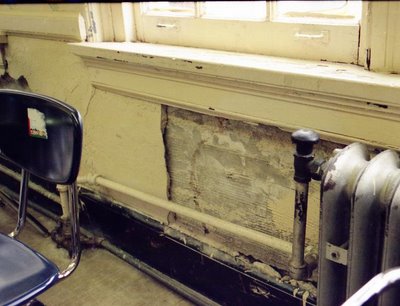
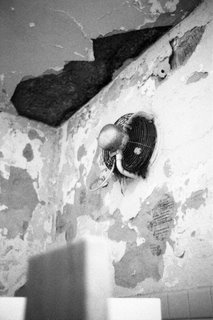
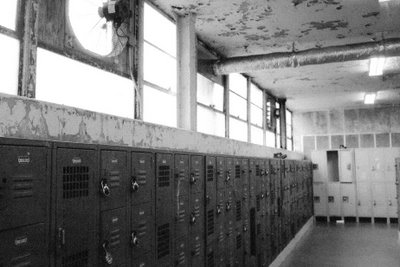
That starts with public education. Building a capable, literate and skilled workforce for a state that currently doesn’t have one is a lot easier if you don’t — in a fit of pique — throw your school system back to Square Zero in the name of “reform.”But then again, we are talking about my hometown, Baton Rouge.They say that a dog won’t crap in its own bed. That may be true for Phideaux, but not for the Baton Rouge that I know and love . . . and hate. (They get complicated, my feelings do.)The Baton Rouge I know — and the Baton Rouge evidenced by the deplorable conditions at my alma mater, and by that anti-tax McCollister column — not only will crap in its own bed, it’ll then plop its children in the stinking pile.Change you can believe in (to steal a slogan) is a city overcoming a crappy legacy. A big part of that would be renewing the school sales tax to fix dilapidated school buildings and raise teachers’ pay — a first step on a challenging journey toward a better future for Baton Rouge’s children.


 CenLamar
Leave a reply to european debt crisis Cancel reply