It’s not a big secret that Alexandria has always struggled with its identity, which is one of the reasons this blog tends to obsess over Alexandria’s few remaining historic buildings and places. It’s a way of rediscovering what we’re made of– every one of those places can tell their own stories.

Since I took the job with the Mayor’s Office, I’ve had the opportunity to learn quite a bit about Alexandria’s history. Local history is a passion shared by many in my family. My great-aunts, Sue Eakin and Manie Culbertson (my paternal grandmother’s sisters), wrote the book Louisiana: The Land and Its People, which, I believe, is still the recommended textbook for junior high school Louisiana history classes.
Aunt Sue also edited Solomon Northrup’s world-famous text, Twelve Years a Slave. I’ve written about her scholarship before. Aunt Sue’s approaching 90 years old, and she’s still researching and writing about the subject she loves– Louisiana. If you were to ask her about Alexandria’s history, I think she’d probably agree about our identity crisis.
Alexandria was burned to the ground in 1864, and we’ve had a love/hate relationship with our shared history ever since. As Drew Ward likes to point out, Alexandria can sometimes be masochistic– recklessly preferring demolition instead of preservation. I’d like to think this has changed recently– in part, as a result of the good work done by people like Melinda Anderson, Paul Smith, Charlie Charrier, and Mike Jenkins.
But, undoubtedly, there are others who believe that demolition is easier (and therefore more sensible) than preservation. There are some who believe our inner core and our historic neighborhoods are somehow beyond saving. It’s absurd.
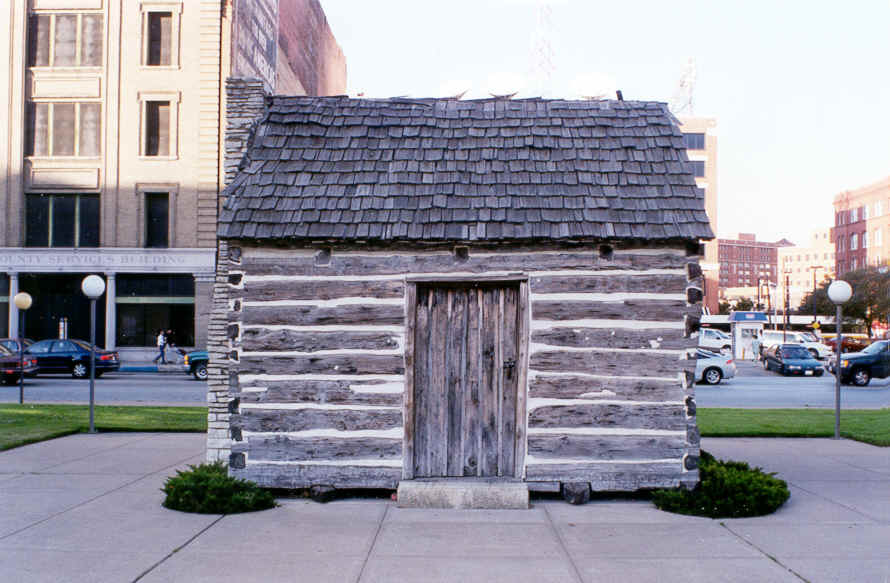
As I mentioned in the previous post, I am in Dallas right now. I return tomorrow. My mother’s family is from Dallas. They can trace their roots all the way back to the very first Dallas settler, John Neely Bryan; a replica of his log cabin is only a block or two away from the Texas School Book Depository.
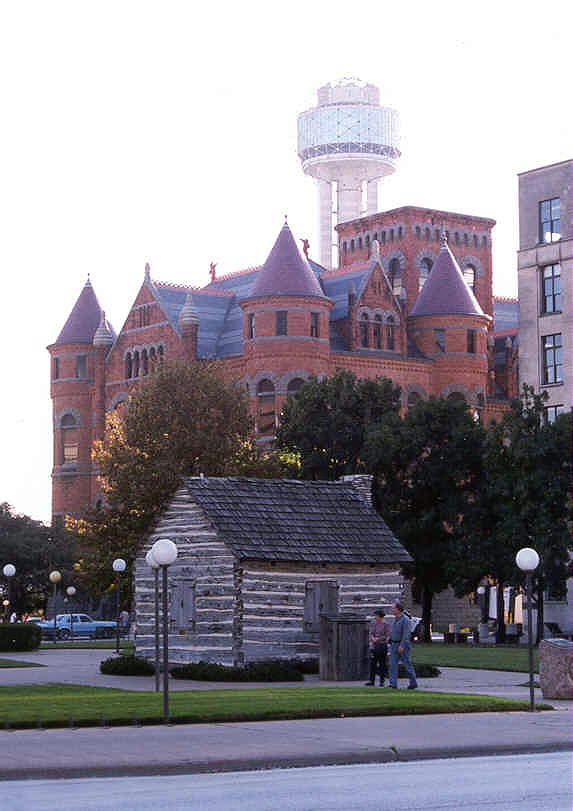
I bring this up for a reason. My maternal grandfather traveled with us this weekend. He hasn’t been to Dallas since his mother’s funeral, over seven years ago. When we told him that we were going to pick up a family member who lives near McKinney Avenue, he remarked, “That’s a bad area of town.” Actually, less than twenty years ago, it was a bad area. It was similar to the way many Alexandrians view Bolton Avenue– a historic corridor that had become blighted due to decades of neglect.
Dallas decided it needed to rescue this important area, and they invested millions in infrastructural repairs. Quoting from the National Resources Defense Council:
Less than two decades ago, the area could be more accurately described as an urban nightmare. The neighborhood suffered from disinvestment, crime, and decrepit infrastructure — urban ills that have plagued many inner-city neighborhoods around the country. What was once one of Dallas’s most affluent areas had become one of its most undesirable. Nevertheless, speculators bought and cleared land in the 1980s in the area, hoping for a new wave of office development. Their hopes turned sour when the real estate market collapsed in the mid-1980s.
But the weak market created favorable conditions for building new housing in Uptown. When land prices are high, developers usually prefer to build office space, because of its much greater return on their high upfront investments. Low land prices in Dallas made housing development economically feasible close to the central business district.
Seizing the opportunity, Columbus Realty Trust (now Post Properties) bought eight properties in the Uptown area, with plans to build apartments, lofts, and townhouses within walking distance of the area’s existing businesses on McKinney Avenue. In 1988, Columbus formed a partnership with the city of Dallas to revitalize the area. The city created a tax increment-financing (TIF) district, which allowed a portion of tax revenues collected in the area to be dedicated to improving the district’s infrastructure. The water and sewage systems were revamped, utilities were buried, and streets were repaved.
Sound familiar?

McKinney Avenue and Uptown Dallas are prime examples of what can be accomplished. I am not arguing in support of a TIF; since 1988, other municipalities have used more innovative methods. We should consider our options.
Still, I have noticed that the people most negative about Alexandria don’t actually live in Alexandria. Seriously.
To be sure, we have our fair share of Debbie Downers, but for the most part, people are positive, though often impatient for change. Continuing:
In 1993, the Dallas City Council approved the creation of the Uptown Public Improvement District, in which property owners pay a special assessment to cover varied improvements throughout the district. (Such arrangements, usually called business improvement districts or BIDs, are becoming increasingly popular. See the box in our discussion of the MCI Center for an example in Washington, D.C.) Funds have been devoted primarily to security, special events, and capital improvements, including sidewalks, street lighting, and small public parks. Also in 1993, Columbus merged with Post Properties, another company dedicated to urban revitalization through developing high-quality rental properties.
Other developers took notice of the changes in Uptown, resulting in a wave of investment. Businesses flourished as more and more people moved to the neighborhood. By 1998, there were 56 restaurants in the 128-block area. The neighborhood also has a large grocery and drug store, a hardware store, several gyms, and a number of smaller specialty shops.
An important aspect of Uptown’s appeal is that many of its attractions are within walking distance. Wide tree-shaded brick sidewalks connect residential areas with work places, quiet neighborhood parks, and the hopping bars, cafes, and entertainment venues on McKinney Avenue. The city’s only trolley line also runs along McKinney, providing another attractive alternative to driving. It is not uncommon to find Uptown residents like Sandra Christie, who estimates that she had put only 6,000 miles on her car in the six years she had lived in the neighborhood.5
Uptown is providing the urban character that its name promises. The housing stock is varied, including both new and renovated buildings, and comprising lofts, luxury units, and townhouses, all at a range of prices. But the new neighborhood is also predominantly affluent: the average Uptown household income was $99,000 per year in 1998, suggesting that, unfortunately, not all people can enjoy its urban delights.
For those who can, Uptown offers convenience, community, and freedom from their cars. As Ron Baker, a businessman, explains: “I could have gotten a large place for less money in North Dallas or Addison, but I didn’t want the suburban feel. And there’s just a lot of very positive energy here.”6 As Uptown proves, there is a very real market for urban living.
The City of Dallas didn’t do anything extraordinary; they simply put the pieces in place for private industry. They recognized the importance of their inner core, the shifting market demands due to changing demographics, and instead of simply talking and planning, they acted.
And it worked.
 CenLamar
Leave a comment